My Guide to Packing for Beach Vacations

It’s holiday time which means vacation time here in Korea, which of course means travel to other parts of Asia for many expats. This year I’ll be packing my backpack for a 10 day trip to Panglao, Bohol in The Philippines.

This will be my second visit to The Philippines, a beautifully romantic, tropical place made up of thousands of islands. The Philippines is home to great  dive spots and stunning beaches, not to mention very friendly people. On my last trip, my boyfriend and I snorkeled twice daily, seeing stunning sea turtles and swarms of sardines. This trip I plan to snorkel again as well, and so am being mindful about what to pack.

Beach sunset (Nicaragua)

Beach sunset

When taking a beach vacation, especially one in which you plan to spend a lot of time in the water, it’s important to consider the lasting effect you and the items you bring with you might have on the environment. For your next beach trip, give some thought to what you bring, wear, and leave behind.

Do your part when packing to make your footprint as small as possible.
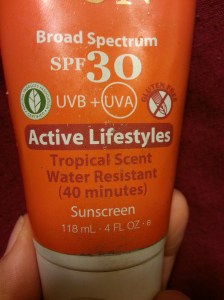
  • SUN PROTECTION – Sunscreen: Not all sunscreens are created equal, do a little research and find a product that is labeled reef safe, especially if you plan to swim, snorkel, SUP, or dive. Some chemicals in sunscreen (oxybenzone) damage reefs and marine life, avoid screens containing the chemical and opt instead for more natural products that contain zinc oxide.
  • SUN PROTECTION – Cover Up: Get a rash guard. Rash guards are thin, breathable tops worn over swimsuits or in warm waters for surf and other water activities to protect against harmful UV rays. As much as I prefer natural fibers for my clothes, when it comes to active and performance wear, synthetics perform best. Buy quality and treat your clothes with care for an extended and purposeful product life. Bring a small cap or beach hat for your trip, too; sunglasses are great for protecting the eyes, but hats will keep rays off of your face and will therefore be cooling.
20151213_140232.jpg

Hat and rash guard.

  • FROM THE SHOWER TO THE SEA – Pack Wise Toiletries: Just like sunscreen, other toiletries that you bring on your trip with you are potentially harmful to the environmental. Bring, or DIY your own shampoos, conditioners, lotions, soaps, cosmetics, toothpaste and more that are paraben-free (a common, dangerous preservative.) Making this extra effort is especially important when staying at eco-lodges or resorts where the gray water (water from showers/laundry/washing) runs straight back into the environment. Some mindful accommodations even require that you bring only safe products with you.
20151213_140354.jpg

Without… PARABENS

  • REDUCE PLASTIC – Bring a Tumbler: The Philippines is one of the top five producers of plastic ocean pollution in the world and I do not want to contribute to that statistic while visiting, so I’ll be bringing a metal, reusable water bottle and my trusty tumbler with me. Potable water is not always easily found in remote places, so bottled water becomes the norm. Bringing a personal, filtering, reusable water bottle might be a solution for the brave. Other options include iodine drops or this LED purifier I’ve recently learned about. My boyfriend and I traveled Costa Rica & Nicaragua for a month with a filtering water bottle and had no problems.
Tumbler

My well-weathered tumbler!

  • LEAVE A POSITIVE PRINT – Donate: Backpacking is a basic way to travel the world, I say basic because you have to edit your packing list again, and again to get it all to fit into a 40 liter pack that you will then carry with you – everywhere. Packing light is a necessity when it comes to backpacking, but if you’re traveling internationally and get a baggage allowance that comes with your ticket, then consider packing a second suitcase of donations for your intended location. Get in touch with an organization ahead of time so you can drop them off at the beginning of your trip. Collect used clothing  or other needed items from friends and relatives. Tip – plan to wear some donations during your trip and leave them at the end to decrease your packing load.
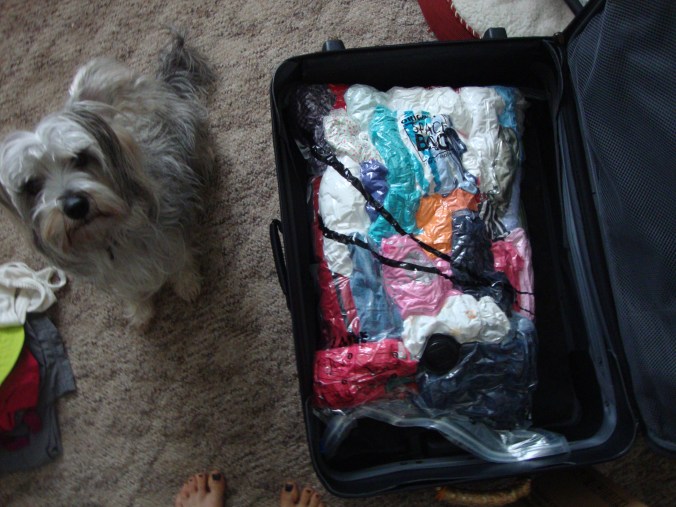
DSC03339

Donations that went with me to my YTTC in Nicaragua, modeling with them is Pepper.

This is just a short list of packing tips, concentrating on conscious/eco travel. Be sure to read your toiletries and cosmetics labels the same way that you read your food labels, and ditch the generic for greener items, or DIY some baking soda toothpaste. Then, relax on the beach, knowing that you have done a small part in reducing ocean pollution!

The Yoga Tree, Chiang Mai – Review

Introducing guest blogger, Amy Steele for http://www.karabemisyoga.com, welcome Amy!

Hidden in an industrial area of Chiang Mai’s old city, at the end of what appears to be a deserted alley, sits The Yoga Tree, a shaded oasis of a chilled-out yoga retreat.

In September, in the middle of a trip to Thailand that brought me over from South Korea and my mom from Alaska, we dropped into The Yoga Tree for a 90-minute yoga foundations class with Gernot Huber. These particular classes explore a common theme every week – with classes currently held Monday, Wednesday and Friday – each one building on the next.

The Wednesday session we attended was a hands-on workshop-style class, with a focus on engaging the muscles between the shoulder blades and aligning the head and neck to improve posture. It was a small class of five people, which allowed each of us plenty of personal attention from Gernot.

Gernot taught a very hands-on class, giving adjustments to us through downward-facing dogs, planks, lizard poses and inversions. In each pose, he would gently push our back muscles into correct alignment, followed by helping us align the head and neck with the spine.

My mom and I agree: One of the most memorable poses was the partner exercise in L-shaped handstand, or half handstand. My mom received an adjustment from Gernot and was able to access the pose carefully, yet confidently, knowing the support was there.

I talked to my mom about the experience after returning from our Thailand trip. “The overall impression is a lasting one,” she said. “Several times a day since the class, I am checking my back and pulling in the muscles to bring my neck and back into alignment. I appreciated [Gernot’s] hands-on approach and his gentle pointers.”

My Mom & I in Thailand

How to get there

The Yoga Tree is a bit difficult to find if you’re not familiar with Chiang Mai. Trust me; we went up and down the west side of the old city several times until we finally asked a local how to get there. Don’t be like us; find detailed directions, in English and Thai, at their website, here.

Address: 65/1 Arak Road, Prasing, Muang, Chiang Mai 50200, Thailand

Screen shot The Yoga Tree Map

Additional information

The studio is well-equipped with mats and props, including bolsters and blankets, which were essential for my mom’s titanium knees. Water bottle refills are available at the smoothie bar outside.

A regular 90-minute drop-in class at The Yoga Tree is 250 THB, or about 7 USD. Passes are also available. View The Yoga Tree’s class schedule here.

In addition to teaching at The Yoga Tree, Gernot teaches at Wild Rose Yoga Studio and offers private classes at his studio in Chiang Mai, Yoga Mind Yoga Body.


Amy SteeleAmy Steele has been teaching English in South Korea since 2013. On the side, she volunteers as a copyeditor and occasionally writes for a local expat magazine. She hopes 2016 will bring her the good fortune of continuing her yoga practice across Southeast Asia.

Leave No Trace – Litter on Korean Mountains

Surrounding myself by nature is a wonderful luxury that I try to make part of my life as much as I can. Living smack in the middle of a city, it is not always easy to feel totally engulfed by the beauty of the natural world. Don’t get me wrong, Busan has great hiking and of course beaches, but often reminders of being in a city are there – noise pollution, light pollution, and straight up litter. Recently though, I was able to get out of Busan for a little trip up north over the Chuseok holiday to visit Seoraksan National Park.

Years back when I made my first trip to Seoraksan, a fellow American expat taught me about the idea of Leave No Trace, it’s as simple as it sounds, take with you whatever you brought up when you go, leaving no trace of your visit. This means clean up after yourself, that simple rule we learn in kindergarten. Don’t leave any wrappers, single use utensils, or even fruit peels (as they are more than likely tarnished with pesticides and are probably not native of the land so therefore might cause disruption to the ecosystem.) This is a rule that I strictly follow whenever I get up into the mountains (or parks, beach, etc.)

Admittedly though, I am not an avid hiker. When given the choice I much prefer to stay near sea level as opposed to climbing up a big ‘ol mountain, but once I have been dragged along on a hike I always love that I’ve done it. It feels rewarding and the views are fantastic.

Seoraksan

Unfortunately, not all of the views are beautiful. On my most recent hike I couldn’t help but be upset by all of the litter left behind by fellow hikers. Feeling affected, I collected as much of the litter as I could and stuff it in the side mesh pocket of my backpack, by the time I finished the hike the trash was spilling over the sides.

Water bottles were a common sight

Water bottles were a common sight

When I returned to my hotel I emptied it all out and arranged it to have a closer look. It seems that most of the trash was individually wrapped candies. (Candy wrappers are also one of the most frequently littered items on my local beach.) If only the sweet-toothed, nature “lovers” loved nature enough to leave no trace. Other items I took notice of were bits of gear that had apparently fallen off mid-hike, a reminder to buy quality when you shop so that you don’t have the problem of your backpack or footwear falling apart during use, and if it does, please take it with you and dispose of it properly.

It is so important to Leave No Trace; I can’t imagine how long all of this might have stayed on the gorgeous Seoraksan floor. Sure, there are probably teams that go up and clean, but wouldn’t it be nice if everybody took their own responsibility and left places as beautiful as they found them, with no traces?

Korean Templestay – Lessons from a Monastic Meal

One of the highlights from my recent Korean templestay was definitely the monastic meal experience. I wasn’t sure what to expect when I saw it listed on the itinerary, well, actually I envisioned a beyond simple bowl of the smallest portion rice, which would leave me immensely hungry for the rest of the night, but that wasn’t the reality.

The meal was actually quite filling and was made up of typical Korean fare. There was the ubiquitous kimchi and rice, as well as a soup and some bancheon (side dishes.) It was of course vegetarian. The contents of the meal are not what stuck with me the most though, it was the strict ritual of how to properly serve, accept, eat, and clean up after the meal that I found memorable.

The head monk that guided us through our templestay, sat at the head of the rest of us and taught us how to perform the ritual. We all sat on cushions on the floor with a bundle of dishes wrapped up tightly in a fabric bundle. We were instructed very carefully on how to unwrap the fabric, remove the four bowls of varying sizes, and how to display them in front of us. Each bowl served a purpose. One for water to be used to do the washing after the meal, one for the soup, one for the rice, and one for the side dishes.

As volunteers began to offer the rice to each participant we were strictly instructed to take only what we could consume entirely. Other volunteers served the soup and side dishes, beginning always with the head monk. There was to be absolutely no talking during the process which made it meditative and mindful. Only non-verbal communication was allowed.

The head monk said again and again not to waste any food. Every last grain of rice was to be eaten, and she was going to check at the end of the meal. When we were done eating we used the water in the water bowl to rinse all of the bowls out. During the middle of the meal she instructed us to save one of our half moons of yellow, pickled radish. The reason was that it was to serve as our scrubber for the dishes. We used our chopsticks to control the radish as we swiped it around every surface space, moving from bowl to bowl in the directed order, and then we ate the radish. The washing water we were to drink, ending up with absolutely no left over food or even any residue of our meal.

I loved it. No waste! Even the scrubber and wash water was consumed by us. Our translator expressed that although it might seem “dirty” to drink the wash water, it really wasn’t, because it only contained tiny bits of the food we had just been eating (no soap was used.)

After we drank the water our water bowl was filled with some scorched rice water which was to act as the final rinse. We poured the water from bowl to bowl and when we were finished we dumped the scorched rice water into a community collection pot. I volunteered do the collecting. If all had done their eating and washing correctly, then the community water at the end should have been crystal clear, lacking a single particle of food. As I collected I witnessed our failed attempted; as expected – we did not clear our bowls as efficiently as monks. Fortunately though, the head monk did not make us drink the community scorched rice water as a group, which is what real monks are made to do if they waste any food. Not a very delicious punishment, but an effective threat.

Eating just one meal as mindfully and thoroughly as a Korean monk has had a lasting impact on the way that I consume my daily meals. My daytime job is an English ESL teacher at a private kindergarten which feeds me lunch every day. Just as the children are taught, and as was reinforced at the templestay, I try every day to take only what I can eat completely, ending with no waste. I haven’t gone so far as to transfer the radish method into my school lunches, but I remember it as a lesson in sustainability and not wasting.

Unfortunately I did not take a single photo during the monastic meal as I didn’t want to interrupt the atmosphere and learning experience. Below is a gallery of photos from Hongbeopsa Temple where I did my stay.

Korean Templestay – 108 Prostrations

In the past I have been invited to teach for yoga mala’s which are events where participants do 108 Sun Salutations (Surya Namaskar.) Teachers guide students through traditional Sun A and/or B, or through variations of both. It is both challenging and rewarding to push yourself to perform all of the sequences and as a teacher it has been fun to be creative and come up with variations. Although I have taught and participated in a few yoga malas, I never really knew what that number 108 was all about.

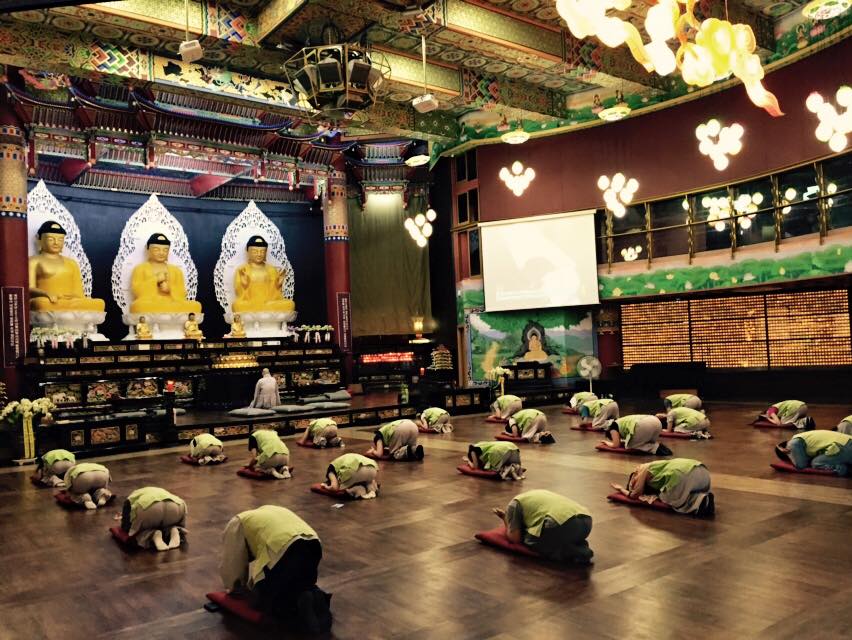
Recently, I took the opportunity to participate in a Korean Templestay. Templestays are little nightly or weekend getaways to a Korean temple. They are geared towards foreigners visiting or living in the country. During the stay, participants experience a brief monastic 24 hours (give or take.) At my templestay I wore simple cotton pants and a vest (worn over a T-shirt as showing shoulders is a big no-no at Korean temples,) ate and experienced the process of eating a monastic meal, attended two Buddhist ceremonies, made a strand of mala beads, and did 108 prostrations.

The Beads

Making the mala strand of beads felt a little bit like a summer camp activity. The other 20 or so participants and myself gathered in a beautifully painted room, sat upon meditation cushions, and were given little kits which included rough wooden beads, thick string, and a small metal tool that was to be used to push a better hole into the bead if it hadn’t been properly punched out.

While we made the malas our guide asked questions of us about Buddhism, such as what are the six offerings people bring to temple (I remember four of the six – rice, incense, flowers, fruit.) The guide/translator also explained that the beads were made of cedar which gave them a strong scent. According to her the scent is offensive to mosquitos and helps ward them off – bonus!

The number 108 was also explained, but in a mathematical-windy way reminiscent of conspiracy theories that add, subtract, and multiply to find their way to a meaningful number that supports their case. I’m not good with numbers in any sense, so unfortunately those numbers went in one ear and out the other. The following morning after stringing the beads we performed the 108 prostrations in the main hall and that’s where the magic happened.

108 Prostrations

After an opening ceremony of tycho drum, chant, and a few introductory bows, we began the 108. As I mentioned, the event was for foreigners; none of us were Korean speakers and the monks didn’t speak English, so during the bows they played a youtube video that gave a meaning to each bow. At first the video was offputting because the anouncer had a very cultish, deep, monotone voice, but what was being said by him was actually quite moving.

Reasons for bows came in groups. For example, for six or so bows there would be reasons about repenting. This is a rough memory, but a few  that I remember went something like this: “I prostrate in repentance for ever having taken my family for granted.” Then it continued with the same, “I prostrate in repentance for ever having taken my friends/nature/teachers for granted.” Another theme I remember was gratitude for similar topics: “I prostrate in gratitude for all the teachers that have touched my life,” for example. Having the sound of the video going, which visually displayed monks in monk like settings, helped the bows go by more quickly and gave them meaning.

Physically I didn’t find the bowing to be taxing, minus the speed. We bowed to the count of the youtube video which runs around 25 minutes, about 20 of those minutes being the actual bows. Doing 108 bows in 20 minutes is quick. The bows were similar to Sun Salutations and were performed by bending at the knees, hands at prayer at the chest (Namaskar,) lowering the knees down onto a meditation cushion, placing the forehead on the cushion, and then going to standing again. I overheard other participants complaining of the difficulty of it; it might be that my consistent yoga practice made the act easier for me.

Full bow.

Full bow.

Here is the link to the video to listen to while performing 108 bows, or while you do your dishes, give it a listen.  The intro of the video is a child giving a little background to the number 108 and then it gets right into the creepy voice reading of the 108 prostrations. As much as that description is not enticing, I encourage you to listen, it honestly moved me into conscious reflection.

If you ever get the opportunity to attend a Yoga Mala or a Korean Templestay, take the opportunity. Through both you can learn a lot about yourself while participating in events that lie outside of your comfort zone. Coming soon will be a write-up of the monastic meal that was the highlight of the first evening at the temple.

The templestay that I participated in was at a temple named Hongbeopsa. It is north west of Busan and can be reached by shuttle bus or taxi from Nopodong Bus Termanl. Hongbeopsa generally hosts monthly cultural events for foreigners such as lantern making, tea ceremonies, and kimichi making. To find out more about their events follow them on facebook here.

Observations of an Environmental, Yogini Traveler

I recently took my summer vacation to visit my family in Western New York. It’s a long, taxing trip from Busan to Buffalo and totaled roughly 26 hours door to door. As usual, my mind was observant of waste created in airports on planes. Here is a short list of what I saw as well as some tips for having comfortable travel.

  • Plastic on Planes – Thankfully, airlines feed travelers on longer flights and I’m always grateful for some grub before attempting rest on a flight. Of course airlines have strict health and safety guidelines to follow when serving so many people in a short time frame, so a lot of plastic is used for sterility. I saw plenty of plastic cups for all those beverage stops, saran wrap on fruit cups, and plastic utensils. Sadly, I also noticed that pop cans, utensils, napkins, and all other waste was jumbled together in the same garbage collecting, leading me to believe that nothing was recycled.
    • My Tip! Bring your reusable water bottle or tumbler with you on the flight and have the attendants fill that up with water or your choice of drink rather than getting a plastic cup every time. I estimate that I saved the disposal of at least 10 plastic cups on my recent flights this way. Having a water bottle handy also saves a few bucks at the airport as there are usually drinking fountains found near bathrooms. At New York’s JFK I saw this nice little reminder of a drinking fountain, and smiled.
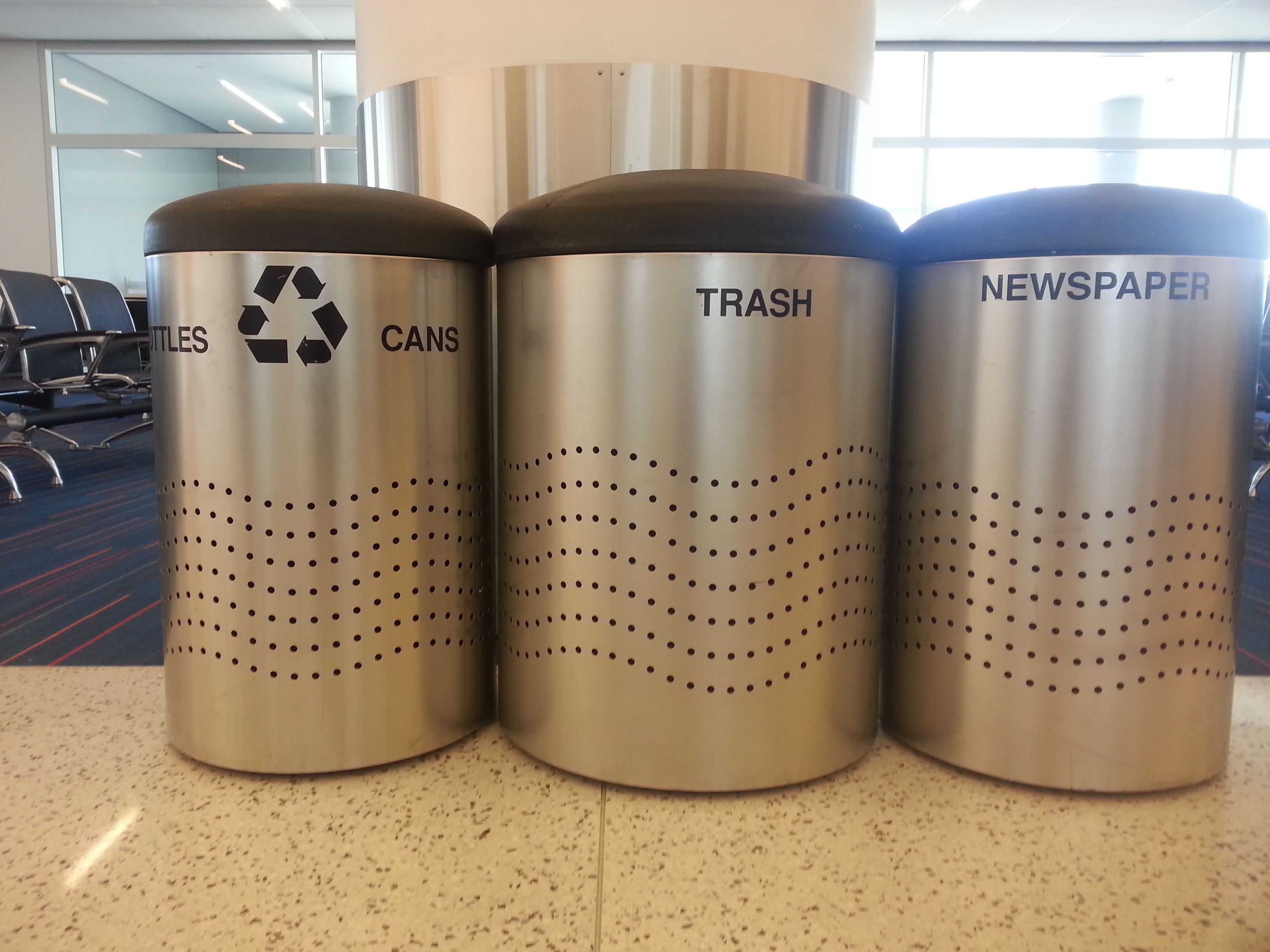
  • Hold Out for Recycling – When I first entered JFK’s immigration area I saw only a collect-all garbage can which got me feeling a bit down, but after going through security and walking around the terminal I noticed that there were in fact recycling receptacles throughout the airport. Relief!

Recycling Bins

  • Get Fresh Air – JFK had a cool new rooftop area at Terminal 5. I had some time to waste so I checked it out. After being around so many people and breathing the dry, stale air on the plane, the outdoor rooftop was a welcoming retreat. It also featured recycling bins. The grass wasn’t real, but plants and flowers bordered the area. It was nice to stretch my legs and do a little yoga after the long journey.
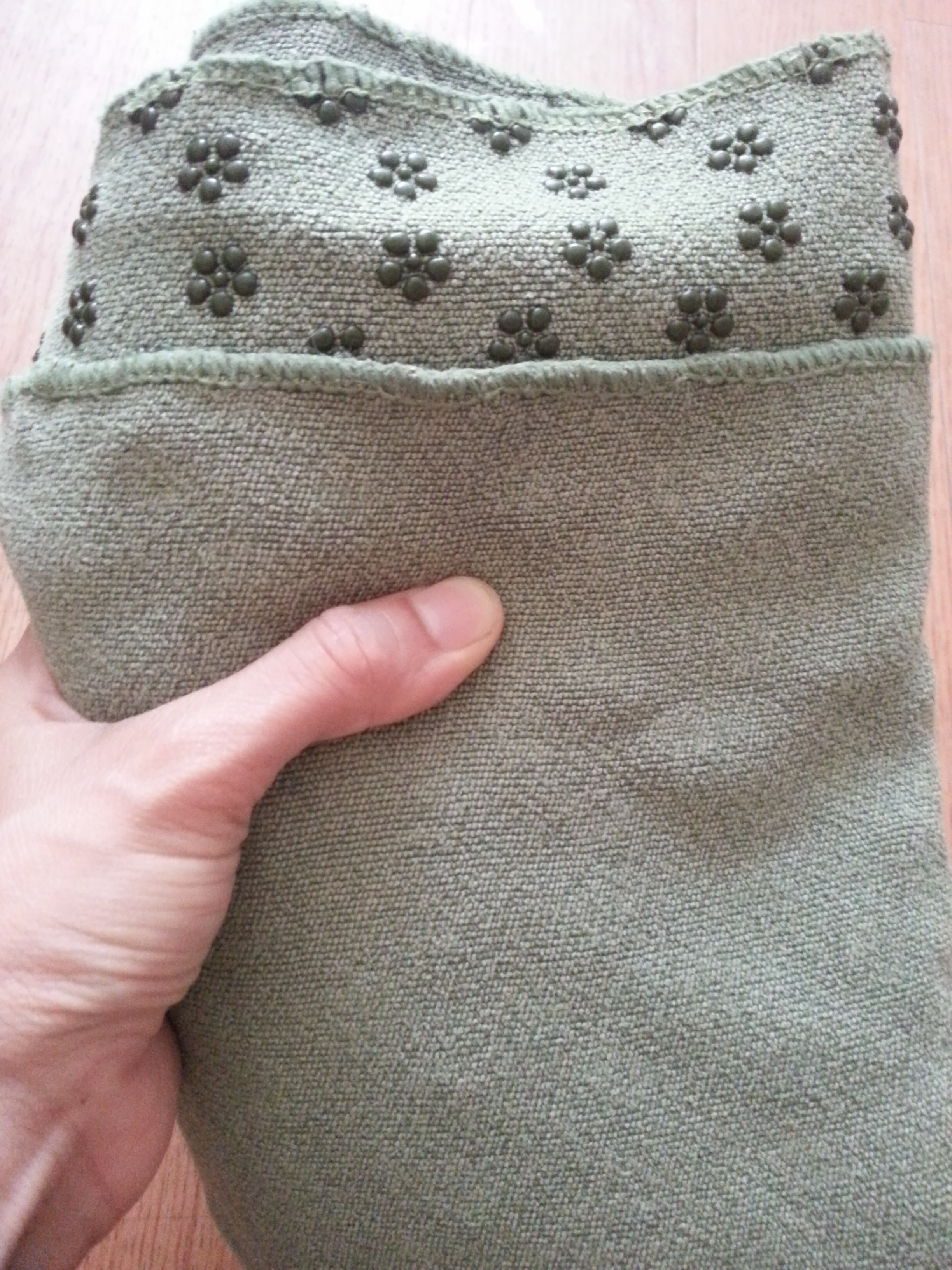
  • Bring a Travel Mat – If you don’t have a packable, travel yoga mat that folds up easily, then I suggest getting your hands on a yoga towel. They’re commonly used for hot yoga classes as the micro-fiber prevents sweaty palms from slipping in downdog. When
    Folds up easily.

    Folds up easily.

    traveling, I toss mine into my carry on bag, this way I can whip it out during lay overs and stretch my weary muscles. If you don’t have a yoga towel, then striking poses in a quite corner right on the carpet would suffice, just as well (I’m just a bit of a germaphobe!) Another bonus of the towel is that it doubles up as a blanket or rolls up as a pillow on the flight. Tucking your improvised pillow between the back of your seat and your lumbar spine (low back) adds an exponential amount of comfort from those flat-backed seats as well.

  • Aisle All the Way – For long flights I always request an aisle seat. Because of the dry air I drink a lot of water on flights which means a lot of bathroom breaks. While I wait in line I take the opportunity to do a simple, standing runner’s stretch to create space in my front body. Another good one to do is to find a flat surface and do downdog at the wall.
    • How To Standing Runner’s Stretch: Stand next to a wall, bend one knee and reach down for the foot with your hand. Pull the heel in towards your glutes, lining the bent knee up with the standing leg’s knee. If balancing is difficult, then use the wall to support you. Hold for a few breaths and switch sides.
    • How To Downdog at the Wall: Stand hip distance, facing a wall, with a slight bend in your knees. Be close enough to the wall that you can lift your arms overhead at shoulder’s distance and place the hands on the wall, elbows straight.  Gently bend at your hips and knees and press in and down into your palms on the wall. Stretch from the shoulders down to the low back. Stay and hold for a few breaths. Repeat as necessary.

Travel is a rewarding privilege; it is a way to see and learn about the world, a chance to relax and take a break from work life and daily chores, but the act of traveling is not always so fun, especially on trips that last literally for days. Take the time in preparation for a trip to make sure to have your essential water bottle or tumbler tucked away in your carry on. Bring along your travel mat or yoga towel for impromptu yoga sessions in the airport. Breathe long through the process of travel and know that you shall reach your destination in time.