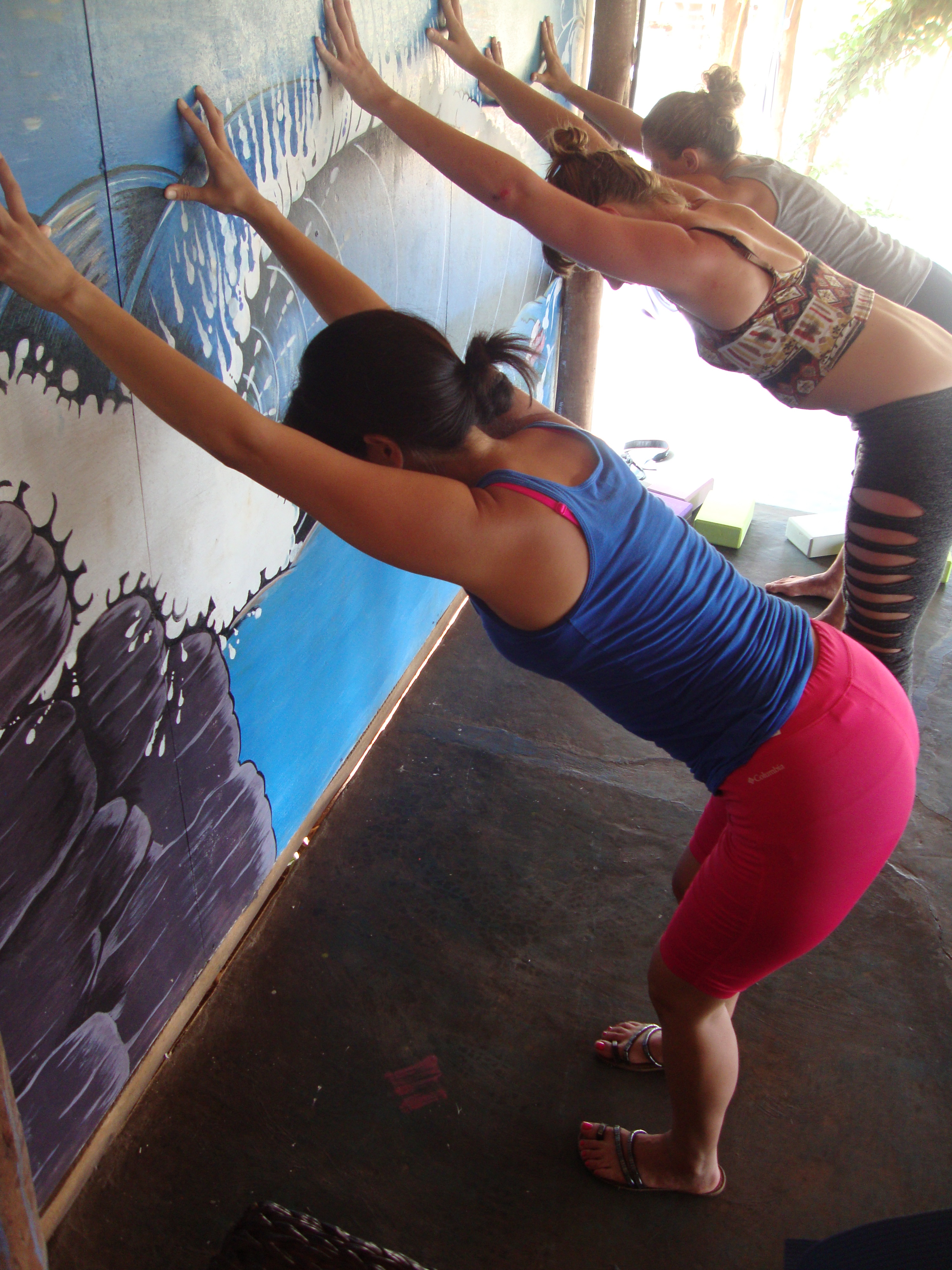
Lessons from Acro Yoga

Acro yoga was never very appealing to me. I had played around with it here and there in the past with friends, but with no technique or guidance it never went far. I am so deeply in love with my asana yoga practice, that I never considered experimenting with acro, all that much… until I attended Little Birds, a beginners acro yoga series taught right here in Busan. The series is held monthly at Kaizen, and is taught by a good friend and fellow yoga teacher, Mindy Sisco.

It has been about a year since I first dipped my toe in the sea that is acro, and during the past year I have been wading deeper and deeper into the experience. It can be said that acro is both very similar to hatha yoga and at the same time completely different. If you’re coming from a yoga background  and try acro, then you will notice that a lot of the shapes and even the vocabulary are similar, Vishnu’s Couch and Parsarita’s Twist are two pose name examples. Also, strength and flexibility built-in a regular yoga practice will compliment acro immensely. How acro differs from yoga requires a longer description. Here are my personal lessons from acro.

Lessons from Acro

  • Trust – Falling onto someone’s legs, especially a stranger’s, and giving them all of your weight and yourself means that there must be a lot of trust between partners. There are drills to build trust that helped me to trust. In the beginning I was very untrusting, it was hard to give up the control, but with time and practice and learning of technique, I have grown to be open and comfortable to new bases and partners.
  • It’s ok to Fall – Just as it’s ok to fall out of a balancing pose in a hatha class, it is ok to fall out of an acro sequence. Falling is part of the learning process. If you never try you will never succeed. You need to try new poses to test your limits and build the strength and flexibility needed to hold the pose later on down the road. That being said, I don’t recommend trying to mimic an advanced acro video off of youtube if you don’t have the basics down. Know your limits and be realistic.

“Falling is part of the learning process. If you never try you will never succeed. You need to try new poses to test your limits and build the strength and flexibility needed to hold the pose later on down the road.”

  • Importance of  a Spotter – Acro is a two person activity, but should always be considered a three person activity in actuality, when you include a spot. The spotter has a highly important job of trying their best to make sure that neither participants break their noses or crack their teeth. As a yoga teacher, I have found that practicing spotting has mirrored my yoga teaching in that I have to be very aware of others’ bodies and I feel a real sense of responsibility in both.
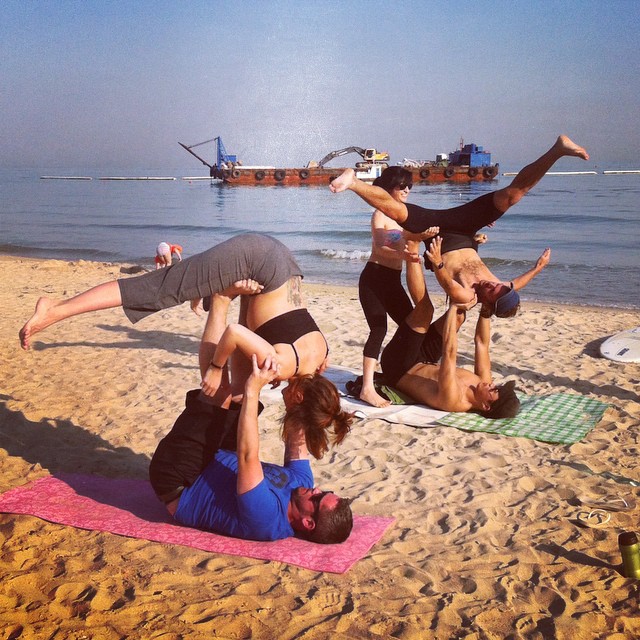
Spotting during some play time at the beach.

Spotting during some play time at the beach.

  • Communication – I’m fairly certain that ESP has been mostly disproven, which is unfortunate, as it would be really useful in acro, instead we must resort to speech. After working with a partner for a long time and learning the sequences it would be possible to get in a flow and feel it out, but in the beginning you must declare what you’re feeling and what you need, to help each other out.
  • Just Flow With It – Arguably my most important lesson from acro, is to let go of hesitations and worries and just flow with it. My day-to-day yoga practice can be rigid in terms of correct alignment; I sometimes play around with less traditional variations, but in general I tend to be a stickler for tradition. Attention to detail is primary in my practice – every joint must be in the right place, the gaze correct and strong. With that background, it was hard for me to just jump into an acro position, and I mean that quite literally – jump into a position! After some time and a little mental conversation with myself, I realized that it’s ok to do things less rigidly than I am used to. Had I not come to that realization, I never would have amazed myself with my acro abilities (if I do say so myself!) Similar to yoga, acro can be very empowering.

My acro yoga practice has grown leaps and bounds (and flips and turns!) in a matter of months. It took an open mind and willingness to fall into another person, but with each session of practice and play, I began to feel more comfortable in my own skin and with others. I suggest seeking out an acro workshop or jam in your area if you haven’t tried it. It’s a great activiity to do with friends, a partner, or family – heck, it’s even fun to do with strangers. There’s a high likelihood that you will learn a lot, not only about acro, but also about yourself, and an even higher chance that you’ll laugh while learning.


Information about acro sessions, classes, and workshops held at Kaizen in Busan can be found via their website at: http://www.kaizenkorea.com/ or on facebook via their page or the Busan Yoga & Meditation page.

Mindy and Simon of Kaizen, Busan.

Mindy and Simon of Kaizen, Busan.

Hosting a Beach Clean Up Event

Hosting a beach clean up event has been spinning in my mind as an idea for a while, but I was never really sure how to materialize it. It’s easy enough though to gather a few friends or a group of people and have them collect as much litter as they can, so that is exactly what I am doing.

Last month contained the American holiday of Earth Day, on April 22nd, unfortunately my event wasn’t planned in advance enough to be around Earth Day, but that really doesn’t matter. Each and every day should be a day in which we consider our constant impact on our fragile planet, and we should change our habits so that we cause less and less harm.

Together with a yoga friend, Jessica Rykert Holt, who has been leading mindful meditation gatherings in Busan, a straightforward beach clean up/yoga event has been organized at Gwangali, one of our local beaches. After a date was set for May 16th, Jessica was told of another beach clean up happening at another coastal location in our city, so we joined up to host coinciding events. The other event is through a local scuba diving group, Busan Scuba. Divers will meet and clean up Taejongdae, an island in the southern part of Busan.

Here’s what our beach clean up event will consist of at Gwangali:

  • Meet Up and Introduction – After learning some new names, I will start the event off by explaining my motivation, which is to create awareness about the harming of the oceans and lands, but more specifically, the oceans, by single use plastics such as to-go cups, straws, packaging and wrappers. Next, Jessica will speak about mindfulness and meditation and teach everyone about what they will be doing as they comb the beach cleaning up.
  • Time to Hit the Sand – After the tools are passed out (gloves and city purchased garbage bags in our case) participants will get to the cleanin’. Busan suffers from a lot of littering, both internally in the city and along the coasts and beaches. Daily I see candy wrappers, cigarette cellophane, straws and the like strewn about the beach when I walk my dog and on the streets. Not knowing the language well enough, it seems to me from observation, that people are simply ignorant of the lasting negative impact of their fluttering plastics that land on the beach and quickly find their way into the water via tides or winds.
  • A Yoga Practice, Of Course! – After all of the hard work and concentration on being mindful, everyone will reconvene at a large area on the boardwalk to lay out their mats and flow. The class will continue with the theme of mindfulness and individual impact, and will last an hour. The class will be designed for a range of students, from beginner to advanced.

It can be intimidating to put yourself out in the community and plan an event, but that should never hold you back from striking the match which lights the fire that is action. Let your little light shine! Planning a beach clean up is a great way to get some friends together and make an impact, or to make it bigger and involve locals.

This event is 5,000 won minimum donation with money going towards garbage collecting gear and the remainder being donated to http://www.projectaware.org/ an organization of divers who work towards cleaning and saving the oceans in their Marine Debris project as well as saving endangered sharks in their Sharks in Peril movement. Below is an infograph produced by Project Aware with facts about the impact of our trash.

TheUglyJourneyofTrashInfographic_PDF


Information about meditation events led by Jessica can be found the Busan Yoga & Meditation Group on Facebook.


Update on Beach Clean Up Event

Despite the fact that Saturday, May 16th started out as a dreary, cloudy, and quite frankly sort of miserable day, with temperatures much lower than they had been for a few weeks, a group of dedicated participants met me on the boardwalk for the clean up. After everyone had made their way to our meet up location, Jessica and I got things started. The event went exactly as planned and everyone did a fantastic job of filling up their garbage bags. It was unbelievable how much litter they were capable of collecting in just 40 minutes. Below is a gallery of photos.

Unfortunately, a lot more was left behind that we weren’t able to collect. The problem has to be corrected with people disposing of their waste correctly. An even better solution, in my opinion, is to drastically decrease individual waste production, by changing habits and cutting out all single use items from day to day life.

Radiant Life School YTTC Review

Radiant Life Yoga School, El Coco Loco Resort, El Manzano Uno, Nicaragua, May 2013

At this time two years ago, I would have been getting comfortable in my shared dorm room with my two new roommates in the eco-resort where we had all separately chosen to complete our yoga teacher training course from our three respective home countries. For myself personally, it was a big decision on where to do my training, in which I took largely into consideration things such as: cost, location, service, style of yoga, and class size. There is a lot I could say about my course, most of it very positive, but I’ll keep it short-ish and outline the majors.

Course Generals

Location – EL Coco Loco Resort, El Manzano Uno, northern Nicaragua El Coco Loco is an enchanting little eco resort located in the northern part of Nicaragua. Of course, I loved that the resort is eco with compost toilets and little in terms of the high energy use items like air conditioners/TVs. Accommodation included private bungalow’s and a shared dorm room (where I stayed.) There was a main, open-air dining/meet up area where meals were had and some practical learning was done. The fresh, home made food has to be mentioned as a highlight of my experience. And the staff were friendly, locals whom I was able to practice my Spanish with. The yoga platform where asana practice was done was a large, raised platform covered with a natural roof. The mostly isolated beach is only a minutes walk from the resort.

The Training For me it was important to find a yoga teacher training that focused on alignment and utilized props, as that is the sort of yoga that has always given me a lot of enjoyment and I knew I wanted to share with future students. Radiant Life Yoga School is led by Kimberly Waugh, ERYT 500, an American yoga teacher with well over a decade of experience. (It was important to me to find an instructor who was a native English teacher and related to me culturally as an American.) More about Radiant Life RYS 200 hr training that I experienced in May 2013:

The Good

  • Lectures During my course I studied yogic philosophy and history and learned a lot of a new information which I have utilized often in my teachings. Two examples of books of study included: TheBhagavad Gita, the Yoga Sutras,  and also a well put together training manual that I have come back to time and time again. As quite a studious person, I took very detailed notes and continuously carry my training notebook with me around the world as I lesson plan.

    My notebook, complete with sketches.

    My notebook, complete with sketches.

  • Teaching/Business Knowledge Kimberly shared her vast knowledge of the industry with us and gave very practical tips and insights. Not all of the tidbits that I learned have been put to use as I have been teaching internationally and not in my home country of the U.S., but I will remember what I learned whenever I do relocate back to the U.S. I’m not sure that other training courses, especially those abroad and by instructors of other countries, would include such detailed and practical learnings.
  • This little bugger wanted to join asana practice.

    This little bugger wanted to join asana practice.

    Prop Use I love using yoga props, and although the rustic setting of the yoga platform didn’t include a plethora of props, there were the basics and I felt that I learned a lot of adjustments and modifications with the props. A word of warning, scorpions loved to nestle in the shadows of the pile of props, so be careful when you collect them for practice!

  • Workshop Study Kimberly taught multiple different and unique workshops to take away and be able to teach immediately. While learning
    Workshopping in the common area.

    Workshopping in the common area.

    these themed workshops,there was a lot of practical study, working with other trainees to practice putting students into poses and finding adjustments.

  • Focus on Seva (Service) This was the big deal breaker for me when choosing this course. I knew that I wanted some karma yoga to be included in my course and this was the right course for that. El Coco Loco Resort established and continues to run a great non-profit organization, Waves of Hope. While completing my training, I was able to get hands on and volunteer to work with local students practicing their English and get in deep and dirty by helping to build the new local high school. Find out more about Waves of Hope here.

The Not So Good

  • Anatomy There was an anatomy segment in the training course, but it was not my favorite part. Since anatomy was one of my weakest areas of knowledge going into the course, I was hoping for more of a focus on it.
  • Teaching Practicum This did happen, stepping in as the teacher to guide the other trainees in sun salutes and poses, but it didn’t happen as much as I wanted. To counter this, I took it upon myself to practice teaching the intern working at the resort at the time.

All-in-all, I highly recommend my YTTC to others. The setting couldn’t be better, the training itself was superb and left me feeling prepared to begin teaching straight away, and the food was enough to write home about.

Mmmm.

Mmmm.


Are you considering training for your 200 hr yoga teacher certification? If you are, check out my very first post, which includes great tips for doing just that.

Choosing a Yoga Teacher Training – Where to Start?

Becoming a yoga teacher is a popular thing to do these days. Sometimes a training is attended simply to better personal practice or with the hopes of going out into the yoga world and teaching. With increase in demand comes an increase in supply. Studios and retreats offering yoga teacher training courses are innumerable, which makes the decision process of where to train quite daunting. Not only is there the question of where, local or even international, but what style, what time of year, is it yoga alliance certified, etc. Here are some considerations that helped me chose a 200 hr yoga teacher training.

First, decide when in is the right time to do your training. With a simple google search, you’ll be able to find a training at any time of the year, so there’s no pressure about when you’ll be able to get off work or what aligns with your schedule. In my case, I had a two month window to work with which I am grateful for because it narrowed down my options right away. Time-wise there are a few options. There are intensive trainings which range from two weeks to a month or six weeks. Personally I think, anything less than a month would really be rushing it with thousands of years of knowledge to skim. The other option, which would have to be local, is to find a long-term training. I have seen these look something like this: 9 months of training on Saturdays for a few hours with breaks for holidays.

The next consideration if it isn’t already blazingly clear to you is to decide upon a style of yoga to train in. Ashtanga, Anusara, Hatha, Vinyasa, Bikram, and the list goes on. Maybe you already have a preferred style of practice, and even better, a well-loved studio, great! Decision made. But if you just read that list with a wrinkled brow, then I suggest you do a little research. Chose a style that you enjoy practicing and one that you think will be employable in your area (teaching Bikram to seniors isn’t going to fly.)

Once you have your heart set on a style, seek out a well-respected studio or teacher. Again, google searching is oh-so-helpful. This is where location plays another key role. If it’s feasible and you’re fortunate enough to have abundant studios in your area, then hopefully you can find a training close to home so that you can save money on room and board. On the other hand, you could turn your training into a little vacation in some beautiful place (Costa Rica or Thailand for starters.) Do a cost analysis, in my case it made more sense to buy a plane ticket and train in a far away location than in the US.

Once you’ve narrowed it down to a few- do more google research! Check out who your potential trainers have trained with and in what styles. Send emails or call and ask as many questions as you wish. You’ll be investing a large sum of money, so get some facts. If possible, by all means go attend some classes and then stay after class and ask more questions! If you can’t go in person then search for an online class on YouTube or iTunes or email and ask for available resources.

Most importantly, after all of the research, contemplating, pros and cons lists, emails, long talks with yoga teachers and friends, and you have made a decision, then the final thing to do is to let it go. This was the best advice given to me before my training by a former yoga teacher. We had a long talk in the parking lot after class and I think she could tell that I was nervous to train, wondering whether I was personally ready, worried how I would compare to other students (I know I shouldn’t have , but it’s natural,) and she simply told me to go into it with no expectations. That really calmed my mind and anxiety.

Hopefully these tips have helped you in your path to a training. It’s an amazing thing to do and with so many trainings out there, you’re sure to find the right fit for you. Take it seriously, but at the same time remember that you’ll be doing and learning about what you love.