Flea Market Fun

Like Kara Bemis, I’m a teacher of young Korean children in Busan, South Korea. Unlike Kara, who spends her days teaching the world’s most adorable 3- to 7-year-olds, I teach elementary school students in a private after-school academy.

Kara students

Kara’s most adorable students

Each age group comes with its own set of positives and negatives, but one plus of teaching slightly older kids is their level of communication and greater understanding of the world around them.

Most of my elementary students are still excited to play and have fun as they’re learning to express themselves in English. The foreign teachers at my academy wanted to build on their enthusiasm while helping them practice English vocabulary and conversation in a real-world scenario, so we teamed up to plan a Halloween flea market – a day when the students could have fun together, invite friends and walk away with a few new goodies.

photo 3 (5)

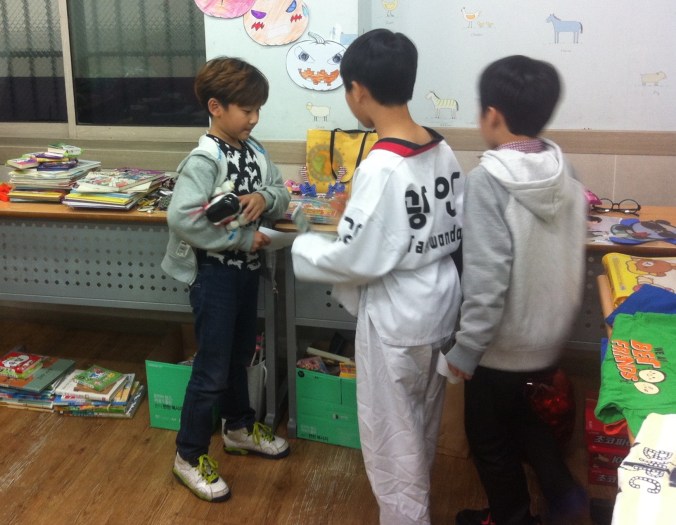
students shopping at the Halloween flea market, held at my academy last month

It’s a common practice for academies to have market days, but they can typically involve nothing more than cheap, Made-in-China crap from Daiso, the Korean equivalent of a dollar store. A good alternative to buying single-use items or tiny plastic toys, which would only create more waste among young citizens, is to turn the familiar student market into a flea market.

For a couple months leading up to it, students at my academy earned points for good behavior, high test scores, completing puzzles and bringing in slightly used items to sell at the market.IMG_4472
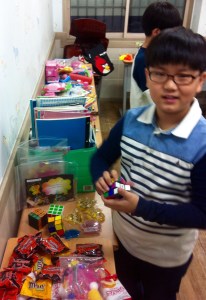
Students and their families donated a wide range of goods they no longer needed. As the teachers sorted through boxes and bags of the goodies brought in, we were delighted to find high-quality stuff: stickers, notebooks, pencils, purses, costumes, jewelry, posters, clothing and snacks. Without an outlet for these nonessentials, they could have easily been tossed in the trash or left in an impromptu pile of discarded materials on the side of the street.

On the day of our Halloween celebration, the kids were finally able to cash in their points and spend their hard-earned money. They loved seeing a room full of potential toys, stationery and candy, and they had a blast shopping with their friends. It was great to see students excited about doing something that didn’t involve their cell phones.
IMG_4474 (1)

The event turned out to be a playful way to reuse old things instead of throwing them out. The remaining items will be donated to other schools, used as school supplies or given away to students as prizes in the future.

Interested in planning a flea market at your school or academy? Here’s how.

  1. Set a date. Coordinate with other teachers to figure out the best date to host a flea market. Do you want to plan a one-time event around a holiday, or would it be best to have annual or semi-annual markets?
  2. Find a space. A classroom in your school will probably work for the market because it keeps the amount of kids in the space under control, and you can cycle them through, group by group.  
  3. Create a points system. Make sure teachers are on the same page with the amount of points (dollars) given for certain things. On the day of the market, we had students trade in their points for $1 and $5 bills.
  4. Get donations. Ask students and their parents to bring in new or gently used home goods, school supplies, books, etc. that they no longer want or need. You can reward students by giving them points based on the quality and value of the donation.
  5. Assign roles. Plot out which teachers will be with the majority of the students, watching a movie or playing games, and which teachers will work the market, collecting money and supervising shoppers.
  6. Set up and sell. On the day of the market, set up the room with goodies, pass out dollar bills and let the kids browse. We had about 10 shoppers at a time, and most of them stayed in the room for about 10 minutes.

This type of event works on so many levels. For older, more advanced or native English students, it could be an opportunity to learn about conscious consumerism, using less and reducing waste.

IMG_4483

Ethical Shopping this Holiday Season

We’re all guilty of letting time slip buy and having to quickly grab something for someone as a gift during the busy holiday season. This year may you take your time, start early, and shift from mindless consumption to being a little more conscious of the sources of what you buy as well as where it comes from, how it was made, and who made it.

Do your research and look for craft shows, privately owned boutiques, or shop ethically online. You can opt for buying from a small producer made in your area or find a big name company that functions ethically.

Top Reasons Why Ethical Shopping is Much Better Than Mindless Consumerism:

  • Support Local – Imagine if most everyone supported a local artisan by gifting from them rather than a piece of plastic something-or-other bought at any old box store, it would be amazing. The artisan would be financially supported and continue their work, the gift giver could smile knowing they’ve spent their money well, and the receiver would get something unique to enjoy.
  • Good for the Earth – You have control over what products you support. Opt for natural, handmade products instead of off the shelf generic. Some examples are soaps, candles, beauty products, baked goods, and more. You’ll bypass the unpronounceable additives for a more natural product. You can of course shop online at Etsy or try Amazon’s new line Handmade if you don’t have local crafted goods near you.

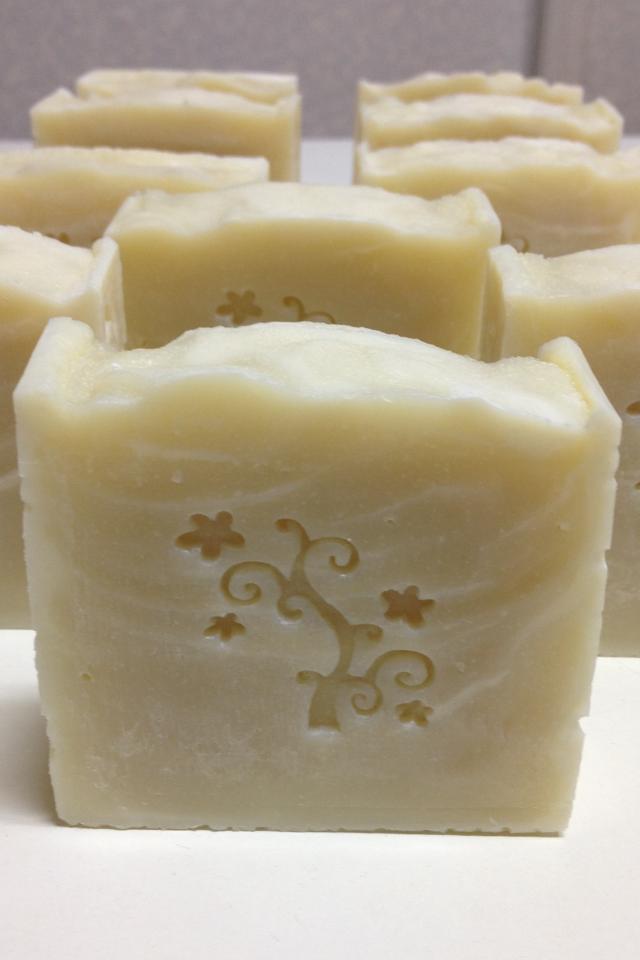
Mama's Binoo Soap

  • Less Packaging – Take your reusable bags when shopping markets or shops and pass on the plastic. Be thoughtful about any packaging, politely decline boxes and plastic containers if they can be avoided and aren’t necessary in keeping the product safe from damage. When wrapping gifts, use boxes from your recycling and newspaper as wrapping. You might even find companies that are consciously packaging.
  • Support Ethical Work – Seek out local or commercial companies that treat their labor fairly. Find a slow fashion producer, buy fair trade products, and look for companies who give back to both their employes and the land and oceans, like Teva who runs a project called A PAIR FOR A FOOT, for every pair of shoes it sells the company commits to cleaning a linear foot of shoreline.

Have fun shopping ethically, and share your finds with friends and family to encourage them to do the same. We have power as consumers to support fair, ethical, and environmental practices. What ethical goodies have you found near you?


*Here are two events happening in Busan where you can purchase ethical gifts:

  • Holiday Trunk Show, Nov 22 4PM (Slow Fashion)
  • BIWA Christmas Charity Bazaar, Dec 5 10AM-4PM

12190980_970856362976254_474606765961813179_n

Hygge Yoga

Hygge (hooga) is popping up everywhere this winter season, but if you’re looking at that mashup of consonants with a furrowed brow let me explain it a bit. The word is Danish and expresses an idea of warm & cozy during the winter months. Take a moment, close your eyes, and think of what makes you feel warm & cozy on a dark, cold winter night. Candles? Christmas lights? Hot chocolate? Reading in sweatpants under a blanket? That’s hygge.

As someone who generally dislikes winter and would much rather be on a hot beach than on the slopes I received the idea of hygge with big open arms. I’m comfortable self diagnosing that I suffer slightly from SAD – seasonally affective disorder, or in my case – being grumpy and mopey in the winter.  So when I recently learned of the idea of hygge, I embraced it completely and began to prominently incorporate it into my yoga classes.

Here’s how to have a fantastically hygge yoga:

  • small talk – It can be common to go to a yoga class as a student and not speak with anyone the majority of the time that you’re there. A major part of warding off the winter blues is to create a sense of community, so make an effort to talk with some fellow students or the teacher. Learn people’s names and small talk for a while. Chances are you’ll be seeing the same people at the next class, so there’s potential for building a friendship. If you primarily have a home practice, invite a friend over to practice with you and have some tea afterwards.
  • blanket bundle – Starting class seated cross-legged or in Sukasana is the general way I do things. From here I chat with students, give my intention, and bring them into their breath. To have a hygge experience, suggest to students that they wrap a blanket around their shoulders. Dim the lights or have only soft lighting on for an added touch.
  • vinyasa flow – Yin or restorative yoga might come to mind when thinking about a winter yoga class, and they have their own place, but to feel heated and warm from the inside out, it’s important to flow. Warming up and continuing to vinyasa flow will keep your muscles warm and open and allow you to go to your deepest edge in your practice. The body heat of the class will warm the room up and have everyone feeling hygge in no time.

Flow

  • slow it down – During the cool down of your practice light candles or dim the lights. If you like to practice with music, make sure that your playlist includes some mellow, sleepier tunes to put on during cool down and Savasana. Be careful if practicing alone, opt for Christmas lights over a candle if there’s a chance you might accidentally fall asleep.

If in Busan, come to my yoga classes to delight in the experience of hygge yoga! Class information can be found in the events section of the Busan Yoga & Meditation page.

Hosting a Plastic Free Event (and Why I Did It)

This post is about my first experience hosting a plastic free event. I did not do this alone, the organizers of the Busan Veggie Fest were amazingly proactive with my initial idea to go plastic free for their event, and did a lot of work. Initially I thought this would be a simple, short bulleted post  comparable with, but not as bad, as Buzzfeed, but it was impossible. I had to include the reasons why to host a plastic free event, because it’s not just something to do for fun. There is substance and ethics behind it. You have two options as a reader, you can jump to the bullet points and read the How-To’s, or you can read the post in it’s entirety.


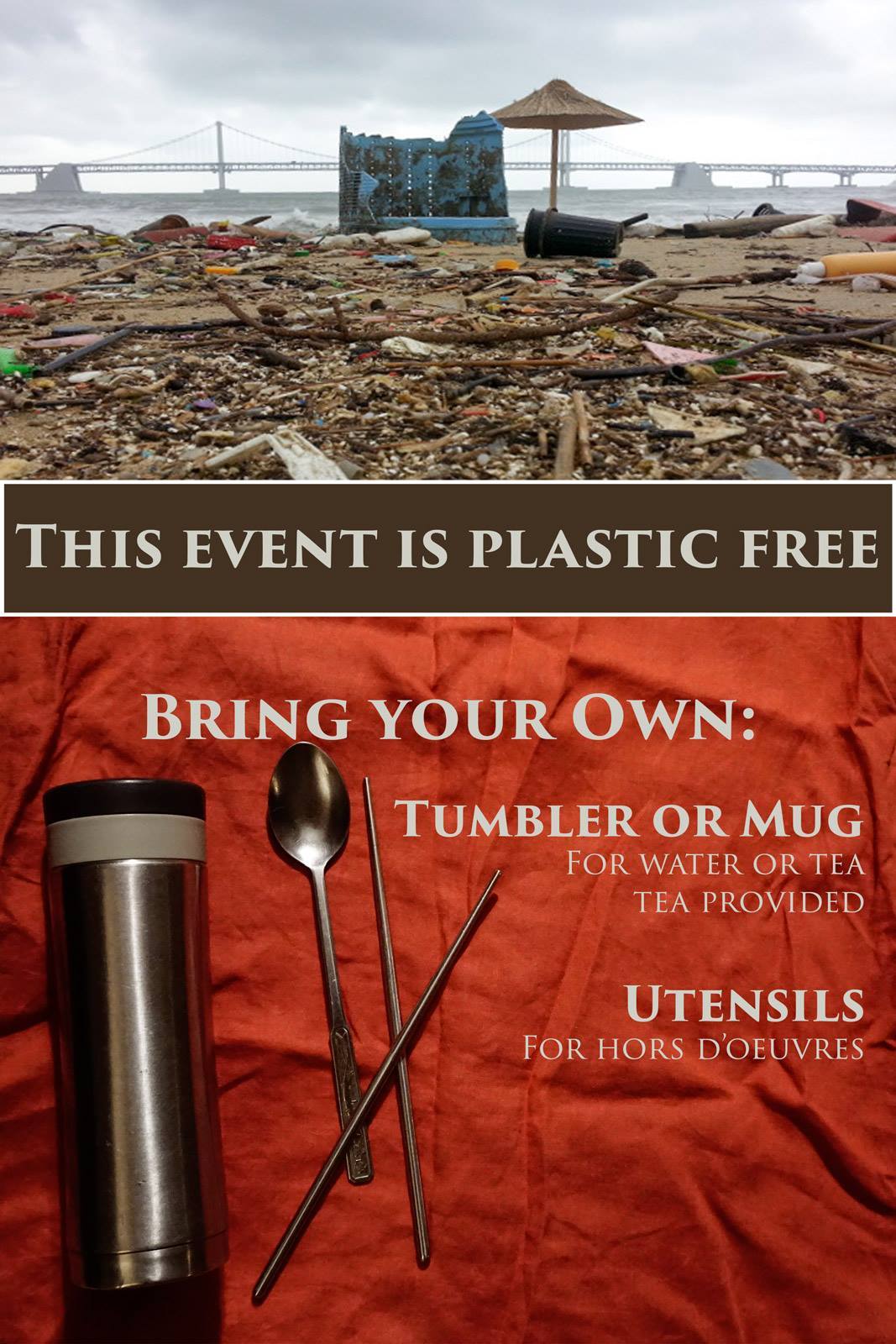
Single-use plastic is everywhere. When I comb the beach for litter, I mostly collect cellophane wrappers, candy wrappers from individually wrapped candies, coffee cups (paper and plastic,) water bottles or other beverage containers, and straws.

That plastic that either comes in with the tide or goes back out with it, or is haphazardly dropped by a hand,  will be floating around the ocean for quite some time as it slowly photo-degrades, seeping out chemicals as it does so. An equally depressing result is that it will be consumed by marine life that mistakes the small, broken down plastic for food. If you’re no animal lover and could care less about flounder being discovered with plastic stomachs, then at least consider this – that plastic consumed by fish, will make its way through the food cycle straight onto your plate. Plastic is even being found in table salt. You can do your part by planning Plastic free Event and sharing why you did it.

Generally people planning parties find it more convenient to buy a box of plastic forks, some colorful paper plates, and those ubiquitous red cups for their guests to eat and drink from. I agree, it is easier to toss a box of plastic forks into the cart with ingredients for your food, but is it wise? Those forks might not make it to the recycling bin and instead go straight into the trash where they’ll take hundreds of years to go away. That fork that assisted food from your plate to your mouth for twenty minutes will take hundreds of years to go away. And recycling is nice and green, but it still uses a lot of energy to transport, process, and reproduce when the alternative would be to wash some forks in the sink.

That fork that assisted food from your plate to your mouth for twenty minutes will take hundreds of years to go away.

Ditch the straws and plastic forks and opt instead for what’s in your kitchen drawer. Here are some tips for planning a plastic free event.

  • PROMOTE – As you promote your event let everyone know that no single use plastics will be used, so they must B.Y.O.E., Bring Your Own Everything. Include this information in your invitations if you go old school with paper invites, or write a prominent description in the events page if you use social media.

PlasticFreeEvent

  • EXPLAIN – Although it wasn’t that long ago that plastics were nonexistent, the majority of the population has gotten used to the convenience of using plastic. It might seem odd to some guests to pour holiday punch into a coffee mug that they carted with them as opposed to filling up a red dixie cup, so be sure to let them know why you are making them do so. Once people learn or are reminded of the dangers of plastic pollution in the oceans, they will hopefully jump on board for your party (and carry the habit into their daily lives.)
Above: An informative display on the afterlife of plastic if disposed of improperly. The numbers are the estimated years it takes for such items to decompose. Photos are of a local beach, covered in PLASTIC LITTER FROM A TROPICAL STORM.
  • RECRUIT HELP – Ask like-minded friends to help you get the word out. My first attempt at a plastic free event would not have been possible without the help of the organizers of the Busan Veggie Fest. They let the providers of food know and even provided plates and supplemental utensils.
The amazing hosts of the Busan Veggie Fest did a beyond expected job of making the event plastic free.

The amazing hosts of the Busan Veggie Fest did a beyond expected job of making the event plastic free.

  • CONSIDER OPTIONS – If you have a kitchen with enough utensils, cups, and plates for all of your guests, then of course you would provide everything instead of asking your guests to B.Y.O.E. If you’re hosting a big event and do not have enough to go around, then do both: encourage guests to bring their own, but also bring extras for those that are uninformed or lack the materials.
  • BE KIND – It’s not us vs. them when it comes to environmentalism, it’s educating those who simply are unaware of the extremely negative impacts of single use plastics. Before public awareness and mass drives of knowledge, people used to smoke cigarettes without a care in the world, but once the science came out actions and laws changed. I’m saddened almost daily by the damage that human beings are causing the land, but I try to remain hopeful at the same time. If someone comes to your event with a fresh bottled water in their bag, don’t scorn them or even double take. In order to get your point across to everyone give a small talk about why you chose to make your event plastic free, and/or create an informative display or poster, hopefully inspiring the water bottle holders to go to their local thrift store and look for a tumbler.

Best of luck in all of the planning of your next event. It’s not impossible to host an event plastic free. On a smaller scale, say a family event, it might be what you’re doing already, I hope that this post inspires you to expand that to bigger community events. The Busan Veggie Fest had around 30 guests and not a single plastic utensil or bottle was provided for them.

How have your plastic free events gone?

The Yoga Tree, Chiang Mai – Review

Introducing guest blogger, Amy Steele for http://www.karabemisyoga.com, welcome Amy!

Hidden in an industrial area of Chiang Mai’s old city, at the end of what appears to be a deserted alley, sits The Yoga Tree, a shaded oasis of a chilled-out yoga retreat.

In September, in the middle of a trip to Thailand that brought me over from South Korea and my mom from Alaska, we dropped into The Yoga Tree for a 90-minute yoga foundations class with Gernot Huber. These particular classes explore a common theme every week – with classes currently held Monday, Wednesday and Friday – each one building on the next.

The Wednesday session we attended was a hands-on workshop-style class, with a focus on engaging the muscles between the shoulder blades and aligning the head and neck to improve posture. It was a small class of five people, which allowed each of us plenty of personal attention from Gernot.

Gernot taught a very hands-on class, giving adjustments to us through downward-facing dogs, planks, lizard poses and inversions. In each pose, he would gently push our back muscles into correct alignment, followed by helping us align the head and neck with the spine.

My mom and I agree: One of the most memorable poses was the partner exercise in L-shaped handstand, or half handstand. My mom received an adjustment from Gernot and was able to access the pose carefully, yet confidently, knowing the support was there.

I talked to my mom about the experience after returning from our Thailand trip. “The overall impression is a lasting one,” she said. “Several times a day since the class, I am checking my back and pulling in the muscles to bring my neck and back into alignment. I appreciated [Gernot’s] hands-on approach and his gentle pointers.”

My Mom & I in Thailand

How to get there

The Yoga Tree is a bit difficult to find if you’re not familiar with Chiang Mai. Trust me; we went up and down the west side of the old city several times until we finally asked a local how to get there. Don’t be like us; find detailed directions, in English and Thai, at their website, here.

Address: 65/1 Arak Road, Prasing, Muang, Chiang Mai 50200, Thailand

Screen shot The Yoga Tree Map

Additional information

The studio is well-equipped with mats and props, including bolsters and blankets, which were essential for my mom’s titanium knees. Water bottle refills are available at the smoothie bar outside.

A regular 90-minute drop-in class at The Yoga Tree is 250 THB, or about 7 USD. Passes are also available. View The Yoga Tree’s class schedule here.

In addition to teaching at The Yoga Tree, Gernot teaches at Wild Rose Yoga Studio and offers private classes at his studio in Chiang Mai, Yoga Mind Yoga Body.


Amy SteeleAmy Steele has been teaching English in South Korea since 2013. On the side, she volunteers as a copyeditor and occasionally writes for a local expat magazine. She hopes 2016 will bring her the good fortune of continuing her yoga practice across Southeast Asia.

Yoga Warm Up for Bouldering & Climbing

Bouldering is a challenging activity. It requires openness, strength, and concentration. Bouldering differs from climbing in that no ropes or harnesses are required, and because of that climbers often do more horizontal than vertical courses (uh-hem, especially if they have a fear of heights.) Yoga is a perfect complement to bouldering and climbing as it opens the joints, stretches out the muscles, builds strength, and calms the mind.

Here are some yoga poses to incorporate into your next bouldering or climbing session.

Warm Up Simple Sun Salutations will get those hamstrings and glutes warm. If you’re not familiar with Sun Salutations then do your own little warm up, if you’re ready to get on the wall quickly, then be mindful not to go beyond your limit in these warm up stretches.

SHOULDERS You want to be sure to warm up your shoulders before a shoulder intense activity like bouldering, this is especially true if you have tight or previously injured shoulders (I’m looking at you, dislocators!) While doing Sun Salutes, focus on drawing your shoulder blades down and in towards each other as you raise your hands overhead. Here are more shoulder openers:

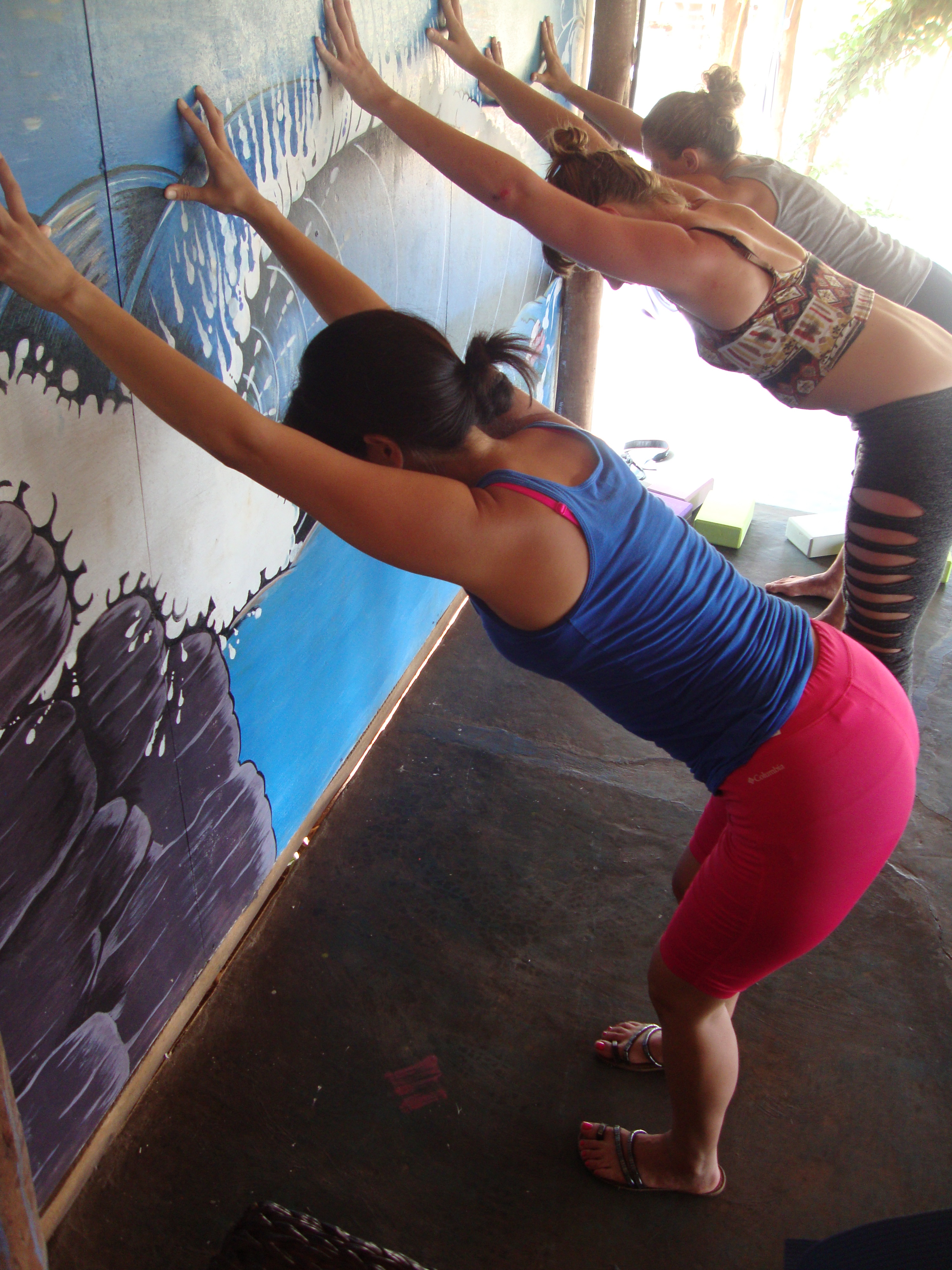
  • Down Dog at the Wall With feet hip-distance and a slight bend in your knees, raise your arms overhead and place the palms flat on the wall. As you exhale, sit back like your going to sit into a chair, but don’t go so far that your hands come off the wall – keep contact. Go until your hamstrings say to stop and focus on pulling your shoulder blades down and in towards the middle of the back. Hold and breathe for five breaths or longer before inhaling up.
Downdog at the wall

Downdog at the wall

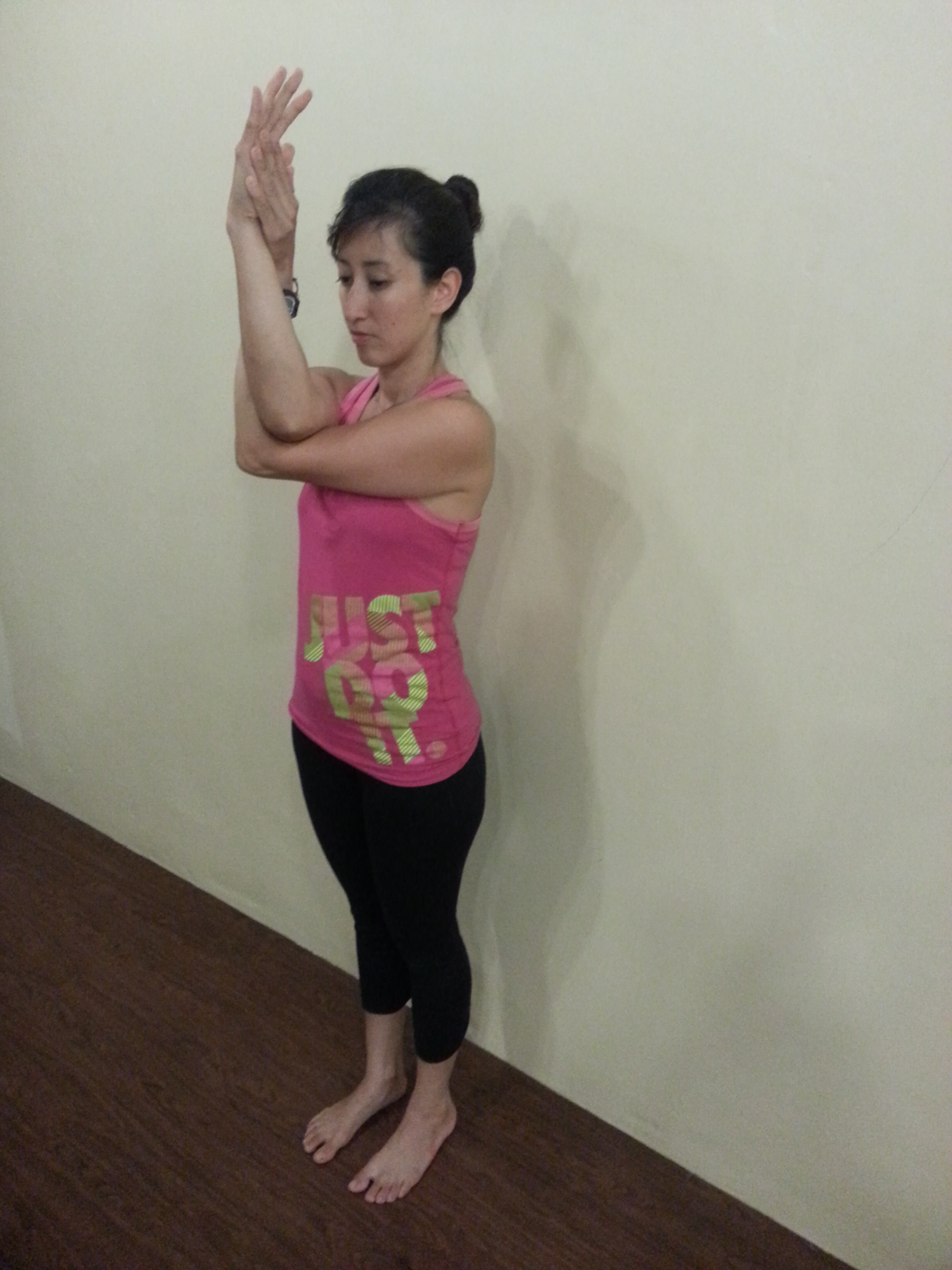
  • Garudasana/Eagle Arms  Start with the arms, bring them to a T, palms facing down. Exhale and cross the right arm over left. Bend at the elbows and touch either back of the hands or wrap until the palms touch. Hold and breathe deeply, release on an inhale and switch the arm that was on top.

Eagle Arms

  • Gomukasana Arms While standing with feet hip-distance, inhale the right arm next to the right ear, palm facing forwards, exhale and bend at the elbow so that the right palm slides down the back. The left arm stays by the left leg, bend at the left elbow, palm facing back behind you, and as much as you can bring the two hands to touch (use a towel or hold your t-shirt if need be.) Hold and breathe five breaths. Inhale release, and switch sides.

HIPS Often times while bouldering you will take a stance which requires really open inner-hips. The knee and toes will face away from the core as the front body is almost totally flush flat against the wall. The outer hips and glutes help push off from the legs to find the next hold. Warm up with these inner-hip openers:

  • Utthan Pristhasana/Lizard Pose Come to a low lunge with the front foot to the outside of both hands. Point the front foot and knee at a 45 degree angle, bend deep into the back hip, bringing it forward to get a stretch in the psoas. Hug the front knee in towards the front shoulder to get into the inner hip.To make the pose more intense, lower down onto your forearms, bent at the elbows. Hold for a few breaths and switch sides. To make the pose more intense, lower down onto your forearms, bent at the elbows.

Lizard

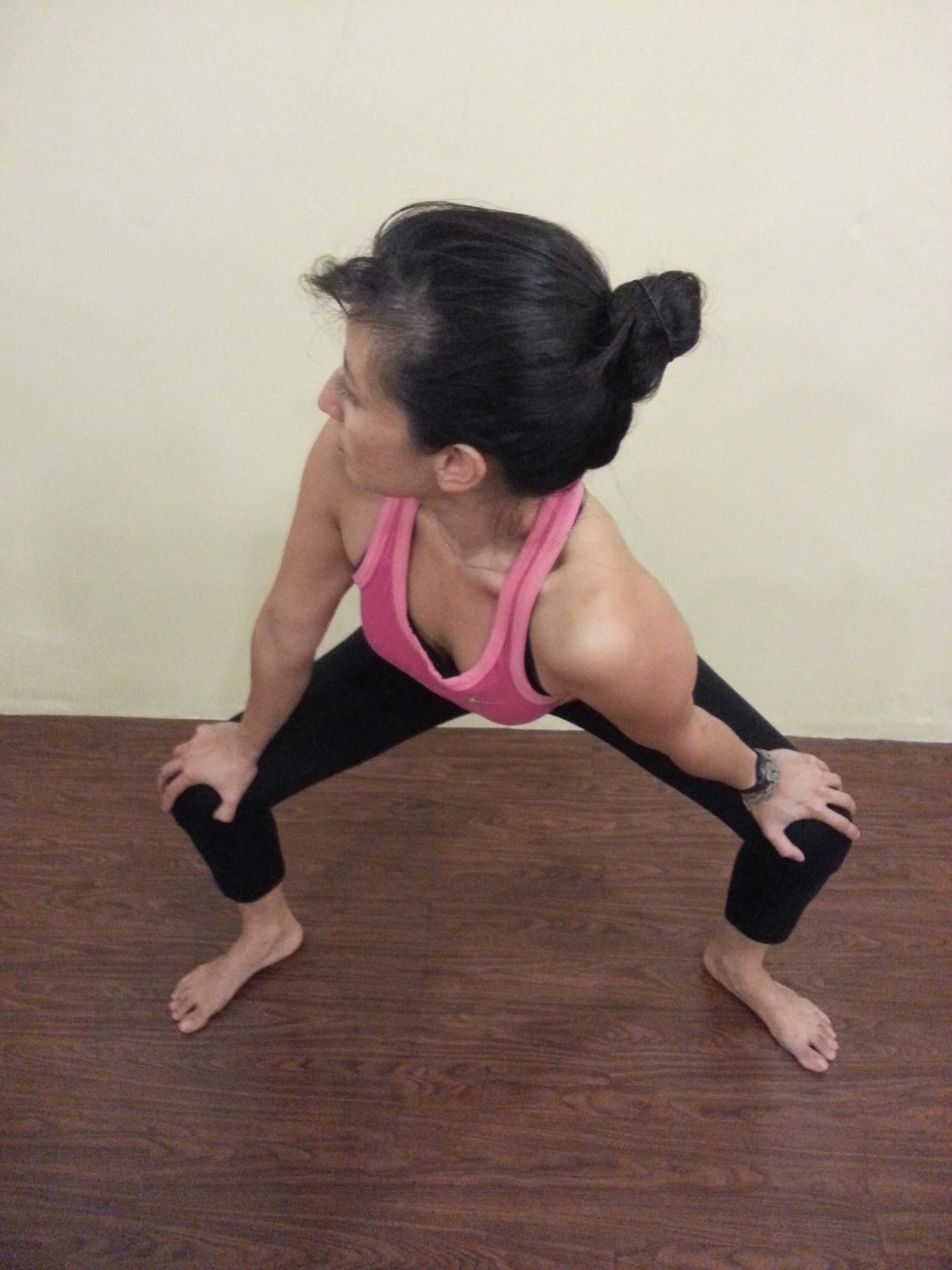
  • Utkata Konasna/Goddess Pose Stand with feet wider than hip-distance, knees and toes point out at a slight angle. Bend at the knees until you feel a good burn in your quads or glutes. Keep your torso upright, shoulders over hips, hold and breathe. Straighten knees and rest. Then go into again and place the hands on the top of the thighs. On an exhale, push into your right thigh with your right hand as you gently gaze over your left shoulder. Switch sides after holding five breaths. 

Goddess Pose

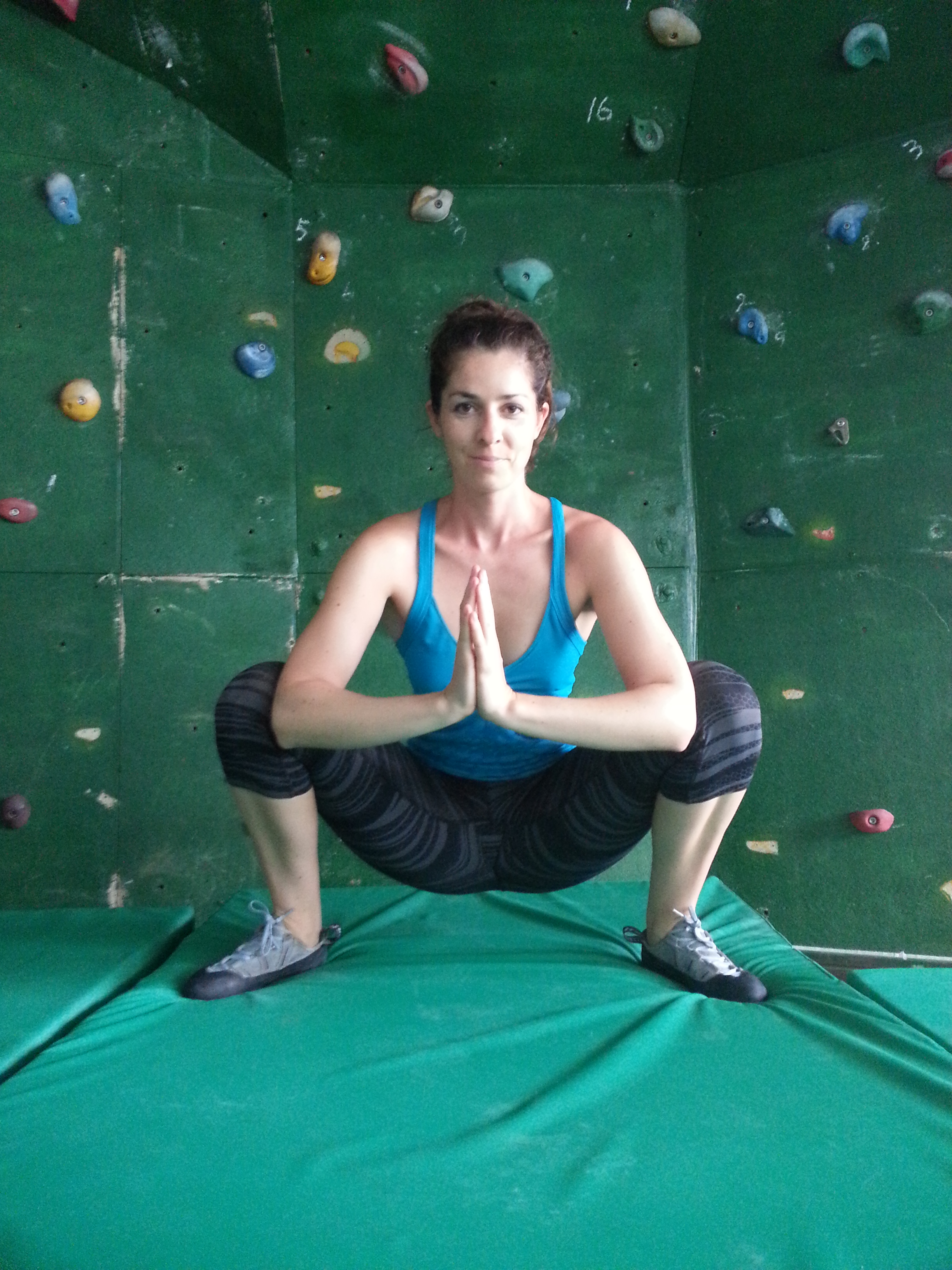
  • Malasana/Deep Squat Stay with your feet pointing out and knees following in the same direction just as you just did in goddess pose. Bend at the knees and allow your hips to sink towards the floor. If this isn’t possible for you, then lower only as low as is possible (meaning your bum might be in the air a bit.) Place your elbows inside your knees and press into them to open up the inner-hips. Palms come to prayer. Be aware of your spine and try to keep it erect as opposed to rounding. Stay and hold, straighten the legs to release.

Malasana

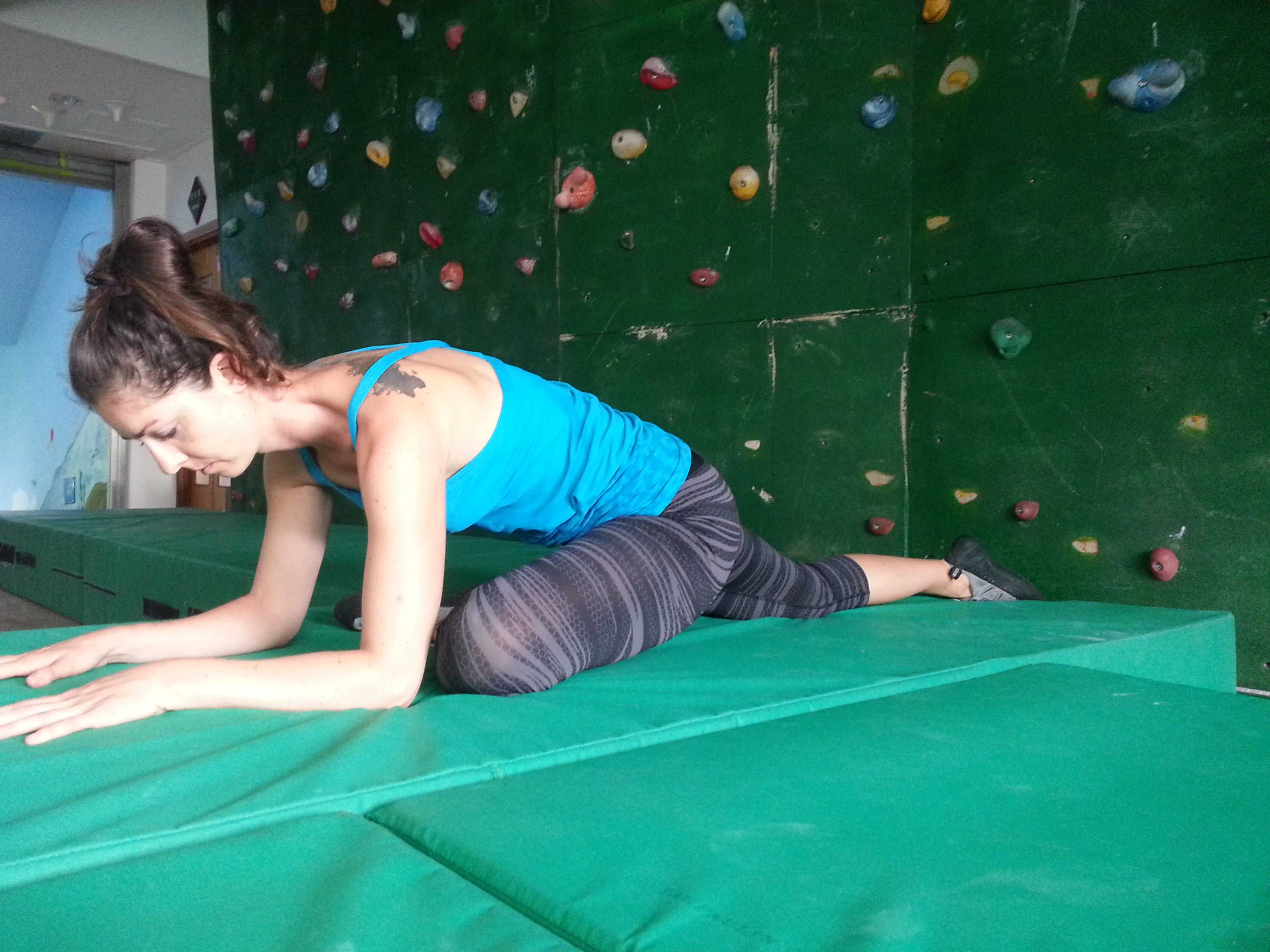
  • Kapotasona/Pigeon Prep Bring your right knee to your right wrist, right foot to left wrist. Left leg shoots straight back behind you on the floor. Stay upright with weight in your hands, or forward fold, being sure there is no pain in the right knee. Switch sides.

Pigeon

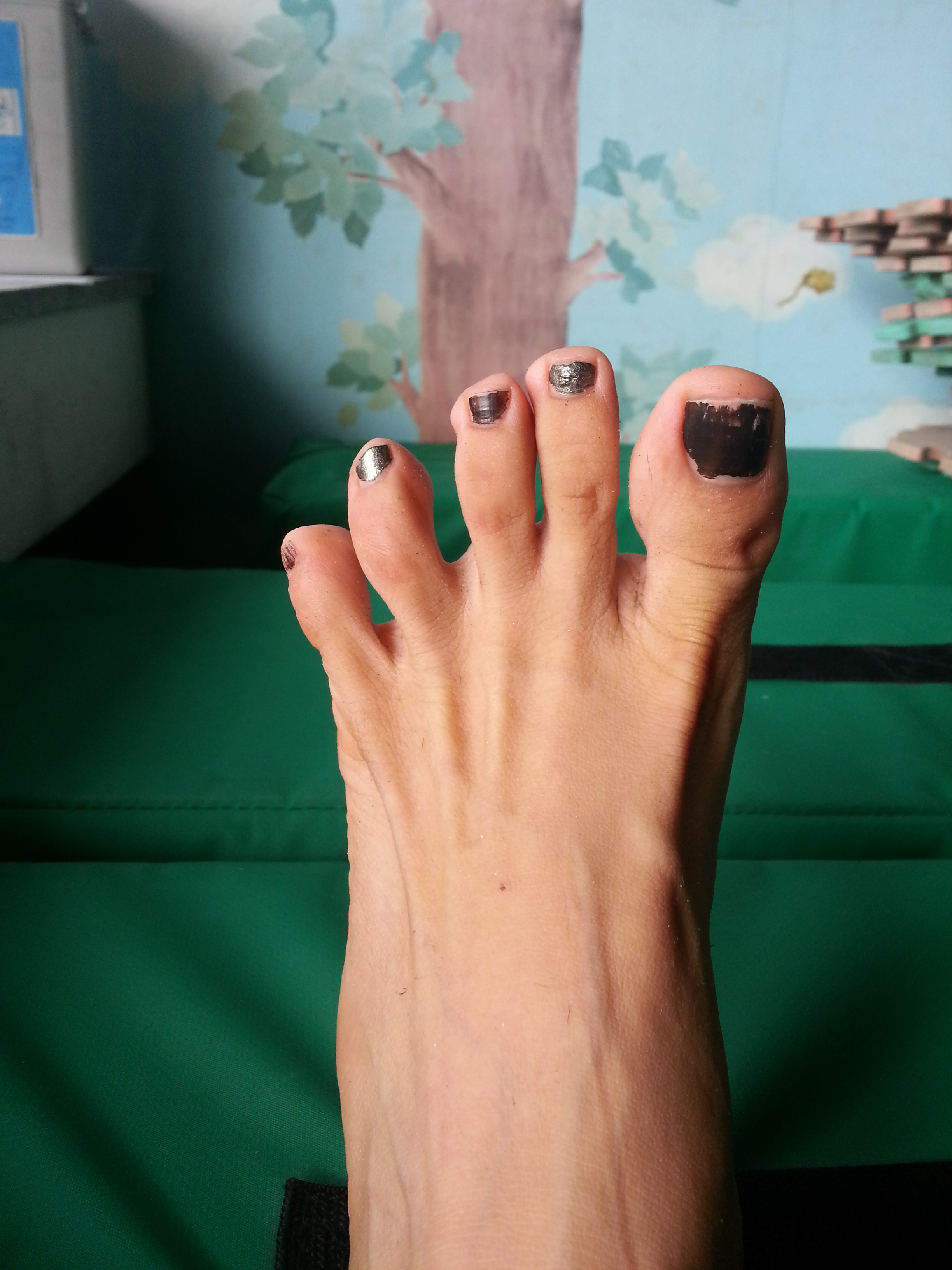
TOES Climbing shoes are small and sometimes pinch the toes together to enable more control in standing and pushing off of placements or juts of rock. Crimping toes together is very anti-yoga and doesn’t feel nice, so as soon as you pull your feet out of your climbing shoes I suggest giving the toes a big stretch. You can reach down and do this manually, sticking one of your fingers in between each toe and giving it a wiggle, or if you have the bodily awareness and control, you can simply find yogi toes.

Yogi Toes

Enjoy your climbing or boulder session with openness and awareness!

DIY Your Halloween Costume

Halloween’s coming up which means that stores are full of racks of cheap, synthetic costumes (possibly to be worn only once and then disposed of the day after the party.) Holidays have become so commercialized, being more about what can be sold than about the holiday itself. Consumerism creates a lot of waste, not only the costumes & decorations themselves but also all of the plastic packaging that they come in. So this year, consider doing a DIY costume: they’re cheaper, more ethical, friendlier to the earth, and are an outlet for creativity.

Don’t get me wrong, I love Halloween and have dressed up every single year. It’s fun to put on a costume and be someone else for a night, but sadly costumes are generally made of petroleum-based fabrics (think nylon, polyester, and acrylic) because they’re cheaper than natural fibers. After the parties they’re typically just tossed out in the trash, making their ways into landfills (being too poorly made to be handed down – simple stitching on those short-lived fabrics means they’re likely to fall apart before making it to a thrift store.)

Here are some tips for making a DIY Halloween costume.

  • Start early, finding the right things will take longer than just popping into a box store and pulling something off of the shelf. If you’re reading this on the day of your party, don’t panic, think outside of the box and you’re sure to pull something together (stuffing socks into black panty hose and pinning to a black skirt with eyeliner whiskers is an instant and easy cat!)
  • Scope your closet. All you need is one item to begin the creative process. Once you have a defining piece, try to match something else you have with it to build upon the look. If you can’t find it in your own closet then look in your friends’ and family members’; for example overalls and your boyfriends flannel morph into a farmer or scarecrow.diyhalloween
  • If all closets leave you empty handed, or you don’t want to risk staining your clothes with fake blood, then head to the thrift store.  Don’t feel stuck with the way the clothes are, cut them up or alter them if you have the skills.
  • When in doubt, Google search! You’ll find loads of images that you can get inspiration from and might even find a blog or Youtube tutorial to follow.
  • Turn your clothes into a costume by adding face paint or accessories.  Again, seek resources online.Screen shot 2015-10-18 at 6.39.43 PM

Here’s a little gallery of previous DIY costumes friends and I have done.

Have fun with Halloween and be safe! What successful DIY costumes have you come up with and how are you decreasing your impact on our Earth this Halloween?

Leave No Trace – Litter on Korean Mountains

Surrounding myself by nature is a wonderful luxury that I try to make part of my life as much as I can. Living smack in the middle of a city, it is not always easy to feel totally engulfed by the beauty of the natural world. Don’t get me wrong, Busan has great hiking and of course beaches, but often reminders of being in a city are there – noise pollution, light pollution, and straight up litter. Recently though, I was able to get out of Busan for a little trip up north over the Chuseok holiday to visit Seoraksan National Park.

Years back when I made my first trip to Seoraksan, a fellow American expat taught me about the idea of Leave No Trace, it’s as simple as it sounds, take with you whatever you brought up when you go, leaving no trace of your visit. This means clean up after yourself, that simple rule we learn in kindergarten. Don’t leave any wrappers, single use utensils, or even fruit peels (as they are more than likely tarnished with pesticides and are probably not native of the land so therefore might cause disruption to the ecosystem.) This is a rule that I strictly follow whenever I get up into the mountains (or parks, beach, etc.)

Admittedly though, I am not an avid hiker. When given the choice I much prefer to stay near sea level as opposed to climbing up a big ‘ol mountain, but once I have been dragged along on a hike I always love that I’ve done it. It feels rewarding and the views are fantastic.

Seoraksan

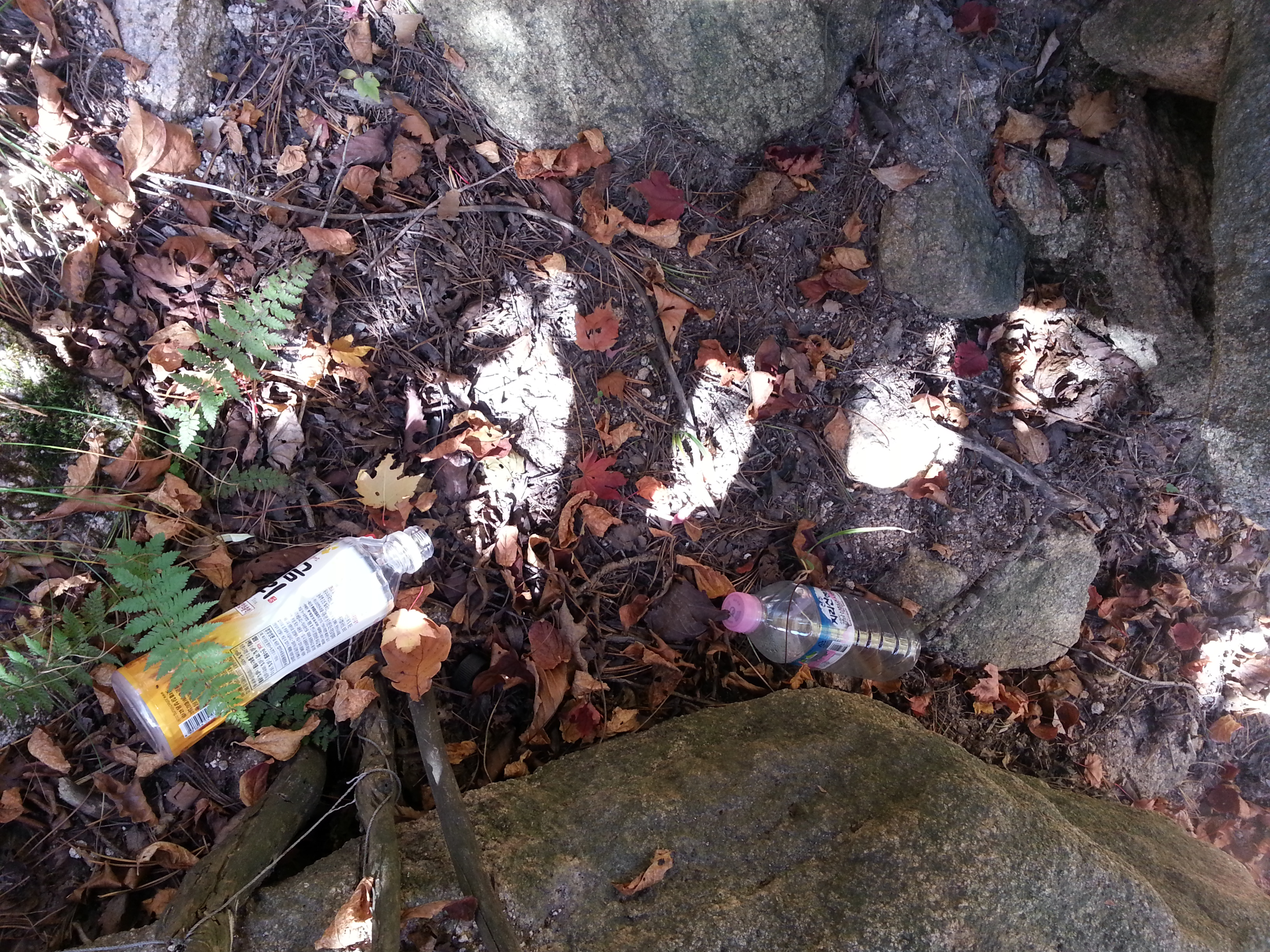
Unfortunately, not all of the views are beautiful. On my most recent hike I couldn’t help but be upset by all of the litter left behind by fellow hikers. Feeling affected, I collected as much of the litter as I could and stuff it in the side mesh pocket of my backpack, by the time I finished the hike the trash was spilling over the sides.

Water bottles were a common sight

Water bottles were a common sight

When I returned to my hotel I emptied it all out and arranged it to have a closer look. It seems that most of the trash was individually wrapped candies. (Candy wrappers are also one of the most frequently littered items on my local beach.) If only the sweet-toothed, nature “lovers” loved nature enough to leave no trace. Other items I took notice of were bits of gear that had apparently fallen off mid-hike, a reminder to buy quality when you shop so that you don’t have the problem of your backpack or footwear falling apart during use, and if it does, please take it with you and dispose of it properly.

It is so important to Leave No Trace; I can’t imagine how long all of this might have stayed on the gorgeous Seoraksan floor. Sure, there are probably teams that go up and clean, but wouldn’t it be nice if everybody took their own responsibility and left places as beautiful as they found them, with no traces?

A few weeks ago I was fortunate enough to be part of another seasonal, community event. Our local Busan community really came together for the Autumn Equinox with organizers working together from the cycle, yoga, and food communities, all for the local foreign involved environmental group – BCA, Busan Climate Action.

An already active community member and activist, Sunny, has been organizing Critical Mass rides in Busan to bring awareness to cycle safety on the road. I know first hand how dangerous it is to cycle here as a commuting cyclist due to inconsistent cycle paths and drivers who don’t always accept or appreciate me being on “their road.” It’s true that Busan has great cycle paths along rivers and the coast, but the city is lacking in areas of the inner city and less touristy neighborhoods. Critical Mass brings together other concerned cyclists whom ride the streets of a certain route, as a big community, to feel safe from drivers and to make those drivers aware that they share the road (whether they like it or not) with bicycles. Critical Mass is held most third Sundays of the months, so it worked out perfectly to combine the yoga equinox event with the cycle ride.

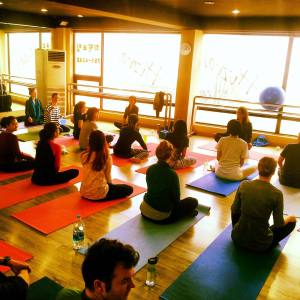
The route ended early in Gwangan so that I could lead an hour-long yoga class. Many regular students joined the cyclists and we practiced a root chakra class, to ground ourselves in the changing times of the seasons. After the yoga class there was some playtime of acro and then we made our way towards a rooftop restaurant for a vegan-family-style dinner.

Donations from the events went towards the upcoming BCA Film Festival. This is the second film festival held by the group and will be on November 6 & 7th at the Busan Community Media Center. The film festival aspires to make the community aware of the dangers of our changing climate, causes of global warming, and changes that can be made to decrease an individuals carbon footprint.

I had a wonderful time being apart of another seasonal event and look forward to participating  again in winter when that comes around. How have you been recognizing the changing of the seasons?

Autumn Equinox Event – Busan 2015

Today, September 23, 2015 is the Autumn Equinox. It marks one of two days of the year when the length of day and night are about equal. It also marks the end of summer and beginning of autumn here in the northern hemisphere.

With the theme of equality in mind, it is a good time to reflect on how to find more balance in your life. For our local Busan event which happened on Sunday the 20th, I taught a special root chakra class to find balance in the first chakra – muladhara chakra. I felt inspired by the colors of the changing leaves focusing on the color red.

Root chakra is the first chakra and is characterized by the element of earth, and represents security, its color is red. Living abroad as expats, it can be common to have feelings of uncertainty about the next step. Most of us here in Korea come on a short-one-year visa that is either extended or left behind for travel or settlement elsewhere. It’s figuring out which choice to make that can leave us feeling uncertain about the future, which can equate to an imbalance in the root chakra. No matter what your situation is, times of feeling ungrounded are sure to arise here and there.

Yoga poses to help ground you are poses that are quite simply near to the ground – seated postures. Muladhara chakra is located at the base of the pelvic floor, focusing on that area during your practice is helpful, as well as grounding through the feet in standing poses. Here are a few poses to practice if you feel you need to dig your roots in a bit deeper.

  • Sukhasana Start seated in a simple cross-legged position. Shift around until you find a comfortable position. If you have tight hips, then lift your sit bones up onto something to give yourself a little more height, such as a yoga block, blanket, or pillow. However, sitting directly on the floor will give you a better sense of grounding. Use your hands to feel heavier on the mat, with the thumbs inside and just below the hip bones, apply pressure with the palms to the top of the thigh to push yourself deeper into the mat. Close your eyes and breathe.

Sukhasana

  • Vrksasana Ok, so this one’s a standing balancing pose, but it makes total sense to do when focusing on the root chakra, I mean of course you have to do Tree Pose when balancing the root chakra! Stand firmly in your standing foot and raise your other foot with control to a comfortable position for you. Keep rooting through the standing foot as you allow your torso to lift, if it feels good, lift your arms towards the sky.
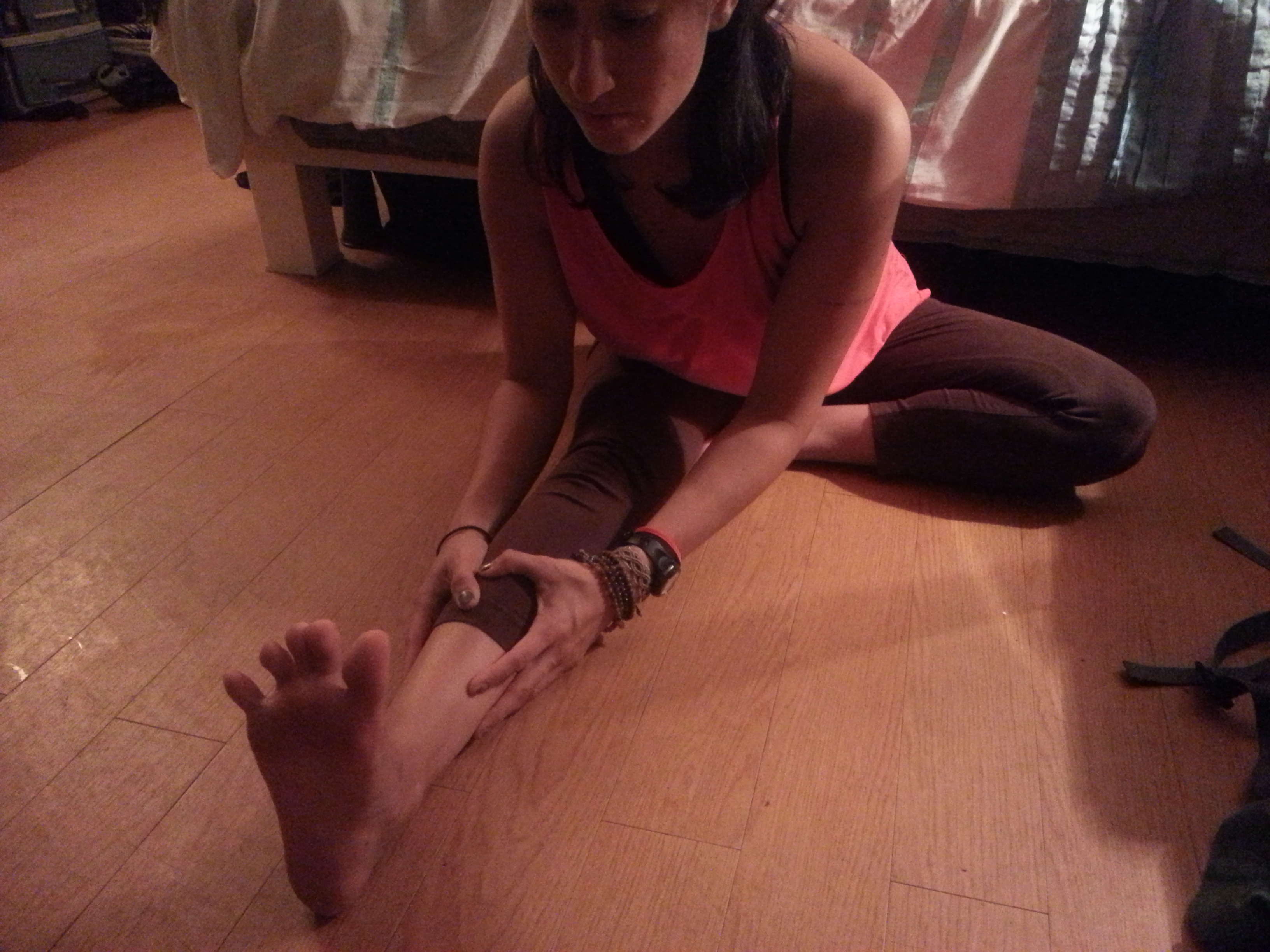
  • Janu Sirsasana After performing a standing sequence to warm up, or a few sun salutations, bring yourself back to the floor for more seated postures. Just as the temperature drops with the season change, so too might your yoga practice, moving from more of a yang to a yin. Sit on the mat with both legs extended long in front of you, draw your right foot into the left inner thigh and let the right knee fall over to the right. Use your finger tips to lift your chest, then on an exhale begin to fold over your extended left leg. Place your hands where you can reach (it is totally not necessary to hold the foot) and breathe as you let the head relax. Come up on an inhale and perform on the second side for balance.

Janusirsasana

  • Upavisthakonasana From the last pose, splay your legs wide out in front of you. Flex through your heels to keep your leg muscles engaged. Be sure that the toes and knees always point up to the sky together. If your hamstrings are tight, you might find relief by placing two small, rolled towels or blankets under each knee. Again, find length through the torso by lifting into your fingertips behind you. Stay there, while feeling completely supported and grounded in the mat, or begin to fold forward. Stay on the hands, go to the forearms, or release onto your belly. Stay and breathe. Come up slowly on an inhalation when ready.

Seated wide leg forward fold

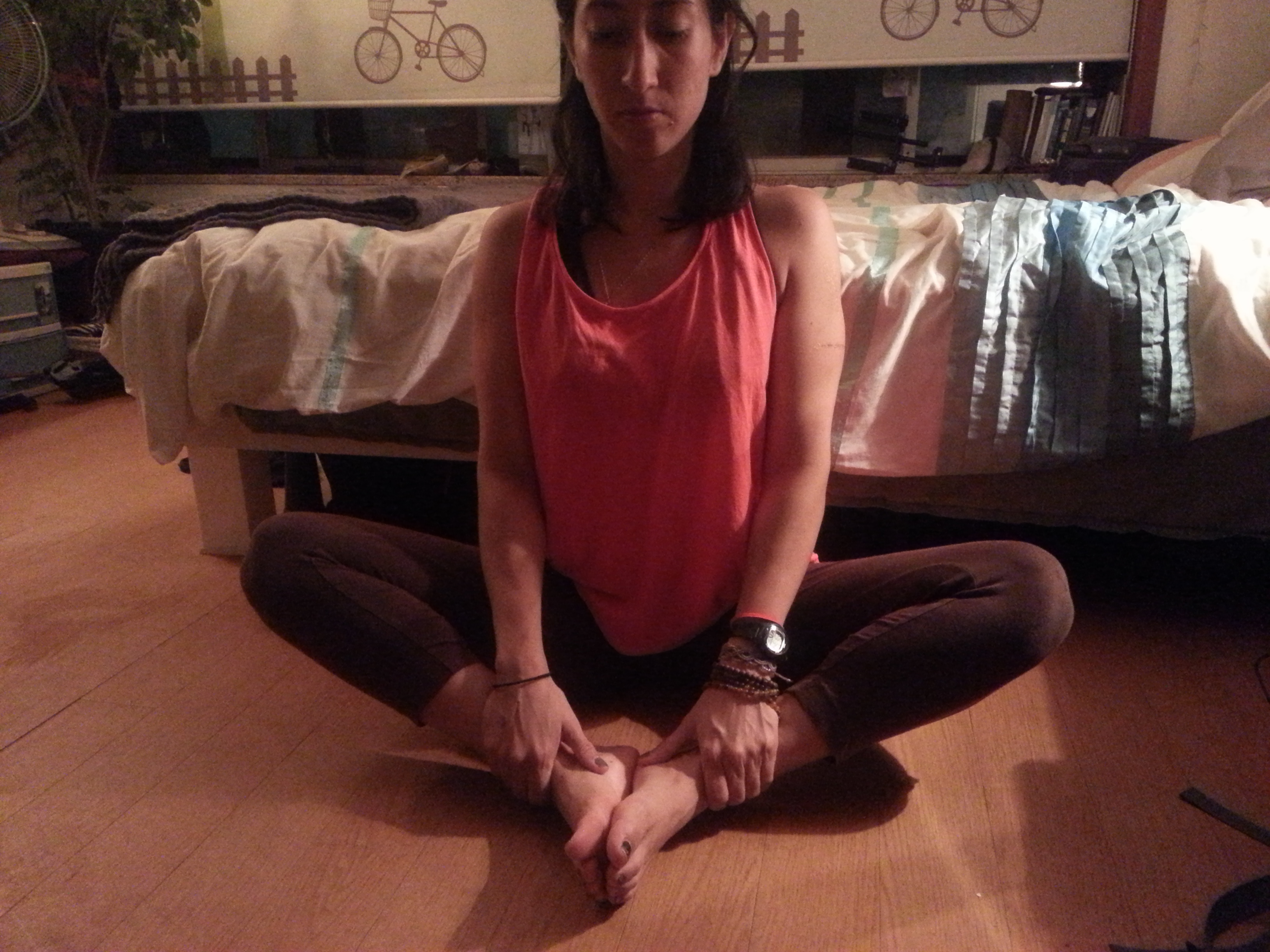
  • Baddha Konasana From the wide leg fold, pull the soles of your feet together for bound angle pose. Let your knees fall apart. With your feet away from you in a diamond shape (tight hips) or heels drawn in close to the body (open hips,) find your open chest and stay or fold. Breathe into the pose focusing on the pelvic floor.

Bound angle pose

My final thought on the root chakra is to get into nature. The element of earth is associated with the root chakra, so spending more time in nature can help you rebalance. After your yoga practice you might choose to take a short meditation focusing on the color red, a strong tree rooted securely in the ground, or with eyes closed envision a glowing red sunset or the changing colored leaves, as I asked my students to do in Savasana at the recent Autumn Equinox Event.

Warm colors of sunset

Root Chakra and the Autumnal Equinox