Hosting Karma Yoga Classes

A karma yoga class is a class in which the payments are donated to a charity. As a teacher, they are very easy to  host and you do your part by donating the money, but also by teaching others about a charity or non-profit that has a lot of meaning to you (not to mention by giving everyone a well deserved yoga class!) Donations Only classes can be taught regularly or during special holidays or vacation times.I find that hosting karma yoga classes during holidays gives them just a little extra meaning; for example, I recently taught a class on Valentines Day, a great day to spread some love around. Here are some tips in hosting a karma yoga class.


Venue: 
Holding a donation based class outside at the beach or at a park is great, Beach Yogabecause no money gets lost to rent payments. When I first moved to Busan I hosted early morning beach yoga classes on the boardwalk and gave payments to my local non-profit of choice. Not much was raised, because not too many people are early risers, but every little bit counts!

Cost: Choose a minimum donation cost that is required, $5.00 is a good place to starDonationst. When I create my events I describe the cost as Minimum Donation of xxx, this way people might consider donating more. When class is finished and everyone is making their payments, I remind them that I have change for them if they need it, but if not their extra money is greatly appreciated by the organization. Many students will be generous.

Choose an Organization: Find a cause that means a lot to you personally and that you are knowledgeable enough about to tell others about in detail. At the beginning of the class, explain your organization of choice, where and how the money will be used, and other ways that people can help. Below is a description of the non-profit that I have been donating to.

BAPS- Busan Abandoned Pet Sanctuary

Busan Abandoned Pet Sanctuary is a privately run dog shelter in Busan, South Korea. The dedicated couple that run the shelter have rescued, medicated, and rehomed hundreds of dogs since 2008. Dogs have been saved from off the street and from the local pound; these are dogs that would have otherwise not had much of a chance at survival. BAPS is a no-kill shelter, so dogs are cared for until they are hopefully adopted for life. Money from donations goes to dog food, shelter upkeep, medications, male neutering, operations, etc.

My personal attachment to this non-profit is my love and joy, Fred, who I adopted from BAPS in 2011 with my boyfriend. He’s come a long way from his skin-diseased-street-dog-days and now lives a life of comfort, spending most of his days sleeping, curled up on my bed. He also loves to join me at beach yoga class. He takes a nice little nap in the sun while others flow.

To learn more about BAPS, visit their website or search for them on Facebook. Donations can be made within Korea by bank transfer or internationally by using Paypal. Information on how to donate is easily found on their website. There are even weekly dog walking volunteer events if you’re missing your furry loved one from back home, those can be found via Facebook.

The Humble Tumbler

I’m assuming that tumbler is not just a Konglish word used over here in South Korea, but is also a term used in the wider world, but just in case that that isn’t the case, I’d better clarify. A tumbler is a mobile, reusable, totally sealed thermos for your coffee or tea. I was gifted mine back in 2010 and it still makes the daily rounds with me pretty much wherever I go. I prefer it to a water bottle because it holds both hot and cold, and it insulates. So my ice water on the beach in July is nice and chilly and my green tea in December fogs up my glasses on the subway. Here is some more info on this wonderfully useful device.

The fact that it has a vaccuum seal lid raises it far above it’s cousin the travel mug, and this is because it can be tossed in any bag and carted along without getting your precious belongings splattered or drenched in a sticky chai tea latte. Recently in the past year I have been biking to and from lessons more often than I used to, and I have had absolutely no hesitation throwing my full tumbler in my backpack. I can’t say that this would be the case if I had a lesser quality tumbler, so if you’re looking to purchase maybe read reviews.

It’s also cost efficient. If I compare the cost of a tumbler, which is about $20-$30, to buying a plastic bottle of water at a convenience store at about $1, it would of course take only 20-30 times to equal the cost of the tumbler. That’s only about one month of yoga classes, so in one month my tumbler has earned her keep. That time frame is decreased if I get a to-go coffee at a chain, as they usually give a discount if you ask them to put the coffee in your tumbler.

A minuscule sample (I didn't see anyone else drinking out of a mug or reusable tumbler besides myself in this busy cafe) of single use paper and plastic containers. A drink of choice was purchased and poured in, then said drink was drunk, and then they were tossed.

A minuscule sample (I didn’t see anyone else drinking out of a mug or reusable tumbler besides myself in this busy cafe) of single use paper and plastic containers. A drink of choice was purchased and poured in, then said drink was drunk, and then they were tossed.

Another reason why I prefer using a metal tumbler to using plastic water bottles is of course sustainability. I’m trying more and more to cut back on using single use, disposable items (think plastic forks, water bottles, straws, etc.) with the hopes of one day quitting use totally. Litter is an unfortunate, daily problem here in South Korea. I’m not going to try to explain this problem here, because I don’t want to judge the culture of the country that I have been calling my home for 3+ years, but I will say that I don’t condone the littering. Cafe culture is HUGE here, I live one block from a main tourist beach in Busan and there are innumerable cafes (ok, realistically about 50ish on a 1.4km/.87mi long beach) and the majority of patrons of those cafes get single use to-go cups. Employees don’t even ask preferrence, they just give the to go cup, plastic or paper, regardless of whether you’re about to stroll the beach or sit down and study for an hour. That’s a lot of waste each and every day; waste that is usually just littered on the beach or street since the city doesn’t provide many waste receptacles. There are recycling areas sporadically on the beach, but the cups and other waste items don’t always make it there.

streetlitter

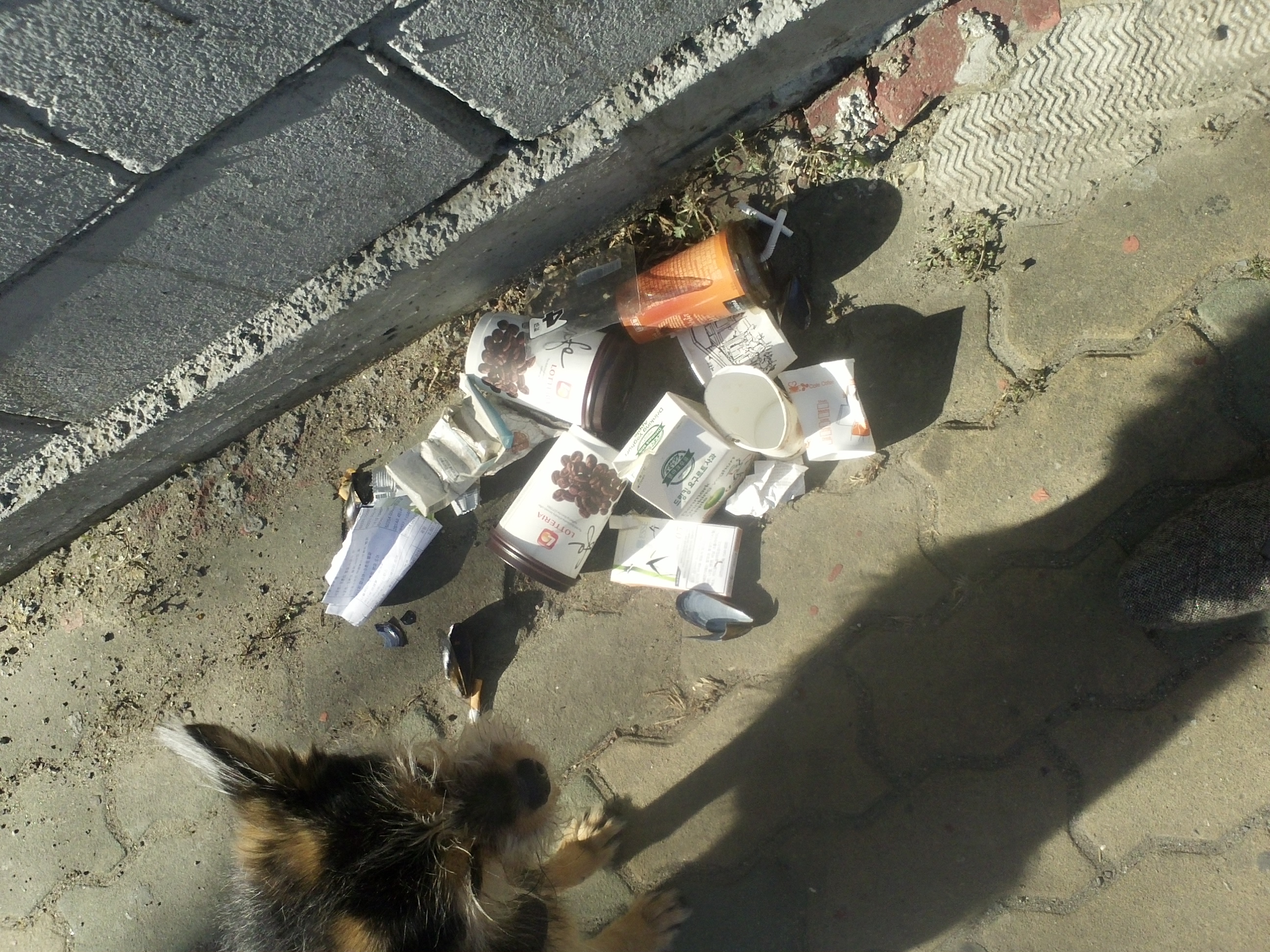
Fred disapproving of litter outside of our apartment building. There are at least five single use containers for hot liquid here. The coffee would have been drunk in minutes and then littered.

And if the cups do make their way to the recycle bins then all is fine and well, right? Well not totally, ok yes, they can be recycled, but recycling uses a lot of energy, so it’s better to reuse. That plastic bottle has to be taken to a processing plant (shipping fuel,) where it is sorted, cleaned (water/energy waste,) processed into pellets (more energy waste,) and then the pellets start their journey to be turned into more plastic bottles or plastic bags. But imagine if we just stopped using those plastic bottles/bags, then there’d be no demand for them. Instead we could use metal tumblers and cotton reusable bags. In the description I use the word waste purposefully because if we change our perception of plastic use to waste, then maybe we’ll stop using (wasting!!!) so much plastic.

The final reason why I’m antiplastic bottle is the negative effects of leaking chemicals into the food or drink that we consume, especially with a heated food or liquid. The research has been out on BPA (bisphenol A) for a while. I’ve heard and read some pretty scary stuff about the chemical which is used to make plastics more durable. You can read up on the stuff yourself here, and at breastcancer.org, and with this PDF, and lastly if you’re more of an auditory learner then this is a very informative interview with a scientist who wrote a book about testing her own breast milk for toxins.