5 Elements, Krakow, Poland – Studio Review

After leaving my course in India my daily self practice sadly dropped significantly, from at least twice a day to only here and there. Backpacking around Europe – getting lost in countries where I can’t even say hello – makes for a chaotic schedule in which my yoga practice has been shuffled around to whenever time can be made. Fortunately, however, while staying at an Airbnb in Krakow, Poland I found an English speaking yoga studio and went for a much needed yin class.

The studio that I found – 5 Elements, is not downtown, but is accessible by public transport (directions linked below) and in my case was a 20 minute walk from my Airbnb.

5 Elements is my kind of yoga studio. Here are the reasons why practicing at 5 Elements was worth the wait.

  • English – When traveling it’s not always easy to find an English speaking studio or class. The finding part is sometimes the most difficult. When I choose a studio in a new, foreign city, I choose it based on it’s website and whether the site is in both the native language and also in English. Obviously I can navigate the site much better if it’s in English as opposed to translating the entire site with google. An English website also implies that the class may be taught in English or some degree of English, a bonus for sure. 5 Elements had both an English website (well designed) and an entirely English taught class.


  • Yogic Philosophy – After a thorough read through of the website which included class descriptions, Ayurveda, and a mentioning of yoga and the ego (my kind of philosophy,) I knew that it was a good fit for me, not simply a “workout” place.


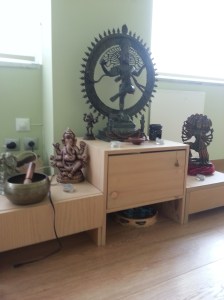
  • Atmospheric-  I like a studio to have soft lighting 20160427_192521.jpg(bonus points for candle lit studios,) Sanskrit and Hindi gods on the wall, pillows on comfy seats, and incense a-burnin’. 5 Elements ticked all of those boxes. There was even an incense burner located outside the main entrance of the studio – literally outside on the doorstep. It was a welcome, homey feel on a cold and rainy Wednesday night.
    • However! – The studio itself was pretty small and had very blue tinged lighting (LED I think) which isn’t great to practice a night time yin class in in my opinion, but it didn’t take away from a good practice, I’m just making note.


  • Props- If you’ve ever taken one of my studio classes at Kaizen, or maybe through reading other posts here, you probably noticed that I am a big supporter of props (pun intended.) During the yin class that I took at 5 Elements we used blocks, straps, and eye pillows – lovely! And necessary to find comfort in those long holds!

IMG_3213

How to Visit 5 Elements

Directions: Like my Airbnb, 5 Elements is not actually in the center of Krakow, but is in a residential suburb. Luckily it was walk-able for me (doubly so since I wasn’t so sure on how to even use public transportation in Krakow) but you can follow this link to get directions.

20160427_183006.jpg

Cost: Drop in classes are 35 Polish zloty, but for your first class there’s a special rate of 20 zloty (about $5.) 5 Elements offers an array of different packages that will suit any schedule. They can be found here, which also has the class schedule.

NOTE, Must Book Ahead: As mentioned, the studio practice space is small, which is great for an intimate class, but for this reason you must call ahead to book a spot. The phone numbers to call, both fore English, are listed in the link found directly above.
Kaizen Korea, Busan – Studio Review

There has been plenty of mention in my writings of my good friend and mentor, Mindy Sisco, who has been running the only English language yoga studio in Busan, South Korea since 2012. She works as a team together with co-owner/teacher, Simon Kang. During my two years in Busan I had the good fortune of learning from each of them, practicing an array of classes at Kaizen.

Whether you’ve recently moved to Busan as an English teacher or are visiting a friend for a short time, you should make time in your schedule to get to a yoga class at Kaizen, and here’s why.

NO SMOKE & MIRRORS 

Yoga has a tendency to get frilly-la-la/hippy-tastic, which is nothing bad (I’m sometimes found guilty of drifting into that lotus-flower field,) but don’t expect so at Kaizen. Their yoga classes jump right into the deep end of the physical practice and stay there through the end. There might be some om-ing to end class, but it’s yoga – it’s expected.

THE STUDIO

The same can be said for their studio, which is minimal in nature, but has all the props a prop-aholic like myself could want – blocks, straps, eye pillows, and more blocks. There are cubbies for you to keep your personal items and mats for borrow (ask which are public and which are private first, since some students store their mats there long-term.)

THE TEACHING – They Know Their Stuff!

Mindy & Simon have done their fair shares of trainings and there’s no sign of slowing down. Teaching yoga is what they do, and they are good at it.

12983453_10156683111315567_662446499601727085_oMindy teaches Ashtanga-Vinyasa classes that bring in elements that feel like physical training. It’s never the same old, same old sun salutation warm ups in her class – she switches it up to work different muscles and prep students for what’s to come. As a fellow teacher, I highly appreciate the design details that each class has and I truly learn from classes, instead of just being guided through poses. The sign of a good yoga teacher.

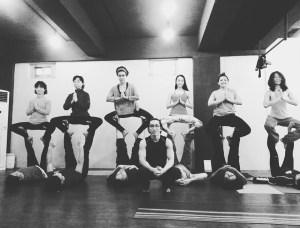
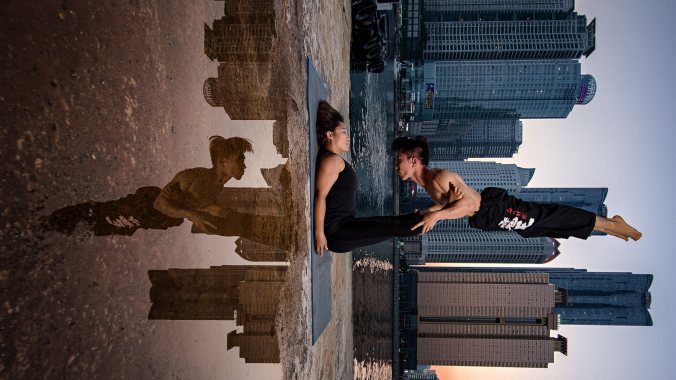
Her teaching style is creative and unique. Students leave having worked their muscles, often in partner exercises which are an extension of the playful and challenging acro yoga classes that Mindy also teaches. If you thought I couldn’t compliment Mindy’s yoga teachings anymore, then you were wrong because her acro classes are an equally fun way to learn more about yoga, yourself, and yourself through yoga. You can read more about my Kaizen acro experiences here and here, oh, and here (I told you I went to a lot of her classes.)

Simon, the other half of Kaizen, has a background in body weight training which comes through in his classes that push students physically, but most importantly safely. Simon’s other trainings (he also teaches jui-jitsu) aid him as a teacher of yoga and therefore benefit the students by giving them a well rounded practice from start to finish.

His Handstands Club class for example, is a four-week series that works on form, Simonalignment, and technique. Rather than just having students hop up into handstand against a wall, Simon works the areas of the body necessary in the advanced pose, and he works on them for the full four weeks. It’s a continuous series, and while the goal isn’t to perform handstand in four weeks, which is very unrealistic, he will get you pointed in the right direction to maybe one day to master the pose.
DIRECTIONS

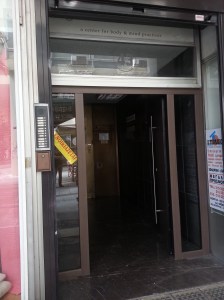
Take the green line of the subway (Line 2) to stop #212, KSU (short for Kyungsung University) or 경성대학교 in Hangul. Go out Exit 5 and walk straight. Take your first left directly in front of Artbox. Walk two and a half blocks until you see a boutique called Zebra on your left (on the right is a yellow cafe [of course – there are a gazillion cafes in Busan] called Compose Coffee.) Walk into the building entrance which is just left of Zebra, and take the elevator to the 6th floor. There is no sign for Kaizen in the elevator, look for Man to Man Fitness in Hangul on a red sign for the 6th floor, which is what the studio was called before Mindy and Simon took over.


COST

Since classes at Kaizen are designed and taught in four week series it is best to buy a month’s pass. You can buy a 4 class pass to cover a specific class, say Simon’s Handstand Club, or you can buy a bigger quantity, or you can get a one-month-unlimited-membership pass which covers all classes. Visit this page for details on pricing. Drop in classes are 20,000 won (roughly $18.)

mindy&simonacro

Mindy and Simon of Kaizen, Busan.


Disclaimer: The reason that I have not written my Kaizen studio review for so long is because I was a stand in substitute teacher at Kaizen when trainings and workshops took Mindy hopping around the globe. Teaching at Kaizen then became a regular class in my teaching schedule. I felt it unprofessional to review the studio while teaching there, so am writing the review after my Busan departure.


Bhavana Yoga Center, Athens, Greece – Review

My time in Athens is short, so I’m happy that I was able to find a  community class at a centrally located studio right in the hustle and bustle of the old city. Bhavana Yoga Center  is easy to get to (directions below) and hosts frequent classes throughout the week.

The class that I attended was a Saturday noon-time community class. You can find specifics about community classes, like who’s teaching and what style it is, and all other classes (they host an array of styles and list level specifics) on their website under Weekly Class Schedule.

Directions

Bhavana Yoga Center is located on a popular pedestrian street called Aeolou, which you’ll likely find yourself on as you explore Athens. It’s not far from the Acropolis and is home to lots of cute cafes and restaurants. There are also two Greek Orthodox churches on Aeolou Street which are good landmarks to use to find the yoga studio as it is situated between them, so if you pass both of them then you’ve gone too far.

The address is: 43 Aeolou St. & Kolokotroni                     20160402_141723.jpg
105 51, Athens – Greece


The Studio

Is beautiful. I couldn’t stop thinking how beautiful it was while I was having a look around before class began. Everything about it is warm and homey with sprinkles of humor thrown in (a handmade sign on the cork bulletin board read: “Warning: yoga causes health and happiness.”) The entrance way invites you to remove your shoes straight away and silence your phones. There’s a changing room for each of the sexes as well as bathrooms and showers. They have lockers which you can lock up if you bring your own lock. There are mats to borrow as well as props.

Be sure to arrive 15 minutes before your first class to fill out a student form and get changed. There’s a comfy lounge area with a couch and yoga books to browse if you arrive a bit too early. Directly in front of the check in desk is merchandise to buy like mats, straps, and teas. 20160402_141201.jpg

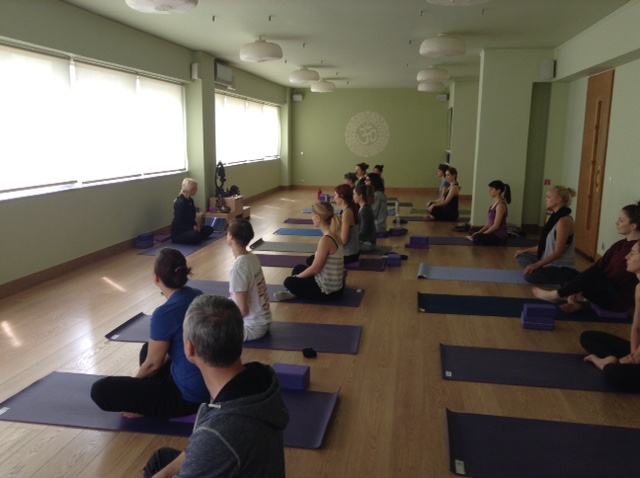
The yoga studio is long and open with windows all along the front. There are a lot of yogic relics like Hanuman and Shiva around that made me feel homesick for India and that add to that warm feeling. The community class I attended lasted an hour and 45 minutes. The teacher was a visiting teacher from Germany and the class was taught entirely in English, which is not always the case I was told afterwards. Classes are taught in the native Greek as well, but with some Sanskrit knowledge and peeking while in poses classes can be taken anywhere in any language. (Side note – the studio and their website were one of the most English friendly, and therefore tourist friendly, that I saw while searching for a studio in Athens.)

IMG_0449


Cost

The cost of Saturday community classes are 8€. If you try a mid-week class and it’s your first class at the studio, then the cost is also the same low 8€ with regular drop-ins costing 15€, not too bad for a European capital city.

More detailed information on pricing can be found via their website here.


Bhavana Yoga Center, in my opinion, is a must for a travelling yogi or yogini in Athens. All in all it was a great experience visiting the yoga center and I left ready to start my Saturday touring Athens with much needed energy and warmth.

Holi Cow, You’ve got some Pink on Your Face

A description of the color festival and four tips you should know

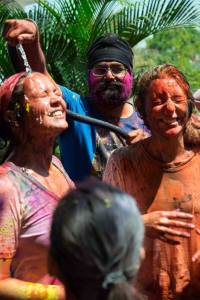
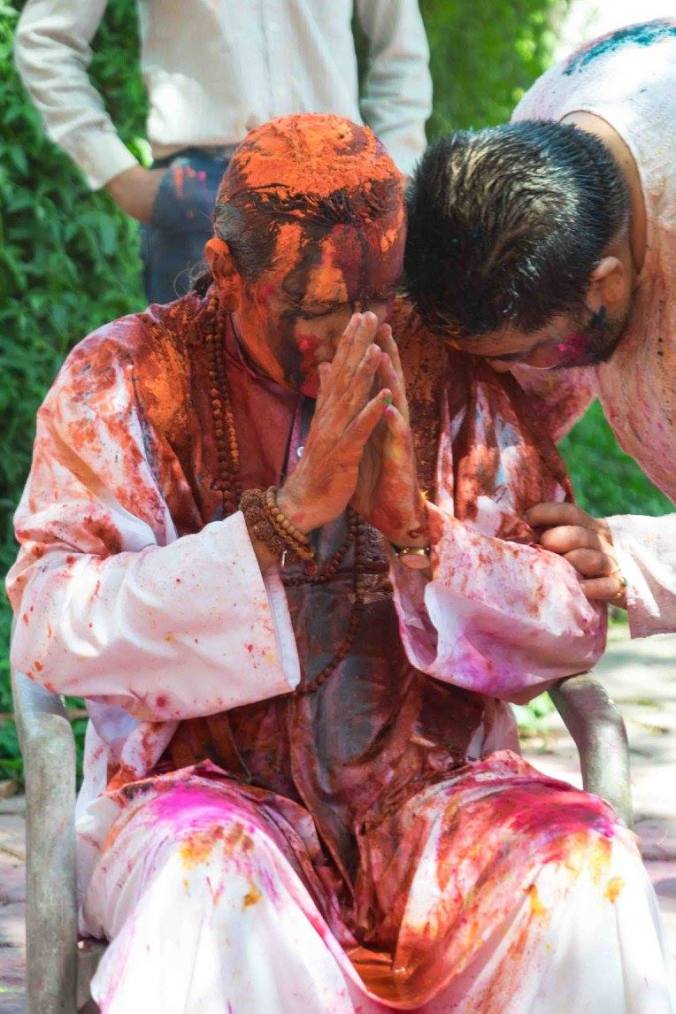
My month here in India is quickly (and sadly) winding down. It’s been an intense month of study, practice, and growth here at the Paramanond Ashram and Institute. Incredible India has been full of amazing food, wonderful people, and lots of color – powdered colors everywhere. Pinks, yellows, blues, and greens smeared on clothes and across skin during the exciting celebration of Holi. If you’re not familiar with what Holi is, then check out the new Coldplay song featuring Beyonce and it’s pretty much like that.

So what’s it all about? During a morning lecture the day of the festivities, Guruji, the primary instructor (guru) here at the ashram, told us about the meaning behind the throwing of colors. He put it in perspective of yoga and the chakras and explained that it’s a day to enjoy 100%, to let go and play like a child. There are definitely plenty of opportunities to do just that – powder, water, music, dancing! We also learned in our Ayuveda class that water and mud are thrown in the mix in order to cool down the intense vata that comes with the summer season, and it is hot here, so it makes sense.

12322694_10153292321640927_7285696917292266035_o

For our Holi celebration, yoga students and ashram attendees alike played just outside the doors of the ashram, only venturing onto the main street in the afternoon after most of the festivities had died down. It’s a bit of a shame that we didn’t immerse ourselves in the larger city celebration, but I’m in no way regretful, we had a blast. If you have the luck to celebrate Holi in India, then remember these four things

  1. WEAR WHITE – Obviously the color will show better on white than a dark surface. Make sure you have a white shirt that isn’t special to you, maybe that one that got splattered with turmeric tea, because that thing will never be white again (same can be said for your pants and underwear!) The colors keep coming and coming; it’s like a big human-tie die experiment.

12898189_10153292320960927_6229741255597557506_o

  1. OIL UP – This tip was given to us hours too late on the first day of celebration, but came in handy the next day (Holi is officially two days here in M.P. and some even got into the mood and bags of colors a day early.) Oiling up the skin, with say coconut oil, doesn’t allow the color to penetrate into your pores as easily, although there is bound to be some staining. Pink was the worst culprit, it’s been five days and at least as many showers and I’m still seeing people with red in their ears… maybe I should say something.


  1. DRINK WITH CAUTION – “Caution, this cup’s contents may be laced with CANNABIS!” should read the little disposable plastic cups (a whole different post – so much single use plastic!) on Holi because bhang is the offical drink of the color festival. What’s bhang you ask? Well, it’s a milky, sweet drink made with weed basically. You can read why it’s the official drink of Holi here, if you get passed a mysterious glass during the festival you’d be wise to ask about it’s contents. However, Holi at the ashram was without. It’s also good to keep in mind that other festival goers may be under the influence of bhang and/or alcohol, so mind your things and your person.


  1. PLAY 100% – Guruji explained that Holi was a time to forget about boundaries of age, religion, sex, or caste and to let go and play fully, 100%. It’s not as easy as it sounds, but once the first fingers leave a vibrant yellow streak on your cheek, you’ll join right in.


My first authentic Holi in India was perfect. I hope I’m able to celebrate it again at some point, somewhere. I hope that you get the opportunity as well, we need to play 100% now and again.


*EXTRA SPECIAL BONUS TIP/COMMON SENSE – Remember to close your eyes and mouth when you see someone coming with a palm full of pink. A necessary strategy for avoiding the ingestion of colors.


Photos courtesy and credited to Miko Photographie of Berlin.


Ashram Life

It’s been just about two weeks now that I have been living, as best to my ability, a yogic lifestyle in an ashram, here in Indore, India. The reason that I’m here is to advance my 20160314_090203studies of yoga, better my asana practice, learn about India and her beautiful people, and of course drink all the chai I can get my hands on (you gotta be fast, it runs out quickly!)
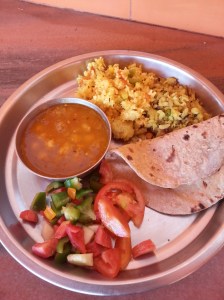
If you’re considering doing a YTTC or retreat at an ashram, here are some basic considerations of life at an ashram. My course is with Paramanand Yoga Institute, in Indore, Madhya Pradesh which is centrally located in the peninsula of India. Living a simple lifestyle won’t be for everyone, so do your research and contemplate if you’re up for life at an ashram before deciding to study one.


  • Yoga – It’s what I’m here for. In my advanced studies I’m learning a lot not just about the postures but about the other aspects of a yogic lifestyle, and it’s very much encouraged to go as deep as you can into it. That means trying to limit social media time, self practicing asana and meditation, and loads of personal reflection. If you go to an ashram to do a training be sure to look into the style of yoga that they practice and teach, as it’s very likely that it will differ greatly from the western, vinyasa flow/hot yoga that you’re used to. Go with an open mind and take as much as you can out of the variety of yoga styles that there are.


  • Vegetarianism – Ahimsa, or nonviolence, is a part of Yama, or self conduct, which is part of the Eight Fold Path of the Yoga Sutras by Patanjali, and this  might include vegetarianism in most ashrams. If you stay here in India, then you won’t even miss the meat, because the food is good. My friend forewarned that I’d probably even put on some pounds from all the ghee (purified butter) and sugary chai (both made from dairy, so let someone know if you’re vegan ahead of time) and she might be right.

20160314_131720


  • Karma Yoga – This is no hotel living. No one is going to clean your room for you or do your laundry, living in an ashram means doing things for yourself and taking joy and responsibility in your duty (dharma.) Not only will you be expected to care for your own space, but everyone is required to maintain the common areas. Personalized projects that cater to your interests are a possibility as well, i.e. – blogging!


  • Lectures – Whether  you do a yoga training, a short retreat, or a temple stay, remember that time spent in a new environment is time to learn and grow. At Paramanand Yoga Institute, there is a tightly packed schedule with classes on everything from Yogic Philosophy to Asana class.


  • Modesty – From attire to behavior there are rules here. 1. Shoulders must be covered, and only loose fitting pants (so leave your MPG at home.) 2. Opposite sex should not embrace/Don’t enter the rooms of the opposite sex. In a way you could almost think of an ashram as a monastery, essentially it’s religious, but before you wrinkle your nose too much, consider how a regulated day, diet, and schedule can be really good to push the reset button on your life. It’s also an integrated cultural experience that likely won’t be happening at a beach side resort.

Like everything outlined here, this may not be the case at the ashram that you find, but scour their website or send an email asking outright about style of yoga and behavior guidelines. If it sounds too intense, then look into a weekend visit or shorter trip than a month long training. Whatever length you choose, it’s beneficial to at least dip your toes into another area of yoga beyond asana.

Korea, I love You

An expat’s love note to the beautiful land of mountains, department stores, & kimchi

It seemed such a foreign land when I first stepped foot onto the peninsula of Korea (South of course, I better clarify that before going any further.) Way back in 2009, I took a 30+ hour journey that landed me wearily in the country that I would unknowingly call home for more than four years.

My first hours in Korea were exceptionally Korean. I was placed in a love motel for my few days of training and taken to a dinner that came out wriggling and squirming in the pot. However, after the click-click-click of the gas stove, it began to slowly lose it’s luster, changing from sea life to dinner. It’s been kimchi and seaweed ever since, and although it took some time to acquire the taste, acquired it I have.

From Ulsan to Busan, teaching students aged 2 to adults; I’ve traveled the country, learned to love my local neighborhoods, and have grown comfortable living life as an anonymous foreigner in an incredibly homogeneous country. The list could go on and on of the things that I love about this country, but I’ll reign it in and keep it to a short-ish list.

Healthcare!

It’s quick, it’s easy, it’s so AFFORDABLE. Everything from a visa required health check to an eye examination and glasses fitting are services readily available and advertised to foreigners. Many hospitals employ a full time translator who will help set up your appointments, discuss what you need, quote you a price, and go with you to translate during your visit. My best medical experiences:

  • 10 Minute Glasses – There are glasses shops on every street corner full to the brim with inexpensive frames. The exam takes minutes and is as high tech as Asia gets. My last two pairs of glasses took longer to chose than to have made. After I found my perfectly dorky pair, the assistant informed me to wait 10 minutes for my prescription lenses to get put in. TEN MINUTES! The cost? 30,000 won, or less than 30$ (*Disclaimer – not all optometrists will speak English, be brave, or shop around for a shop with a doctor who can communicate with you. Or use google translate on your phone.)

1927748_10156481695495567_4260413307540884913_n

  • Dentist Visits – Luckily my dental health and hygiene has been mostly A-OK, minus one unfortunate incident. Cleanings you can have done at most chi-gwuas(dentists,) but you should know that it’s different from cleanings back home. In Korea teeth cleanings are called “scaling.” It can be a scary experience if you’ve never had it done before. While it’s called scaling, it is more like “scraping” and it feels like a sharp metal object scraping along the gum line of your teeth. But it can’t be all that bad if it’s what the entire population receives for dental care and the whole frightening experience will only cost you about 10,000 won, or less than 10$ USD.


  • Blood Work – I’ve lived with anemia for my entire life and never thought much of it, but figured that while I have reliable, full coverage insurance, why not check it out. It’s good that I did because my iron levels were extremely low, so I got jabbed with two viles of iron, started taking pills, and adjusted my diet. I then made a few more appointments via the English translator to continue checking that my iron level was increasing with the pills. The appointments may have been superfluous, the translator and doctor even questioned why I was visiting again so soon after my last visit, and my reasoning quite simply was, why not? The entire experience of seeing the doctor and having a consultation via the translator, having my blood drawn, waiting for the results took about 2 hours and cost roughly 20,000 won, I’m sure you worked the exchange rate out already, but that’s about 20$ USD. Oh, and after the results were done there was another consultation with the internal medicine doctor. Let me repeat that – I had two personal visits with a specialists via a translator, and got blood work done in about 2 hours. Getting blood work back in the US can involve visiting a lab and waiting a couple of days for the results, Korean healthcare is miles beyond American.


Cost of Living

Korea is so livable. I lived in the second largest city, Busan, and was able to not only get by, but to save money. Granted, I’m generally a frugal person, but the cost of living in Korea is relatively low compared to back home in the US. Check it out:

  • Rent – I found an apartment that was a block from the second largest beach in the city, a 10 minute walk to the subway line that connects the whole of the city, and was surrounded by mostly cafes and some dotted restaurants. In Korea you pay key money, or a deposit on your apartment which you get back at the end of your stay. Key money can range from 1 million won to 10 or 15 million won, that’s about 1,000/10,000/15,000 USD. Monthly rent depends on your key money and ranges from 300,000 won to 600,000 won (300USD/600USD.) Oh, and I should mention that Korea has the fastest broadband internet in the world and connection/router/month of unlimited use costs about 20USD.


  • Food – Korean food is healthy and delicious. As mentioned about it requires some 19041_546881468487_8253510_nacquiring though unless you grew up eating fermented cabbage on the regs. You can buy fresh fruit and vegetables at local markets for cheap. Eating out at Korean restaurants is cheap as well and healthy. Western restaurants serving pizza and pasta will put you back much more and generally are disappointing.


  • Enjoy Your Life – You can truly enjoy your life because you don’t have to worry about how you’re going to pay your cheap rent. There are loads of things to do especially around Busan: yoga of course, hiking, cycling, camping, bars, noraebang, department stores, jimjilbang, and more. I sometimes can’t believe the lifestyle that I have just given up, but I’m hopeful that a similar life is possible to create elsewhere in the world, and if it isn’t then back to the Bu I shall go.

10622760_10102457944880699_4955680072870828057_n

  • Healthcare – *See Above

Safety & Convenience

Korea is sometimes known as the Land of the Morning Calm (possibly because everyone’s still at noraebang [karaoke] till 7am) but should really be called the Land of Convenience. From shops and bars that never close to easy-to-use public transportation. Likewise Korea could be known as the Land of the Low Crime Rate. Straight away upon my move to Korea I adapted a sense of ease and comfort navigating the zigzagging streets at all hours of the night when returning from those never-closing-noraebangs, which might sound straight up stupid to someone who’s never lived there before, but those of you that have, know what I mean. I’m a small, unintimidating woman and never once did I fear for my safety while in Korea. This might just be the hardest thing to leave behind.

  • Transportation – It’s cheap, it’s easy, it’s often, it’s Korean public transportation and it comes in the form of buses, trains, taxis, and subway. You can get from one side of the city to the other for about 2$USD and in a little over an hour. You can also get from Busan to Seoul by bus or your option of slow or fast train, KTX. You can also use your rechargeable subway pass both in Busan and Seoul, and probably Daegu and Ulsan, etc. Now, can you imagine pulling out your DC metro card in New York with no problems?


  • Safety – No drugs. No guns. Minimal crime. There are countless stories of smartphones being left in cabs and getting returned, bags full of belongings getting forgotten on that convenient public transportation, and getting returned, and even wallets getting handed back with cash still inside. This is not 100% true all the time of course, and I did have a bike stolen from my building once, but never have I feared for my physical safety (other than every single day on my bike commuting on the road, but this is a love letter note a hate note, so I’ll leave that bit out.)


  • Healthcare – *See Above


This could go on. I could write about relationships, the yoga community, and my lovingly adorable students, but already I’ve hit the magic number of 1000+ words which means that most of you quit reading a long time ago, or never even clicked, too scared off, and to those of you who stuck to it, congratulations and thank you! So I must bring this post to an end by saying that I will forever remember my time in Korea in the warmest part of my heart. It will never fade away because Korea has become a part of me, I will probably take my shoes off when entering a house, I will pass money using two hands, and I will have so many great friendships formed over the bonding of being expats in the Land of the Morning Calm. 11193389_10155440948275618_418032844345695615_n


Day Retreat – BK Meditation Center – Tagaytay, Philippines

Over the Lunar New Year holidays, I was fortunate enough to be able to take a short three-day-trip to the Philippines to warm up one last time before leaving cold, wintry Korea. Three days is not much time in the mass array of islands that is the Philippines so my friend and I did some research and decided to visit a lake district just south of Manila to cut travel time. Just a simple two hour bus ride and we were out of bustling Manila and in the diversely green hillsides of Tagaytay.

In a quick Google serach of yoga in Tagaytay, I discovered that there is a Brahma Kumaris center there, and fortunately for me they were hosting a day retreat on the day of my arrival. It was perfect. I sent my email registration and soon received an acceptance email that outlined the theme of the retreat –  Heal the Heart and Feel “The Circles of Love,” so themed because of the Valentine’s holiday coming around the corner. As Amy wrote before, residents at BK centers refer to themselves and others as Brother & Sister; in my acceptance email, Sister Tim Tim answered my inquiries about the retreat like this: “The facilitation of this event is free as our service to humanity. However, for your snacks, lunch and use of the facilities, there is a contribution of 500pesos per person. You can bring your own notebook and pen with you should you wish to take notes.”

“The facilitation of this event is free as our service to humanity.”

– Sister TimTim, BK Meditation Center, Tagaytay

Getting There

How to get there from the Tagaytay bus terminal, which is more of a gathering of trikes waiting to take customers to destinations, buses don’t actually stop and park at the terminal, but instead stop on the side of the road so passengers can disembark; be sure to tell the bus driver in Manila that you’re going to Tagaytay and he’ll know when to have you get off.

Once you get off the bus, grab a trike and tell him to take you to Magallenes Drive. He’ll know the name of the road but may not be familiar with the center, so keep an eye out for it. It’s a white building on the right-hand side of the road, with a blue Brahma Kumaris sign hanging from a light post. It will take a few minutes of driving on Magallenes Drive to get there. From the bus terminal it should cost about 150 PHP for transport by trike.

The Center

The center is beautiful. The atmosphere is peaceful from the very second that you enter the blue-lit entrance-way after ringing the doorbell. Visit the front desk and inform them of your visit. If you’ve registered online beforehand then that’s great, they’ll have your information, but if you didn’t, or bring a friend who hadn’t registered then ask if there is still space and more likely than not they’ll say yes to having added participants.

My friend and I toured the area after registering and were joyously surprised by the beauty of the center. They took care to display an array of thriving local fauna in the garden and even in the indoor areas. The center facilitates a dining area, a large hall where our retreat was held, a meditation hall, the main lobby with toilets, and even has a residential area for participants and guests to stay overnight. A Sister asked upon our arrival if we had a hotel booked already, which we did, but I imagine that via email you could inquire about the cost of overnight stay.

The Event

The Day Retreat was from 9am-4pm. Before it started we had some coffee in the dining area, then everyone grouped in the main hall to start the day’s activities. For the first few hours we were divided into random groups in which we discussed topics about love – it was a good opportunity to get to know some local Filipinos.

In the afternoon there was a guest speaker who took over for the rest of the event. She was Timmy Cruz, a TV star turned singer, who entertained us with songs aplenty. At times the event felt a little on the long side, due to travel (an overnight flight with only little sleep on the concrete airport floor,) but the vibe of the event was warm and inviting, and the people’s warm energy (and multiple cups of coffee) got me through the seven hour schedule.

The Food

Go for the food, stay for the meditation – it was good. Another energy booster was the frequent breaks for food. In the morning we had a heaping pile of vegetarian pancit (pictured below,) a Filipino staple, and banana for a snack; lunch was veggies, rice, a soy-meat in sauce, and desert of pandan flavored jelly; afternoon snack was a sweet cassava cake (pictured below.) All food at the center is vegetarian and delicious. What a great deal, especially for this budget traveler, to pay the event fee of 500 PHP (roughly $10 USD), get atmosphere, learning, amazing food, and good company.

The People

Meeting local Filipinos was the best part of the event. Previously, the primary interactions that I had had on my past two visits to the Philippines were with service industry workers, who were very friendly, but I didn’t really get to know any locals. Having conversations together during the workshop event and casual chats over coffee was nice and enjoyable, especially after so much time spent in Korea where the language barrier doesn’t allow for conversation with locals as easily.

There was a mix of people who were attending their first BK event like I was, and there were some people who frequented the center often. Of the people who were attending for the first time, many said that they would like to return, and I think I’d put myself in that category, too.


Brahma Kumaris is a meditation center that hosts meditation classes, retreats, and seminars and has locations dotted around the Philippines and the rest of the globe. If you get the chance to visit the Tagaytay BK center, take it. The experience was nothing short of delightful: beautiful, natural surroundings; delicious food; and warm-hearted people.

20160207_160223.jpg

Yoga Barn, Ubud – Review

It was early January, and I had just come from a month in the Philippines with a pretty poor record of practicing yoga. Once I arrived in Ubud, a gorgeous jungle yogi paradise set on the Indonesian island of Bali, I bought a card at Yoga Barn and got excited.

photo 2

Yoga Barn is the perfect place for the yoga-curious. Its teachers offer beginners classes as well as classes and workshops for more advanced students who want to deepen their practice. The schedule is packed with 11-15 classes a day, each of them different, and when I was there in January, 16 different styles of yoga were on the schedule.

Months ago, when Ubud was just a daydream I’d pieced together from Instagram images, one of my friends told me that her time there shook everything up – in a good way. I didn’t quite follow, but I loved that she said it, and I’ll admit that I wanted to experience some of whatever it was that shook her. So, in the two weeks I spent in Ubud, I went to seven classes at Yoga Barn: restorative, laya, vinyasa, acro (twice), kirtan, and nidra. I dug right in with a sense of experimentation and wonder.

The classes

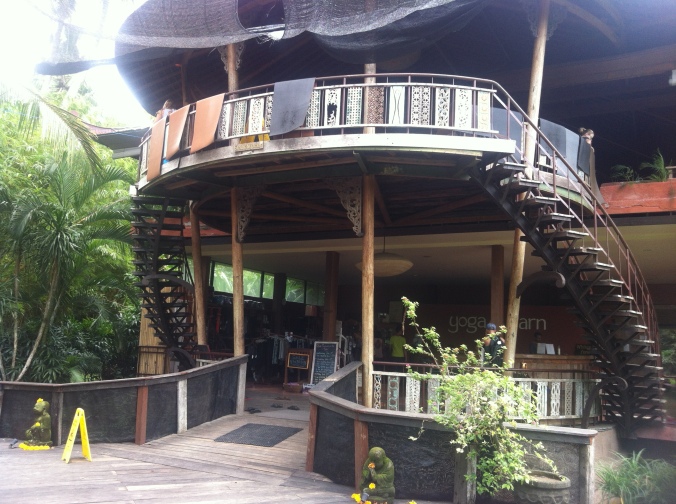
After an airport nap, over-night flight, and early morning transport from Denpasar to Ubud, my boyfriend and I sought a little therapy and relaxation with Yoga Barn’s evening restorative yoga class. It was held in the upstairs studio, an elevated hut that comes with everything one would need for the practice: mats, bolsters, blocks, straps, blankets, water, and all-natural mosquito repellant. We left the class feeling incredibly relaxed. As we noshed on sushi rolls at an open-air Japanese restaurant across the street afterward, we fell totally in love with Ubud.

Our first yoga experimental class was Sunday morning laya yoga, recommended by a friend who told us to go into it free of expectations or assumptions. The three-hour class was based in kundalini and incorporated a lot of up and down movement with coordinated breath. Much of the class focused on vocal expression, releasing built-up tension, and letting sounds involuntarily move through us. As a student laughed hysterically on the other side of the room and others orgasmically moaned through poses, the teacher noted that if any of us were annoyed by the sounds of others, it was a good thing; that means it’s working. Accept it and move past it.

photo 1Feeling the need to get back to basics the next day, we signed up for a good ol’ vinyasa class. The flow incorporated a 15-minute inversion practice break, which was fun for about half of the class and confusing for the rest. On a whole, though, it was just what we came for – an energetic sweat session in the afternoon Balinese heat.
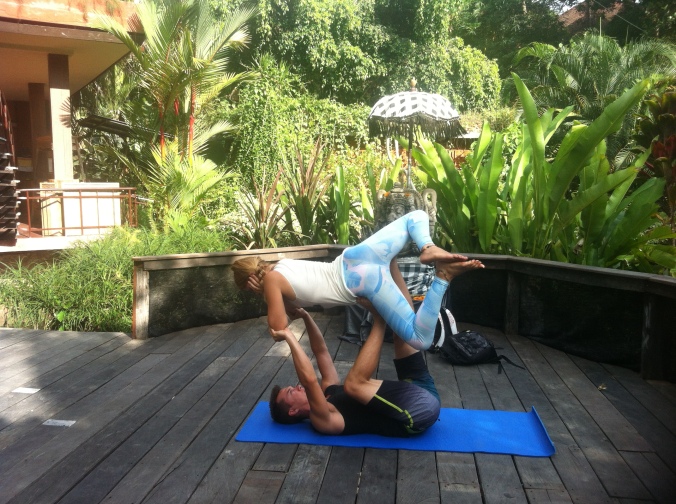
 

My next two classes were acroyoga, and I was surprised by how unique each class was. We didn’t do a single warmup or pose in the second class that we did in the first, and it was almost a completely new group of people. While both classes focused on the acrobatics component of acroyoga, the first one was much more playful. We warmed up by doing a tougher version of wheel barrel – this time with feet hooked on hips and no hands from the partner walking upright. We stacked plank on plank and did synchronized pushups. We got into teams of three for assisted handstands. The second class taught me several new poses, which was exciting and inspiring. After a much shorter warmup, we practiced flag, flying child’s pose, and moving from a easy throne to shin stand.

After the second class, my boyfriend met back up for an acro jam on the patio just outside the studio. We met a few others from the class, as well as seasoned acro yogis, to practice and play.

photo 2

The following Sunday night took me back to The Barn for kirtan, another friend recommendation. Sitting in a semicircle facing three musicians, we closed our eyes and chanted together in Sanskrit, sharing the energy and power of a group sing-along and slowing down the tempo as the class came to a close. The 15-minute savasana at the end put me into the most relaxed state I’d experienced in quite a while, and I walked out peaceful and totally happy.

My second time in Ubud, I returned for a yoga nidra class. Again, it came as a recommendation – this time from my boyfriend’s mom, who had become familiar with it during her yoga teacher training in the states. I heard how relaxing people find it and went into the midday class half expecting to take a nap. Instead, we were instructed to walk the line of total body and mind relaxation without completely succumbing to sleep. With the teacher as a guide, the intention is to do a full body scan and focus on one body part at a time. The teacher then moved onto describing a place and telling a story while we were instructed to visualize the imagery using our subconscious minds. Towards the end, I found it difficult to get out of the discomfort in my physical body (cold, laying on the floor) and get into a state of relaxation. But I don’t think I fell asleep, so at least there’s that.

photo 1

Even though I may have decided some of these forms of yoga aren’t for me, it’s hard to say anything bad about my time practicing at Yoga Barn. Each class opened my eyes to new people and practices, taught me something about myself, and gave me something to work on – mentally or physically.

Facilities

First, the restaurant: It’s really good. It’s reasonably priced (about $3-$4.50 per dish) and offers everything from pre-yoga energizing drinks and cashew nut lattes to Ayurvedic kitcheree and macrobiotic main dishes. And it’s super tasty.

A juice bar – which sells drinks, popsicles, and quick treats for before or after class – is also just outside the studios.

The upper studio holds 35 people, and the lower studio holds 30. FYI, they do strictly hold to that number and turn people away once a class is full.

Showers (with liquid body soap) are available to use post-class, free of charge. There’s also a water cooler near both studios.

Pricing

Individual classes are about $9.50, but cards are the way to go if you’re planning to attend at least three. My boyfriend and I each bought the five-class card for $37. If you’re in town for a long stay and want to try it all, you can purchase a 30-day unlimited card for around $190.

Directions

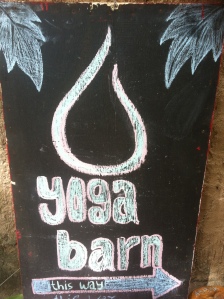
Yoga Barn, located at the end of a small alley in Ubud, is in walking distance from tons of hostels and guesthouses. If you’re heading south from the palace on Hanoman, the alley will be on your left. The sign, which is found at the top of a list of other destinations down the same alley, is a little difficult to spot from the main road, so also keep an eye out for Zen, and turn there.

photo 5

Yoga Barn hosts movies, yoga teacher trainings, workshops, and retreats.  Check out www.theyogabarn.com for schedules, current prices, and directions.


The Yoga Tree, Chiang Mai – Review

Introducing guest blogger, Amy Steele for http://www.karabemisyoga.com, welcome Amy!

Hidden in an industrial area of Chiang Mai’s old city, at the end of what appears to be a deserted alley, sits The Yoga Tree, a shaded oasis of a chilled-out yoga retreat.

In September, in the middle of a trip to Thailand that brought me over from South Korea and my mom from Alaska, we dropped into The Yoga Tree for a 90-minute yoga foundations class with Gernot Huber. These particular classes explore a common theme every week – with classes currently held Monday, Wednesday and Friday – each one building on the next.

The Wednesday session we attended was a hands-on workshop-style class, with a focus on engaging the muscles between the shoulder blades and aligning the head and neck to improve posture. It was a small class of five people, which allowed each of us plenty of personal attention from Gernot.

Gernot taught a very hands-on class, giving adjustments to us through downward-facing dogs, planks, lizard poses and inversions. In each pose, he would gently push our back muscles into correct alignment, followed by helping us align the head and neck with the spine.

My mom and I agree: One of the most memorable poses was the partner exercise in L-shaped handstand, or half handstand. My mom received an adjustment from Gernot and was able to access the pose carefully, yet confidently, knowing the support was there.

I talked to my mom about the experience after returning from our Thailand trip. “The overall impression is a lasting one,” she said. “Several times a day since the class, I am checking my back and pulling in the muscles to bring my neck and back into alignment. I appreciated [Gernot’s] hands-on approach and his gentle pointers.”

My Mom & I in Thailand

How to get there

The Yoga Tree is a bit difficult to find if you’re not familiar with Chiang Mai. Trust me; we went up and down the west side of the old city several times until we finally asked a local how to get there. Don’t be like us; find detailed directions, in English and Thai, at their website, here.

Address: 65/1 Arak Road, Prasing, Muang, Chiang Mai 50200, Thailand

Screen shot The Yoga Tree Map

Additional information

The studio is well-equipped with mats and props, including bolsters and blankets, which were essential for my mom’s titanium knees. Water bottle refills are available at the smoothie bar outside.

A regular 90-minute drop-in class at The Yoga Tree is 250 THB, or about 7 USD. Passes are also available. View The Yoga Tree’s class schedule here.

In addition to teaching at The Yoga Tree, Gernot teaches at Wild Rose Yoga Studio and offers private classes at his studio in Chiang Mai, Yoga Mind Yoga Body.


Amy SteeleAmy Steele has been teaching English in South Korea since 2013. On the side, she volunteers as a copyeditor and occasionally writes for a local expat magazine. She hopes 2016 will bring her the good fortune of continuing her yoga practice across Southeast Asia.

Observations of an Environmental, Yogini Traveler

I recently took my summer vacation to visit my family in Western New York. It’s a long, taxing trip from Busan to Buffalo and totaled roughly 26 hours door to door. As usual, my mind was observant of waste created in airports on planes. Here is a short list of what I saw as well as some tips for having comfortable travel.

  • Plastic on Planes – Thankfully, airlines feed travelers on longer flights and I’m always grateful for some grub before attempting rest on a flight. Of course airlines have strict health and safety guidelines to follow when serving so many people in a short time frame, so a lot of plastic is used for sterility. I saw plenty of plastic cups for all those beverage stops, saran wrap on fruit cups, and plastic utensils. Sadly, I also noticed that pop cans, utensils, napkins, and all other waste was jumbled together in the same garbage collecting, leading me to believe that nothing was recycled.
    • My Tip! Bring your reusable water bottle or tumbler with you on the flight and have the attendants fill that up with water or your choice of drink rather than getting a plastic cup every time. I estimate that I saved the disposal of at least 10 plastic cups on my recent flights this way. Having a water bottle handy also saves a few bucks at the airport as there are usually drinking fountains found near bathrooms. At New York’s JFK I saw this nice little reminder of a drinking fountain, and smiled.
  • Hold Out for Recycling – When I first entered JFK’s immigration area I saw only a collect-all garbage can which got me feeling a bit down, but after going through security and walking around the terminal I noticed that there were in fact recycling receptacles throughout the airport. Relief!

Recycling Bins

  • Get Fresh Air – JFK had a cool new rooftop area at Terminal 5. I had some time to waste so I checked it out. After being around so many people and breathing the dry, stale air on the plane, the outdoor rooftop was a welcoming retreat. It also featured recycling bins. The grass wasn’t real, but plants and flowers bordered the area. It was nice to stretch my legs and do a little yoga after the long journey.
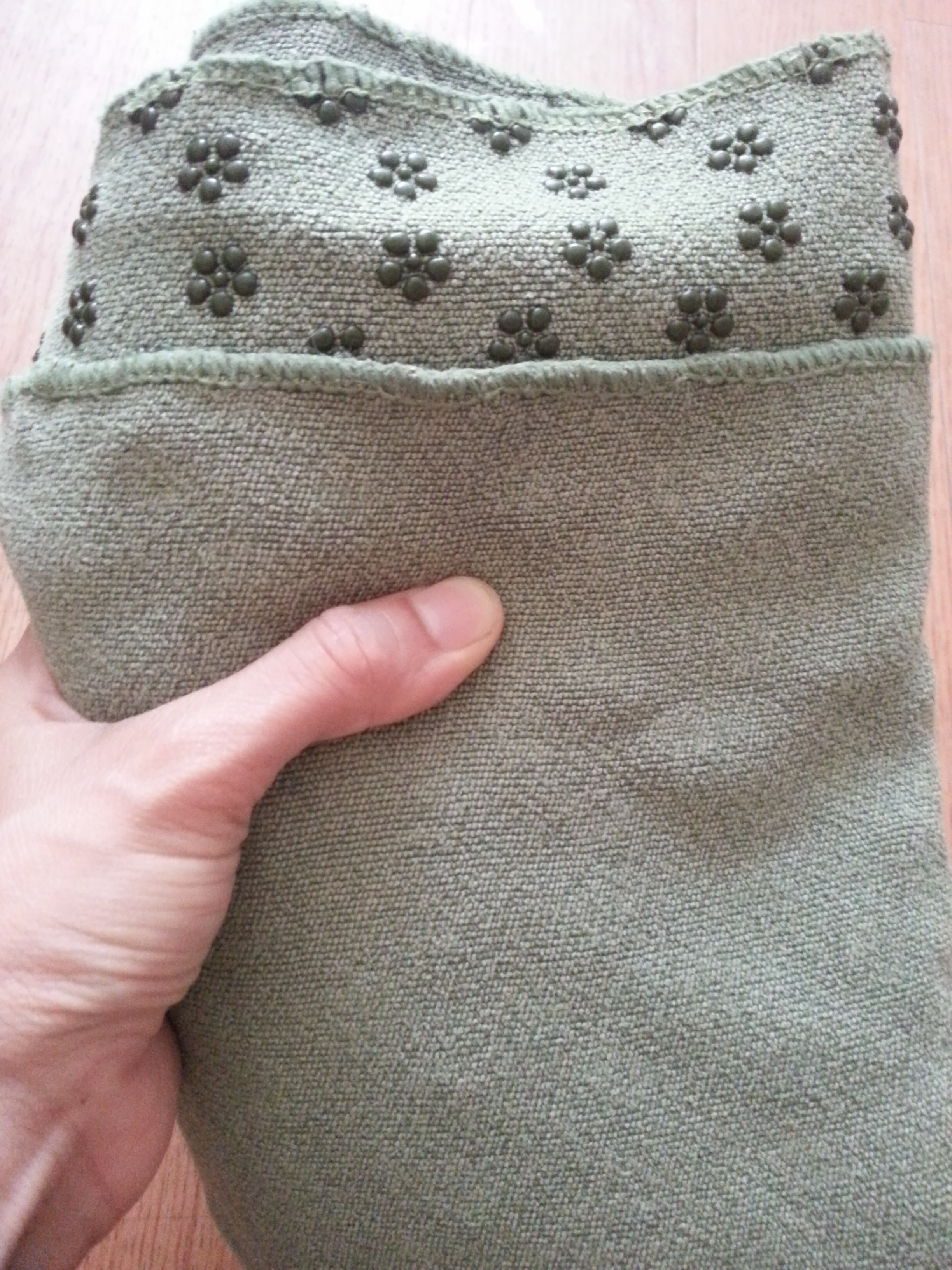
  • Bring a Travel Mat – If you don’t have a packable, travel yoga mat that folds up easily, then I suggest getting your hands on a yoga towel. They’re commonly used for hot yoga classes as the micro-fiber prevents sweaty palms from slipping in downdog. When
    Folds up easily.

    Folds up easily.

    traveling, I toss mine into my carry on bag, this way I can whip it out during lay overs and stretch my weary muscles. If you don’t have a yoga towel, then striking poses in a quite corner right on the carpet would suffice, just as well (I’m just a bit of a germaphobe!) Another bonus of the towel is that it doubles up as a blanket or rolls up as a pillow on the flight. Tucking your improvised pillow between the back of your seat and your lumbar spine (low back) adds an exponential amount of comfort from those flat-backed seats as well.

  • Aisle All the Way – For long flights I always request an aisle seat. Because of the dry air I drink a lot of water on flights which means a lot of bathroom breaks. While I wait in line I take the opportunity to do a simple, standing runner’s stretch to create space in my front body. Another good one to do is to find a flat surface and do downdog at the wall.
    • How To Standing Runner’s Stretch: Stand next to a wall, bend one knee and reach down for the foot with your hand. Pull the heel in towards your glutes, lining the bent knee up with the standing leg’s knee. If balancing is difficult, then use the wall to support you. Hold for a few breaths and switch sides.
    • How To Downdog at the Wall: Stand hip distance, facing a wall, with a slight bend in your knees. Be close enough to the wall that you can lift your arms overhead at shoulder’s distance and place the hands on the wall, elbows straight.  Gently bend at your hips and knees and press in and down into your palms on the wall. Stretch from the shoulders down to the low back. Stay and hold for a few breaths. Repeat as necessary.

Travel is a rewarding privilege; it is a way to see and learn about the world, a chance to relax and take a break from work life and daily chores, but the act of traveling is not always so fun, especially on trips that last literally for days. Take the time in preparation for a trip to make sure to have your essential water bottle or tumbler tucked away in your carry on. Bring along your travel mat or yoga towel for impromptu yoga sessions in the airport. Breathe long through the process of travel and know that you shall reach your destination in time.