Bhavana Yoga Center, Athens, Greece – Review

My time in Athens is short, so I’m happy that I was able to find a  community class at a centrally located studio right in the hustle and bustle of the old city. Bhavana Yoga Center  is easy to get to (directions below) and hosts frequent classes throughout the week.

The class that I attended was a Saturday noon-time community class. You can find specifics about community classes, like who’s teaching and what style it is, and all other classes (they host an array of styles and list level specifics) on their website under Weekly Class Schedule.

Directions

Bhavana Yoga Center is located on a popular pedestrian street called Aeolou, which you’ll likely find yourself on as you explore Athens. It’s not far from the Acropolis and is home to lots of cute cafes and restaurants. There are also two Greek Orthodox churches on Aeolou Street which are good landmarks to use to find the yoga studio as it is situated between them, so if you pass both of them then you’ve gone too far.

The address is: 43 Aeolou St. & Kolokotroni                     20160402_141723.jpg
105 51, Athens – Greece


The Studio

Is beautiful. I couldn’t stop thinking how beautiful it was while I was having a look around before class began. Everything about it is warm and homey with sprinkles of humor thrown in (a handmade sign on the cork bulletin board read: “Warning: yoga causes health and happiness.”) The entrance way invites you to remove your shoes straight away and silence your phones. There’s a changing room for each of the sexes as well as bathrooms and showers. They have lockers which you can lock up if you bring your own lock. There are mats to borrow as well as props.

Be sure to arrive 15 minutes before your first class to fill out a student form and get changed. There’s a comfy lounge area with a couch and yoga books to browse if you arrive a bit too early. Directly in front of the check in desk is merchandise to buy like mats, straps, and teas. 20160402_141201.jpg

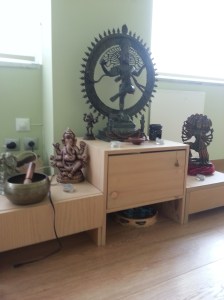
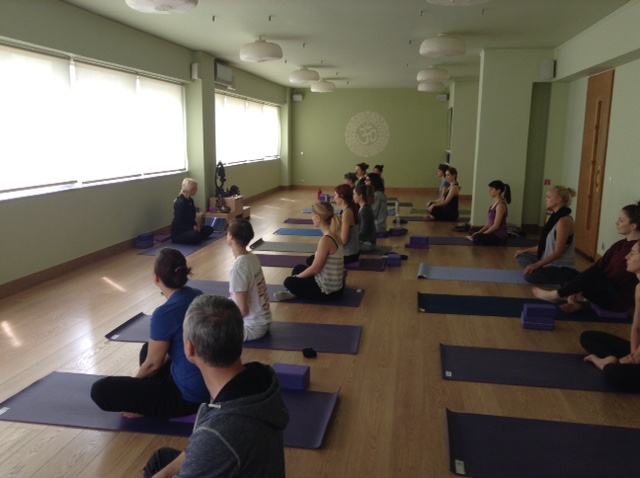
The yoga studio is long and open with windows all along the front. There are a lot of yogic relics like Hanuman and Shiva around that made me feel homesick for India and that add to that warm feeling. The community class I attended lasted an hour and 45 minutes. The teacher was a visiting teacher from Germany and the class was taught entirely in English, which is not always the case I was told afterwards. Classes are taught in the native Greek as well, but with some Sanskrit knowledge and peeking while in poses classes can be taken anywhere in any language. (Side note – the studio and their website were one of the most English friendly, and therefore tourist friendly, that I saw while searching for a studio in Athens.)

IMG_0449


Cost

The cost of Saturday community classes are 8€. If you try a mid-week class and it’s your first class at the studio, then the cost is also the same low 8€ with regular drop-ins costing 15€, not too bad for a European capital city.

More detailed information on pricing can be found via their website here.


Bhavana Yoga Center, in my opinion, is a must for a travelling yogi or yogini in Athens. All in all it was a great experience visiting the yoga center and I left ready to start my Saturday touring Athens with much needed energy and warmth.

Holi Cow, You’ve got some Pink on Your Face

A description of the color festival and four tips you should know

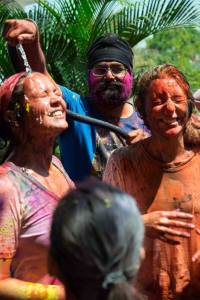
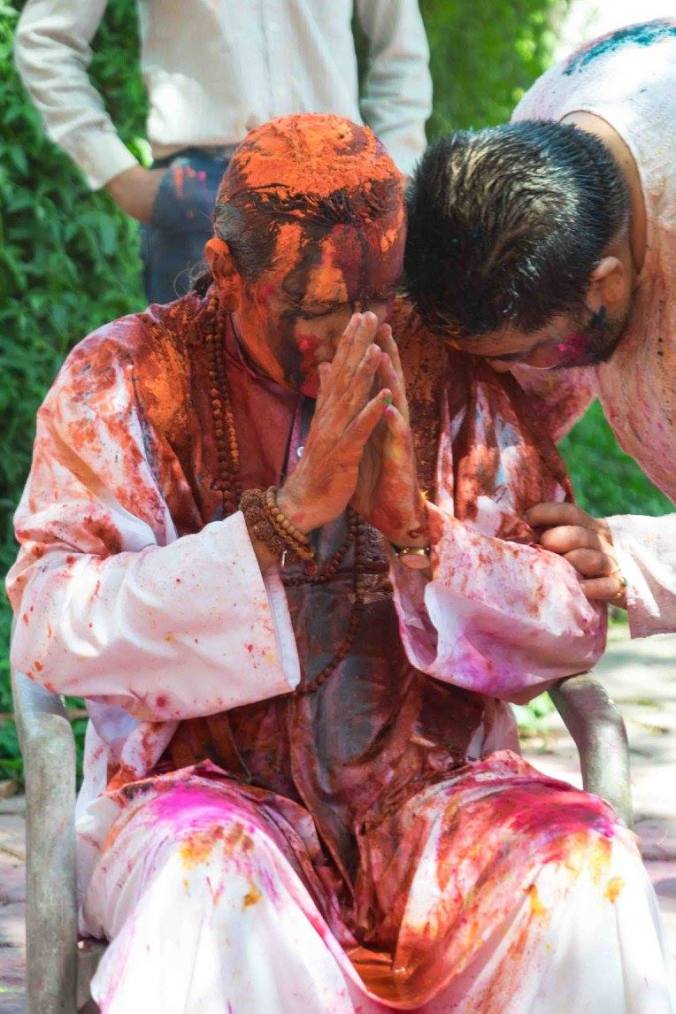
My month here in India is quickly (and sadly) winding down. It’s been an intense month of study, practice, and growth here at the Paramanond Ashram and Institute. Incredible India has been full of amazing food, wonderful people, and lots of color – powdered colors everywhere. Pinks, yellows, blues, and greens smeared on clothes and across skin during the exciting celebration of Holi. If you’re not familiar with what Holi is, then check out the new Coldplay song featuring Beyonce and it’s pretty much like that.

So what’s it all about? During a morning lecture the day of the festivities, Guruji, the primary instructor (guru) here at the ashram, told us about the meaning behind the throwing of colors. He put it in perspective of yoga and the chakras and explained that it’s a day to enjoy 100%, to let go and play like a child. There are definitely plenty of opportunities to do just that – powder, water, music, dancing! We also learned in our Ayuveda class that water and mud are thrown in the mix in order to cool down the intense vata that comes with the summer season, and it is hot here, so it makes sense.

12322694_10153292321640927_7285696917292266035_o

For our Holi celebration, yoga students and ashram attendees alike played just outside the doors of the ashram, only venturing onto the main street in the afternoon after most of the festivities had died down. It’s a bit of a shame that we didn’t immerse ourselves in the larger city celebration, but I’m in no way regretful, we had a blast. If you have the luck to celebrate Holi in India, then remember these four things

  1. WEAR WHITE – Obviously the color will show better on white than a dark surface. Make sure you have a white shirt that isn’t special to you, maybe that one that got splattered with turmeric tea, because that thing will never be white again (same can be said for your pants and underwear!) The colors keep coming and coming; it’s like a big human-tie die experiment.

12898189_10153292320960927_6229741255597557506_o

  1. OIL UP – This tip was given to us hours too late on the first day of celebration, but came in handy the next day (Holi is officially two days here in M.P. and some even got into the mood and bags of colors a day early.) Oiling up the skin, with say coconut oil, doesn’t allow the color to penetrate into your pores as easily, although there is bound to be some staining. Pink was the worst culprit, it’s been five days and at least as many showers and I’m still seeing people with red in their ears… maybe I should say something.


  1. DRINK WITH CAUTION – “Caution, this cup’s contents may be laced with CANNABIS!” should read the little disposable plastic cups (a whole different post – so much single use plastic!) on Holi because bhang is the offical drink of the color festival. What’s bhang you ask? Well, it’s a milky, sweet drink made with weed basically. You can read why it’s the official drink of Holi here, if you get passed a mysterious glass during the festival you’d be wise to ask about it’s contents. However, Holi at the ashram was without. It’s also good to keep in mind that other festival goers may be under the influence of bhang and/or alcohol, so mind your things and your person.


  1. PLAY 100% – Guruji explained that Holi was a time to forget about boundaries of age, religion, sex, or caste and to let go and play fully, 100%. It’s not as easy as it sounds, but once the first fingers leave a vibrant yellow streak on your cheek, you’ll join right in.


My first authentic Holi in India was perfect. I hope I’m able to celebrate it again at some point, somewhere. I hope that you get the opportunity as well, we need to play 100% now and again.


*EXTRA SPECIAL BONUS TIP/COMMON SENSE – Remember to close your eyes and mouth when you see someone coming with a palm full of pink. A necessary strategy for avoiding the ingestion of colors.


Photos courtesy and credited to Miko Photographie of Berlin.


Yoga Teachers – 4 Tips to Giving Better Adjustments

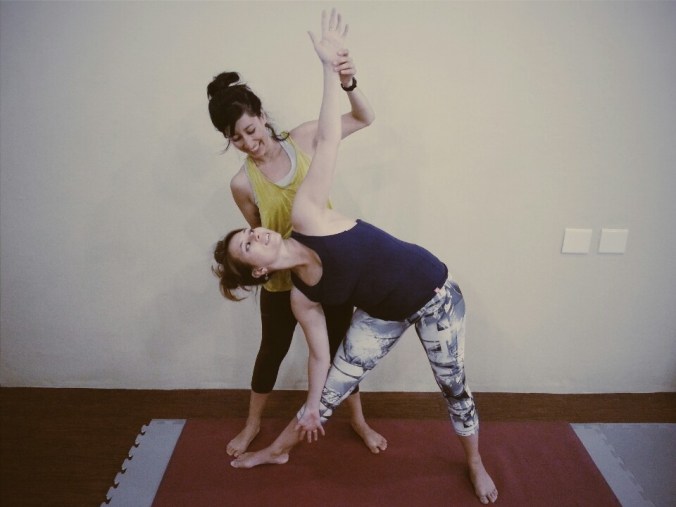
As a forever student I love going to a yoga class and receiving adjustments. There are times when you’re in a pose and you feel like you’re doing it pretty well and then suddenly a teacher smoothly places their hand on your hip, giving a little pressure, and – ahhhh… so that’s how it’s supposed to feel – totally different. For many students, it’s a primary reason for going to a yoga class when they could just as easily do a quick YouTube search at home.

20151229_112859.jpg

As a teacher, adjusting is a practice, like the asana practice. It requires constant studying, observing, and testing of the adjustments. You must go into an adjustment full of confidence, or your student will sense your hesitation and it will be less effective for them.

Flow

On top of teacher trainings, weekend workshops, and reading articles, here are 4 basic tips to remember when adjusting your students.


  • CONFIDENCE It’s so important that I’m saying it again – You must go into an adjustment full of confidence. This may take time if you’re new to teaching or new to an adjustment, so practice is required. But no matter how shy of a person you are, when giving an adjustment in class, you must do it with 100% confidence.


  • BE FIRM This is a teaching point that I will never forget from my first teacher trainer – Kimberly Waugh of Radiant Life Yoga School. She wisely taught me to adjust with a firm grip as opposed to a feeble, too-gentle touch. This circles around to confidence again, and also keeps the creepiness level down to zero.


  • MOVE WITH THE BREATH This is a technique that, surprise, surprise requires yet again more hands on practice. Remember your knowledge of the asanas and apply it to adjustments, i.e. Exhale as you guide a student into a deeper twist and have them do the same, verbally guide them by saying, “Inhale deeply… now take a deep exhale.” as they exhale, you guide them a little deeper in the twist, going only to their comfort limit.


  • TEACH It’s all fine and well to make a student feel better in a pose, but it’s even better to get them to understand why they  are feeling better. This way they can improve their home practice, and they’ll be grateful to you and will return again and again to your classes to keep learning.


Just like your asana practice, keep practicing hands-on-adjustments of students and you’ll be doing it like a pro in no time.Besides learning from workshops practice on people that you’re comfortable with at first, like a sibling, partner, or best friend and ask them for their honest feedback then take the adjustment into the studio. Happy adjusting!


Ashram Life

It’s been just about two weeks now that I have been living, as best to my ability, a yogic lifestyle in an ashram, here in Indore, India. The reason that I’m here is to advance my 20160314_090203studies of yoga, better my asana practice, learn about India and her beautiful people, and of course drink all the chai I can get my hands on (you gotta be fast, it runs out quickly!)

If you’re considering doing a YTTC or retreat at an ashram, here are some basic considerations of life at an ashram. My course is with Paramanand Yoga Institute, in Indore, Madhya Pradesh which is centrally located in the peninsula of India. Living a simple lifestyle won’t be for everyone, so do your research and contemplate if you’re up for life at an ashram before deciding to study one.


  • Yoga – It’s what I’m here for. In my advanced studies I’m learning a lot not just about the postures but about the other aspects of a yogic lifestyle, and it’s very much encouraged to go as deep as you can into it. That means trying to limit social media time, self practicing asana and meditation, and loads of personal reflection. If you go to an ashram to do a training be sure to look into the style of yoga that they practice and teach, as it’s very likely that it will differ greatly from the western, vinyasa flow/hot yoga that you’re used to. Go with an open mind and take as much as you can out of the variety of yoga styles that there are.


  • Vegetarianism – Ahimsa, or nonviolence, is a part of Yama, or self conduct, which is part of the Eight Fold Path of the Yoga Sutras by Patanjali, and this  might include vegetarianism in most ashrams. If you stay here in India, then you won’t even miss the meat, because the food is good. My friend forewarned that I’d probably even put on some pounds from all the ghee (purified butter) and sugary chai (both made from dairy, so let someone know if you’re vegan ahead of time) and she might be right.

20160314_131720


  • Karma Yoga – This is no hotel living. No one is going to clean your room for you or do your laundry, living in an ashram means doing things for yourself and taking joy and responsibility in your duty (dharma.) Not only will you be expected to care for your own space, but everyone is required to maintain the common areas. Personalized projects that cater to your interests are a possibility as well, i.e. – blogging!


  • Lectures – Whether  you do a yoga training, a short retreat, or a temple stay, remember that time spent in a new environment is time to learn and grow. At Paramanand Yoga Institute, there is a tightly packed schedule with classes on everything from Yogic Philosophy to Asana class.


  • Modesty – From attire to behavior there are rules here. 1. Shoulders must be covered, and only loose fitting pants (so leave your MPG at home.) 2. Opposite sex should not embrace/Don’t enter the rooms of the opposite sex. In a way you could almost think of an ashram as a monastery, essentially it’s religious, but before you wrinkle your nose too much, consider how a regulated day, diet, and schedule can be really good to push the reset button on your life. It’s also an integrated cultural experience that likely won’t be happening at a beach side resort.

Like everything outlined here, this may not be the case at the ashram that you find, but scour their website or send an email asking outright about style of yoga and behavior guidelines. If it sounds too intense, then look into a weekend visit or shorter trip than a month long training. Whatever length you choose, it’s beneficial to at least dip your toes into another area of yoga beyond asana.

Radiantly Alive, Ubud – Review

Bali won me over, but after spending two weeks there in January with my boyfriend, we decided to head east for Lombok beaches and diving in the Gilis.  We managed to take a few yoga classes in that part of the country – one at Ashtari on Lombok and two at H2O Yoga on Gili Air – but our time over there was mostly spent in the sand or under water.

Kuta yoga

view from Ashatari yoga studio in Kuta, Lombok

Once I was back on Bali in February, this time solo, it was time to hit the mat and fall fully into the Ubud lifestyle again. While my first time there was dominated by classes at Yoga Barn, I decided to branch out during my second visit and check out Radiantly Alive, a smaller studio across town. I bought a three-class card for about $22 that I used over my four-day return trip.

ubud1

Balinese Hindu temple

The classes

My first class was pilates with Acacia, a former dancer and yoga teacher from Canada whose energy and enthusiasm for movement lift up the entire room. The class reminded me somewhat of a barre workout, with small pulses within yoga poses to challenge the muscles. We moved in and out of poses quickly, doing a lot of ab work to strengthen the core.

The next morning, I took Daniel’s RA vinyasa class, a class offered only a few times a week. Daniel is the founder and director of the studio and teaches the class in addition to running workshops and hosting yoga teacher trainings.

He began the class by asking about our relationship with time. Is it a positive relationship or a stressful one? Is there never enough time? Are we always worried about what time it is? Ubud may be one of those places where time doesn’t matter, but for most of us, our lives are dominated by schedules and timelines. It was an interesting way to begin the class, and I find myself  – a month later  – still wondering about my feelings towards time.

Physically, the class was dynamic and demanding. The room was crowded and sweaty, and the day’s heat was in full swing already at 9 a.m. After core work, we played around with half moon pose, practiced going deeper and opening up more, losing our balance, laughing and trying it again. This led to the final challenging pose of the class – pincha mayurasana, aka feathered peacock pose. The inversion practice began by placing our forearms on the mat, walking our feet in and raising one leg. From there, we practiced little hops, floating our standing foot up just a few inches as we put weight into or arms. With practice, those hops become higher until the full inversion is reached with both feet overhead.

photo (6)

practicing pincha mayurasana, working towards the full inversion


Daniel related learning to balance in pincha mayurasana to learning to walk on two feet. We’re afraid of falling, but bit by bit, with continual practice, we can find our balance. The body knows how to fall, he said. We recover and try again.

I intended for acroyoga to be the final class of my Ubud experience, but a cancelled class meant signing up for something I never had any interest in – yoga dance. Again taught by Acacia, the class was packed with yogis who came for acro and ended up playing together in a completely different way. We began the class with a free dance – no mats to contain us – closing our eyes and moving to the beat of the music in any way we felt. Once we got a little loose and more comfortable, we started learning the 3:39 minute dance that Acacia had choreographed.

yoga dance 1

Acacia (front center) leads a small group of us after class

Yoga dance incorporated yoga poses, like standing forward fold, seated twist, and downward facing dog, with quick dance moves. The class was full of laughter, and Acacia’s encouragement carried us through to the end of the 90-minute session. Check out the embarrassing but awesome video of a few of us practicing the choreography one last time after class, here.

Facilities

Radiantly Alive has one main open-air studio with a gorgeous jungle view. Drinking water is available at the front desk, and the studio is equipped with mats, blocks and straps.

Anywhere from two to seven classes a day are offered, with 15 different classes throughout the week as well as yoga teacher trainings and workshops. Visit radiantlyalive.com for more info.

Pricing

Radiantly Alive offers just about any option to suit your stay in Ubud, from single drop-in classes at $9.50 to 180-day unlimited passes for $495 – and everything in between.

Directions

The studio is conveniently located across from Bali Buda, a fantastic restaurant with a neighboring natural foods market. For detailed directions, click here.


Professional Yoga Shots – 4 Tips

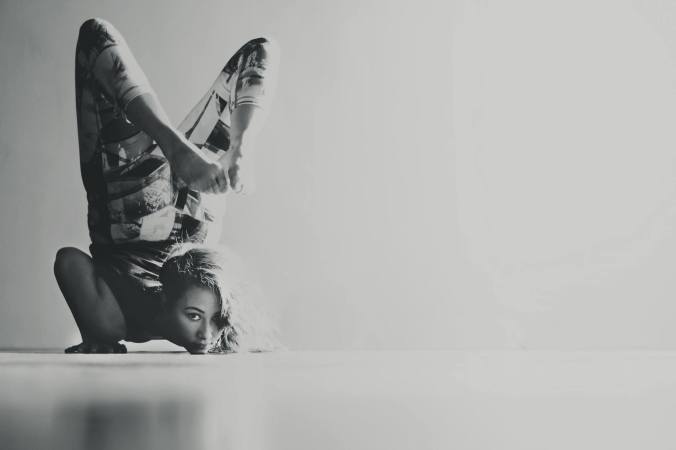
Instagram Yoga, it’s a thing. As described by Jason Crandell (paraphrased from memory) Instagram Yoga is – “doing a pose on one side long enough to get a snapshot,” as in, it’s not really yoga. Yoga is balance, so if you attach to a shot of yourself holding an impressive pose (on your good side)  for the split second it took to take the picture, then it’s not truly “yoga” in the traditional sense. But I’ve done it, it’s part of my image as a teacher, which I need as I begin to market myself to studios. This post is not about Instagram Yoga, which on the positive flip-side can be very inspiring. Rather, this post is about finding a photographer friend, relative, or hiring a professional to take photos with a more technical camera than an iphone 6.

Why? The main reason to do a photo shoot as a yoga teacher is quite simply professional. We interact and consume primarily through screens these days, and images have impact, (honestly, would you enjoy this blog post as much if it didn’t have images embedded into it?)

As a yoga teacher about to leave my teaching position here in Korea I know that I have to do a lot of self promotion in order to find teaching jobs in new cities. That self promotion involves Facebook, Instagram, this website, emails, and more. Each thing listed will inevitably have my face and yoga poses all over it.

Here are my tips for your Yoga Photo Shoot:

  • Dress Modestly – All bodies are beautiful and so is self confidence, but bearing midriff and butt-cheeks can be too much for some. Remember that these photos may be used professionally, so use your judgement.

12605355_1231107303570471_6638566688454559275_o

  • Realistic Poses – Chose poses that you can hold comfortably. I highly doubt that a studio would interview you and request you demo your strongest, most impressive pose, but still, you need to be honest with your practice and abilities. Straying from comfortable poses to pretzely poses is for the classroom, in the roll of a student, with an experienced teacher, or your photo shoot could lead to injury.


  • Find A Yoga Photographer – What? That’s a thing? Well, I’m not sure if it’s exactly a thing, but when I had my photos taken it was by my good friend, Mindy Sisco of I Write Light photography. Mindy is a fellow yoga teacher, so she knew exactly how to get my toes, elbows, and eyes in the right place at the right time for the most beautiful (if I do say so myself!) pose shots. In the past my boyfriend, a great photographer in his own right, has taken yoga pictures of me, but he couldn’t tell me when my hip was jacked up in Hasta Padangustastana because he doesn’t have the eye for it, so some photos came out unusable.


  • 12525392_1228646733816528_6095315996969326375_oHead Shots – Be sure to get actual head shots. A studio may want to see you bustin’ a pose, and pose shots are great for social media usage and event posters, but you’ll also want to represent yourself more professionally for the greater world that exists outside of the yoga world, because sadly we have to enter that world from time to time. A good head shot can also be used for Linkedin, other network profiles, or your non-yoga resume.

My experiences with yoga photo shoots have been nothing but fun. Whether you do it mid-cycle ride, hoping off your bike at the perfectly spotted backdrop; or hire a make-up artist, hair-stylist, and photographer to do studio shots, it’s most important to enjoy the process. Meditate on your image and how you would like to present yourself as a yoga teacher in these single frame images; almost everything when done consciously will come out better than when done in a rush. Be proud of the end result, share it, and self promote. Well thought out, professional images could get you a lot further when applying for jobs than your Instagram roll.

12640221_1228735380474330_4478747538666939627_o12633589_1231107263570475_33090303289947209_o


Like I Write Light’s yoga photography? Visit Mindy’s website for information on how you can book a photo session with her. She primarily works out of Busan but is traveling/teaching/shooting around the world and just might come to an area near you.

Yoga Barn, Ubud – Review

It was early January, and I had just come from a month in the Philippines with a pretty poor record of practicing yoga. Once I arrived in Ubud, a gorgeous jungle yogi paradise set on the Indonesian island of Bali, I bought a card at Yoga Barn and got excited.
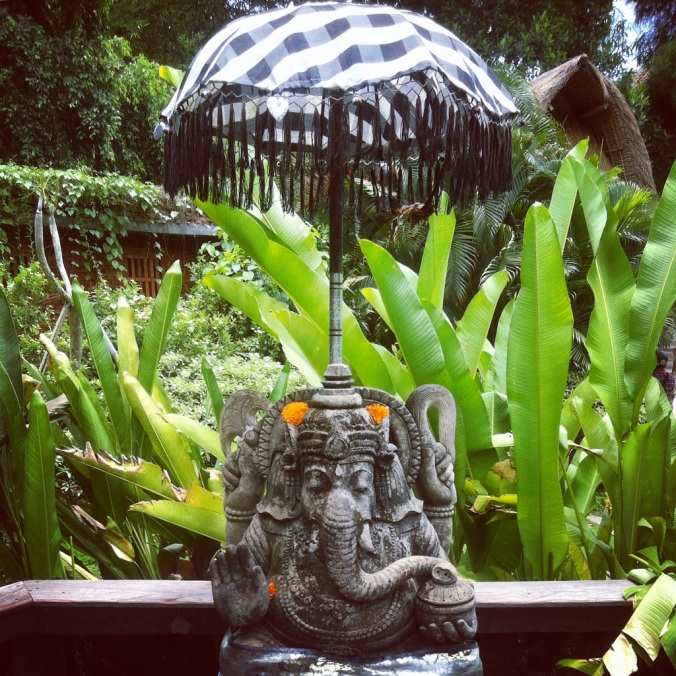
photo 2

Yoga Barn is the perfect place for the yoga-curious. Its teachers offer beginners classes as well as classes and workshops for more advanced students who want to deepen their practice. The schedule is packed with 11-15 classes a day, each of them different, and when I was there in January, 16 different styles of yoga were on the schedule.

Months ago, when Ubud was just a daydream I’d pieced together from Instagram images, one of my friends told me that her time there shook everything up – in a good way. I didn’t quite follow, but I loved that she said it, and I’ll admit that I wanted to experience some of whatever it was that shook her. So, in the two weeks I spent in Ubud, I went to seven classes at Yoga Barn: restorative, laya, vinyasa, acro (twice), kirtan, and nidra. I dug right in with a sense of experimentation and wonder.

The classes

After an airport nap, over-night flight, and early morning transport from Denpasar to Ubud, my boyfriend and I sought a little therapy and relaxation with Yoga Barn’s evening restorative yoga class. It was held in the upstairs studio, an elevated hut that comes with everything one would need for the practice: mats, bolsters, blocks, straps, blankets, water, and all-natural mosquito repellant. We left the class feeling incredibly relaxed. As we noshed on sushi rolls at an open-air Japanese restaurant across the street afterward, we fell totally in love with Ubud.

Our first yoga experimental class was Sunday morning laya yoga, recommended by a friend who told us to go into it free of expectations or assumptions. The three-hour class was based in kundalini and incorporated a lot of up and down movement with coordinated breath. Much of the class focused on vocal expression, releasing built-up tension, and letting sounds involuntarily move through us. As a student laughed hysterically on the other side of the room and others orgasmically moaned through poses, the teacher noted that if any of us were annoyed by the sounds of others, it was a good thing; that means it’s working. Accept it and move past it.
photo 1Feeling the need to get back to basics the next day, we signed up for a good ol’ vinyasa class. The flow incorporated a 15-minute inversion practice break, which was fun for about half of the class and confusing for the rest. On a whole, though, it was just what we came for – an energetic sweat session in the afternoon Balinese heat.


My next two classes were acroyoga, and I was surprised by how unique each class was. We didn’t do a single warmup or pose in the second class that we did in the first, and it was almost a completely new group of people. While both classes focused on the acrobatics component of acroyoga, the first one was much more playful. We warmed up by doing a tougher version of wheel barrel – this time with feet hooked on hips and no hands from the partner walking upright. We stacked plank on plank and did synchronized pushups. We got into teams of three for assisted handstands. The second class taught me several new poses, which was exciting and inspiring. After a much shorter warmup, we practiced flag, flying child’s pose, and moving from a easy throne to shin stand.

After the second class, my boyfriend met back up for an acro jam on the patio just outside the studio. We met a few others from the class, as well as seasoned acro yogis, to practice and play.
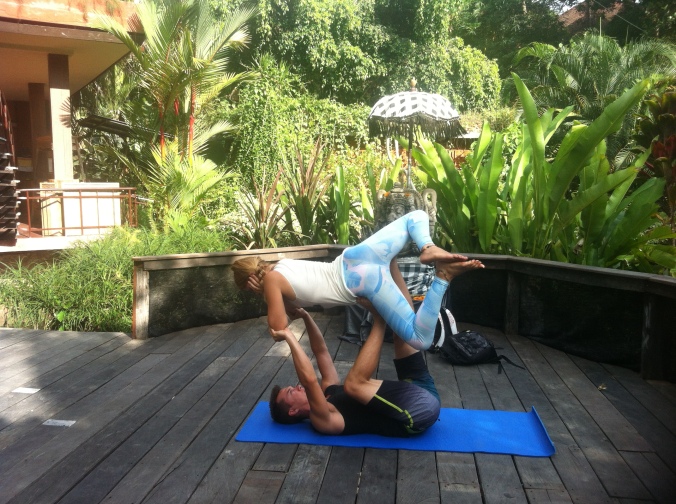
photo 2

The following Sunday night took me back to The Barn for kirtan, another friend recommendation. Sitting in a semicircle facing three musicians, we closed our eyes and chanted together in Sanskrit, sharing the energy and power of a group sing-along and slowing down the tempo as the class came to a close. The 15-minute savasana at the end put me into the most relaxed state I’d experienced in quite a while, and I walked out peaceful and totally happy.

My second time in Ubud, I returned for a yoga nidra class. Again, it came as a recommendation – this time from my boyfriend’s mom, who had become familiar with it during her yoga teacher training in the states. I heard how relaxing people find it and went into the midday class half expecting to take a nap. Instead, we were instructed to walk the line of total body and mind relaxation without completely succumbing to sleep. With the teacher as a guide, the intention is to do a full body scan and focus on one body part at a time. The teacher then moved onto describing a place and telling a story while we were instructed to visualize the imagery using our subconscious minds. Towards the end, I found it difficult to get out of the discomfort in my physical body (cold, laying on the floor) and get into a state of relaxation. But I don’t think I fell asleep, so at least there’s that.
photo 1

Even though I may have decided some of these forms of yoga aren’t for me, it’s hard to say anything bad about my time practicing at Yoga Barn. Each class opened my eyes to new people and practices, taught me something about myself, and gave me something to work on – mentally or physically.

Facilities

First, the restaurant: It’s really good. It’s reasonably priced (about $3-$4.50 per dish) and offers everything from pre-yoga energizing drinks and cashew nut lattes to Ayurvedic kitcheree and macrobiotic main dishes. And it’s super tasty.

A juice bar – which sells drinks, popsicles, and quick treats for before or after class – is also just outside the studios.

The upper studio holds 35 people, and the lower studio holds 30. FYI, they do strictly hold to that number and turn people away once a class is full.

Showers (with liquid body soap) are available to use post-class, free of charge. There’s also a water cooler near both studios.

Pricing

Individual classes are about $9.50, but cards are the way to go if you’re planning to attend at least three. My boyfriend and I each bought the five-class card for $37. If you’re in town for a long stay and want to try it all, you can purchase a 30-day unlimited card for around $190.

Directions

Yoga Barn, located at the end of a small alley in Ubud, is in walking distance from tons of hostels and guesthouses. If you’re heading south from the palace on Hanoman, the alley will be on your left. The sign, which is found at the top of a list of other destinations down the same alley, is a little difficult to spot from the main road, so also keep an eye out for Zen, and turn there.
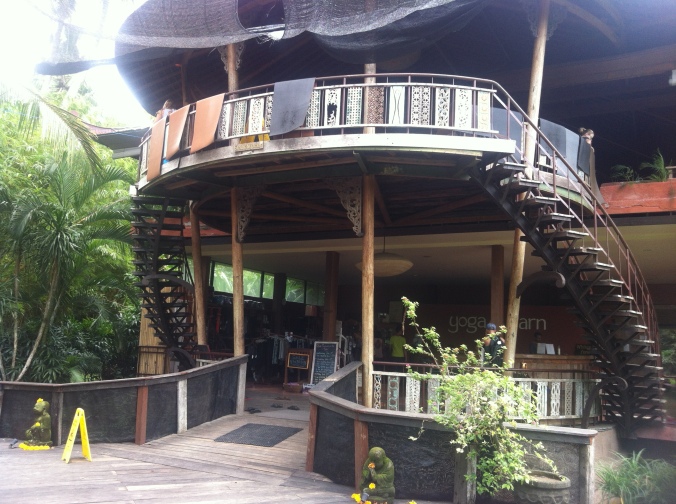
photo 5

Yoga Barn hosts movies, yoga teacher trainings, workshops, and retreats.  Check out www.theyogabarn.com for schedules, current prices, and directions.

 

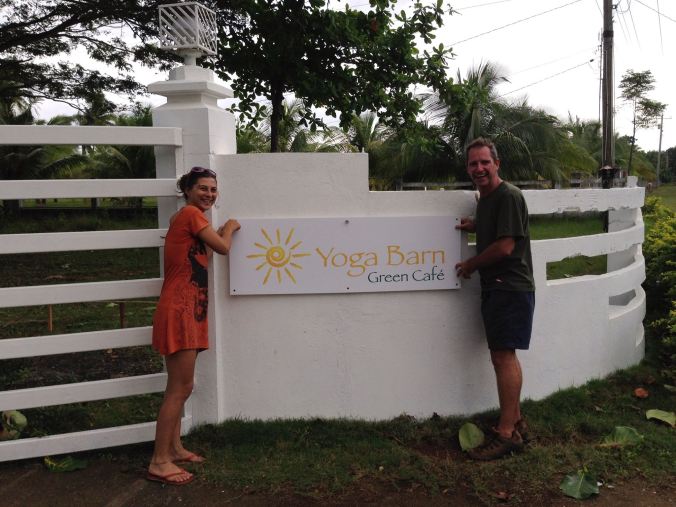
Yoga Barn Panglao – Guest Teaching Volunteer Program – An Interview with Barbara & Steve

My most recent post was about my experience guest teaching at the Yoga Barn Panglao, which is located on the utopian island of Panglao, Philippines. I am so impressed with the way that the guest teaching program is run that I decided to ask a few questions of the barn to get a better understanding.

I am a teacher who daydreams about teaching in paradises all over the world and might even want to run my own studio one day, so I was curious to learn more about their guest teaching program. Barbara and Steve warmly replied to my questions, so for your benefit and mine, I provide their answers below regarding their unique volunteer program.

10904530_720728348025720_899485961864692438_o

Barbara & Steve of the Yoga Barn Panglao


KBY (Kara Bemis Yoga): Where did the idea originate to freely host guest teachers?

YBP (Yoga Barn Panglao): One of my teachers taught me about the importance of non-attachment. When it comes to asanas we all have our preference for a style or particular teacher. For the good and growth of my regular students I love to give them the chance to practice with different teaching styles.

It’s also great to see teachers used to working in big city studios getting inspired all over again by the beauty and magic of the Barn itself. There are two types of non-resident teacher programs at the Barn.

The Guest Volunteer is for experienced teachers who are here for a short time and just want to share their skills and passion for a class or two.

The Intern Volunteer is a program aimed at freshly certified teachers who feel they need more practice or are a little shy about leading class or perhaps they just need some experience for their CV [resume]. For them we offer coaching, support and guidance and the chance to use a great space. For the new teachers as well as us here at the Barn it’s all about sharing, deepening our knowledge and teachings skills.

KBY: How does it benefit the barn, the community, and the two of you as managers?

YBP: These kind of programs take a lot of commitment from Steve and I [Barbara], but we really love to see our local community growing and getting a wider understanding of what Yoga really is about, and for us, we improve the business with the help of the volunteers, plus we get to meet some awesome people!

KBY: Who qualifies to guest teach?

YBP: Anyone who is an experienced Yoga or Meditation teacher, dedicated, passionate and wants to share can volunteer as a Guest Teacher. The volunteer intern [program] is open to those who have just finished their YTT or those who have been out of teaching for a while.

KBY: What is expected of a guest teacher and what is the general exchange for them?

YBP: From my own experience as a traveling yoga teacher, I learned that a flexible mind is more useful than a flexible body when it comes to teaching students of different levels, nationalities and attitudes! Guest teachers learn from the experience of serving, teaching and sharing and they get to do all of this surrounded by nature on a beautiful tropical island.

KBY: What’s the best way for an interested, certified yoga teacher to contact you and what sort of information should they provide?

YBP: Contact us before hand; we will want to know about you, about your experience, what you hope to gain from your time with us and how we can help each other.

Contact: info@yogabarn-panglao.com


If you are a certified yoga teacher who would like to keep your skills sharp while traveling, maybe looking to travel on a budget, and are willing to exchange your teachings for yoga classes, then guest teaching is perfect for you. Whatever your reason, you’re sure to leave with a new anecdote to tell your friends and family about that time that you taught yoga in the middle of a Filipino forest.

10917873_725220937576461_6562299261288758102_n

Pure magic

Yoga Barn Panglao – Guest Teaching Experience

It has been a goal of mine to teach internationally after leaving my longterm home of South Korea. This idea of mine is nothing serious, I don’t expect to become a big name teacher, nor do I want to, but I do have a desire to use networks of teachers and social media to find teaching jobs here and there while I travel. I want to do this to keep my skills sharp and to experience different kinds of studios, and meet new students.

But where to start? It’s a daunting task to reach out to strangers and ask if you can teach for them. Who am I to them? I often think that I’m just a small fish in a little pond, but I’m now preparing to swim upstream and test bigger waters.

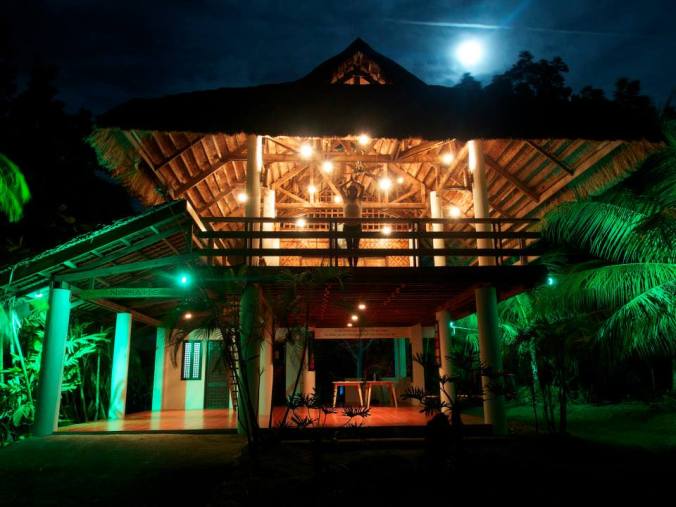
Of course you start with google searches, which is what I did before my recent trip to the Philippines, and I was happily surprised to stumble upon Yoga Barn Panglao, a picturesque studio set in nature on the island of Panglao, Philippines. It’s not uncommon to find yoga studios on tropical islands, but what is really unique is to find a studio with managers that openly accept guest teachers, and that’s just what I found at the barn.

Through my google search I discovered a tab on their website entitled Volunteering. I clicked on the page to find an outline of the opportunity they have for guest teachers to share their teachings in exchange for classes. This was exactly what I was looking for!  What was exceptionally perfect for me was the final description that read: No minimum volunteering time is necessary, key to my 10 day visit over the holidays.

Teaching

Teaching back “home” in Busan.

Emails were exchanged with the kind Barbara of the Yoga Barn Panglao and she instructed me to speak in person with their interim teacher who was holding down the fort for a month while Barabara and her partner, Steve, returned home for the holidays. Once I arrived on the beautiful island of Panglao, I attended the first class I could and met their substitute teacher, Emilie, my resume in hand, and we worked out a  teaching slot for me. It was perfect. I was instructed on how to manage things for my Wednesday sunset class: where to turn on the lights and fans, where the props were kept, and as for signing in students, Emilie met me there and took care of that.

The class itself was great. I was able to experience teaching a set of entirely new students and took on the responsibility of making them comfortable, confident, and safe. The second story platform studio is well equipped with mats and props, and I was even thoughtfully left with natural insect repellent for myself and students. And don’t forget that location! It was a dream come true to be able to lead a class in such a serene  setting surrounded by the sounds of crickets and shimmering, shining stars.

20151229_095633.jpg

Yoga Barn Panglao

The prior correspondence with Barbara was an experience in and of itself, as I felt the waters out of the bigger yoga world, polished my resume, and shifted into a warm, yet professional exchange. Barbara did a great job of melting away any and all of that business-like coldness and we were able to communicate openly and comfortably via email before my visit to the island.

If you get the special opportunity to visit Panglao as a yoga teacher, I highly suggest that you contact the kind people of the Yoga Barn Panglao and start a conversation about guest teaching. They’re warm, friendly, open and professional. And for you as a teacher you will get the rare opportunity to teach in the paradise of Panglao, growing your resume all the while.


Yoga Barn Panglao, How to Get There:

You could walk from Alona beach, but it will take at least 30 minutes or more. A cheaper and more comfortable option is to take a habul-habul, or motorbike taxi there. The first time I took a habul-habul the driver didn’t know where the barn was, so make sure t0 screenshot the image of the map on their facebook page to show the driver, or have them ask a local how to get there. It should cost about 25PHP from Alona beach.

Address: Bolod, Poroc 3, 6340 Panglao Island, Bohol, The Philippines


Yoga for Diving & Snorkeling

20151223_132208.jpgIt is a beautiful thing to have the opportunity to delve into the seas and oceans to view and be with the fish, coral, and other beings that live below. On my recent trip to Panglao, a small island off of Bohol which is part of the thousands of islands that make up the Philippines, I packed my fins in my bag and got in the water to see some amazing sights. Blog post on those specific experiences in the future, but for now here are my pre-snorkel/pre-dive yoga tips.

 

Isolate

Because it’s all about those hips, bout those hips… and ankles. Focusing on twisting from side to side at your torso and hips will greatly improve your propulsion through the water with fins on. Here are some yoga asanas that will get your body twisted.

Torso Twists

  • Sukhasana/Easy Seat Twist: Sit cross legged. Feel grounded through the sit bones, tall all the way up the spine and through the crown of the head, knees fall out to the side. Bring awareness to the breath for 30 second, making it long and calm. Then on an exhalation cross your left hand to your right knee and place your right fingertips back behind you. Stay and hold for 5 breaths. Inhale back to center and exhale to the left side. Hold 5 breaths. Continue for 3 rounds.

20160121_182009.jpg

  • Anjaneyasana/Low/High Lunge Twist: From Downdog come into a low lunge, right foot forward, right knee directly over ankle. Lower your left knee to the mat, toes tucked. Bring your arms to your heart in prayer position. Inhale, lift your left elbow high to the sky, exhale and cross the left elbow to the right knee. Try not to crunch the left ribs, but instead create space there. Use the left elbow against the right knee for resistance and extension. Option to lift the left knee off the mat and extend the leg straight. Hold for 5 breaths. Switch sides.

20160121_182214.jpg

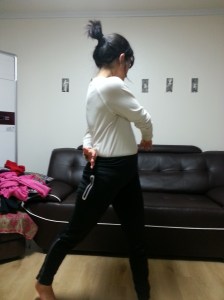
  • Dynamic Standing Twist: Stand with feet hip distance and a slight bend in both knees. Let your arms hang limp by your side, shoulders down your back. Inhale and twist left, swinging the arms with you so that the right arm gently hits the area of the left kidney. Inhale and twist to the right, this time the left arm hits the right back body in the space between the hip and ribs. Continue moving left and right while swinging the arms and gently hitting the back. Keep the bend in the knees the entire time. Focus on the twist coming from the abdominal area. This is the part of your body that you will mostly use when snorkeling. The fins makes it easy to move yourself through the water primarily from the torso twist, and when you have it down well you won’t even need to use the arms, freeing them up for your go-pro!

20160121_182024.jpg

Open Ankles

  • Adho Mukha Svanasana/Downdog Variation: Come in to Downdog, feet hip distance. Lift the right foot slightly off the floor, point the toes and cross the foot over the body to place the top of the toes (your toenails) to the left of your left foot. Breathe energy into the top foot and ankle area, where your shoe laces are. Switch sides after 5-10 breaths.

20160121_181949.jpg

  • Ardha Hanumanasana/Half Split Variation: Kneel on your knees and swing your right foot out front, don’t let the right hip change position when you do this, make sure that it stays in line with the left hip. Flex the right heel and lower the hands to blocks or the floor. Breathe to stretch the back of the leg. After 3 breaths, extend the right toes to the floor, hold and breathe for 5 breaths. Repeat on the left side. Opening the top of the foot, front ankle area will increase the effectiveness of your fin use while snorkeling or diving.

20160121_182111.jpg

Breathwork to Calm the Mind

  • Slow it Down: I often instruct students to lengthen their breath at the very beginning of class and to attempt to keep their breath at the long and steady pace during the entire class, no matter how challenging the poses become. The same technique can improve your diving & snorkeling, because although it’s a beautiful and tranquil world down there, feelings of stress and anxiety can arise by putting yourself in a whole new environment.
    • Slow Breath: Before getting in the water sit, or stand and breathe as slowly as you can. Begin breathing just through the nose like you do for yoga.
    • Diving/Snorkeling Breath: While diving & snorkeling you will breathe only through your mouthpiece for an extended length of time and venturing into the unknown vastness of the deep deep ocean can sometimes cause panic. Practice lengthening the breath, and especially lengthen the exhalation. Make the exhalation longer than the inhalation which lowers the heart rate, calming you down. Do this only through the mouth only for a few breaths to stimulate the mouthpiece, or do it right when you enter the water with the mouthpiece already on. When diving, use the deep breath only as a calming technique and ask your instructor for the appropriate breaths to be taking during the dive as you don’t want to suck up your tank too quickly!

20151227_111750.jpg

Have a great time exploring the surface and depths of the beauty below. For tips on how to keep coral safe while snorkeling, read this blog post about eco-packing which includes tips for the harsh sun and against harsh sunscreens that can cause coral bleaching.