Fast Fashion 101

The most recent post over here at karabemisyoga.com was a short, introductory, factual write up about the often overlooked dark truth of how our clothing is produced in our modern, globalized world. A remembrance of a day in April when over a thousand people lost their lives stitching together pieces of fabric to be shipped all over the developed world and sold with no mention of the countless people whose hands assembled the clothing, other than a tag that is rarely checked labeled “Made in Bangladesh.”

The anti-industry name associated with this type of fashion is “Fast Fashion,” and it’s become the norm these days. I say anti-industry for lack of a better descriptor, and what I mean by this is that once you learn the ins-and-outs (that often go un-publicized) of the Fast Fashion industry – the labor conditions, pollution, waste, product quality, etc. – you’ll quickly turn against it and search for alternatives.

To understand the term Fast Fashion a little better,  think of Fast Fashion the same way you probably think of fast food – yes, eating at McDonalds is quick and easy, tastes “good,” and gives an instant satisfaction, but after you go home your belly might hurt and after you read up on what those “chicken” nuggets are really made of, you probably won’t go back for a while. Similar to walking into the golden arches, you may at first have a feeling of satisfaction, the pastel-floral-pink racerback is cute enough and at that price how could you resist? But when you get home and try it on again the fit turns out to be just a little bit off and the feel of the polyester on your skin isn’t that nice, so you might wear it out once or twice, but it quickly makes it’s way to the bottom of the drawer, so undervalued that you don’t even bother to fold it, it’s just wadded up lost to the world forever.

Or lets say that you love this top and wear it multiple times in one season, that’s great – to give a product a full life instead of losing it in your wardrobe or dumping it in the trash, but the cheap material (polyester/acrylic/etc.) doesn’t last through many wash cycles. Soon enough the seams start to come out, but it’s not worth any upkeep or care, no one would ever bother to have a low quality item dry cleaned for example (and the skill of mending has no value when you can just go out and buy a replacement for a few bucks.) Instead the falling-apart top gets taken to the thrift store where it won’t even get put on the over-crowded racks because it has no value, it winds up in the trash in the end after only a few months.

Look into the pink top’s production and you’ll find environmental pollution and lax labor laws in developing nations where the industry has been outsourced for the past few decades. Rivers run rainbow colors in China, synthetic material is often oil based, using up non-renewable resources, and all of the international shipping from seed to fabric to T-shirt damage the environment. Of course the reason why production has been shifted to other countries is cheap labor, low taxes, and nearly nonexistent environmental protection laws.

A shirt made in Bangladesh is made for a fraction of the costs it could be made in the U.S. or other developed nations, but that cheap price tag has hidden costs, i.e. Rana Plaza. These extremely low wages paid abroad are often not even at a living wage standard; meaning workers might make their country’s minimum wage, but still they struggle to get by day to day.

As if remembering the human toll and struggle that goes into the production of our cheap clothing wasn’t enough to sway you to shop differently and more ethically when possible, then consider as well the price that the environment pays (which was only skimmed here.) And ask yourself if that $5 pink-pastel top is really worth it.

There are alternatives to Fast Fashion, some you can read about on this site and some that maybe you can share with me. May you happily shift into well informed, ethical, well made shopping and away from Fast Fashion.

20151230_151411.jpg


Rana Plaza Remembered

Rana Plaza, located just outside of Dhaka, Bangladesh was an eight story building that collapsed due to poor construction and lack of maintenance on April 24, 2013. Thousands of workers were housed within the walls of Rana Plaza and were forced to go to work although there was knowledge of a large crack in a column of the structure that eventually led to the collapse. One thousand-three hundred-thirty four people lost their lives in Rana Plaza and more than two thousand people were injured.

One thousand-three hundred- thirty four (1,134) people lost their lives in Rana Plaza and more than two thousand (2,000) people were injured.


The thousands of laborers worked for very low wages for big-name western companies such as Joe Fresh (Canada,) Carrefour (France,) Primark (UK,) J.C. Penney (U.S.,) and Zara (Spain.) As of this 2014 Forbes article some companies had paid  financial compensation to the families of the deceased, and some had not. Other large companies like Walmart and the Children’s Place (both U.S.) had paid compensation even though they did not house workers in the building at the time of the collapse, but had  at some point in the past. On top of financial compensation, those found responsible for the collapse were charged with murder back in 2015.

Even though such large North American and European clothing manufacturers are overdressedassociated with the collapse at Rana Plaza (and countless other collapses and tragedies,) consumers often fall deaf to such news. Personally, I first learned of Rana Plaza a few months after the tragedy via an NPR interview by Terry Gross with author Elizabeth Cline speaking about her highly recommended book on the Fast Fashion industry, “Overdressed: The Shockingly High Cost of Cheap Fashion.”

My shopping habits have changed drastically since hearing that interview and reading the book (I haven’t shopped at or even entered a large clothing chain since summer 2014.) You can read about my lifestyle changes in previous blog posts which outline hosting clothing swaps, a great alternative to supporting Fast Fashion.

Swap in full Swing


I don’t write this post to be self-righteous or to encourage readers to shift their shopping habits as drastically as I have, but rather to inform consumers, because we are all consumers, of a tragedy that they may not be aware of. The collapse at Rana Plaza happened just three years ago,but I’d bet that many shoppers have never heard of it. You can dig and dig and dig and find many other similar stories of ill-treated, cheaply hired labor in developing countries. Laborers whose stories are not shared enough and who may even sacrifice their lives in poor working conditions for a cheap price tag in a department store. Bangladeshi workers work for a fraction of the cost of other laborers elsewhere and are often forced to work 12 hour days in unsafe conditions. The lives of laborers are the hidden costs of cheap clothing that we blindly consume.

It’s never fun to be the bearer of bad news, and I often feel that I’m a “Debbie Downer” because I share tragic news with friends and readers, but if we never know the truth then we’ll never change our ways, and if we, the consumers never change our spending habits then we’ll never shift the way of production. Whether you decide to go to a second hand shop this weekend instead of a mall or department store, or share this link or story with a friend, every little bit helps and adds up eventually. But we have a lot of sharing and changing to do to defeat the Fast Fashion industry.

Kaizen Korea, Busan – Studio Review

There has been plenty of mention in my writings of my good friend and mentor, Mindy Sisco, who has been running the only English language yoga studio in Busan, South Korea since 2012. She works as a team together with co-owner/teacher, Simon Kang. During my two years in Busan I had the good fortune of learning from each of them, practicing an array of classes at Kaizen.

Whether you’ve recently moved to Busan as an English teacher or are visiting a friend for a short time, you should make time in your schedule to get to a yoga class at Kaizen, and here’s why.

NO SMOKE & MIRRORS 

Yoga has a tendency to get frilly-la-la/hippy-tastic, which is nothing bad (I’m sometimes found guilty of drifting into that lotus-flower field,) but don’t expect so at Kaizen. Their yoga classes jump right into the deep end of the physical practice and stay there through the end. There might be some om-ing to end class, but it’s yoga – it’s expected.

THE STUDIO

The same can be said for their studio, which is minimal in nature, but has all the props a prop-aholic like myself could want – blocks, straps, eye pillows, and more blocks. There are cubbies for you to keep your personal items and mats for borrow (ask which are public and which are private first, since some students store their mats there long-term.)

THE TEACHING – They Know Their Stuff!

Mindy & Simon have done their fair shares of trainings and there’s no sign of slowing down. Teaching yoga is what they do, and they are good at it.

12983453_10156683111315567_662446499601727085_oMindy teaches Ashtanga-Vinyasa classes that bring in elements that feel like physical training. It’s never the same old, same old sun salutation warm ups in her class – she switches it up to work different muscles and prep students for what’s to come. As a fellow teacher, I highly appreciate the design details that each class has and I truly learn from classes, instead of just being guided through poses. The sign of a good yoga teacher.

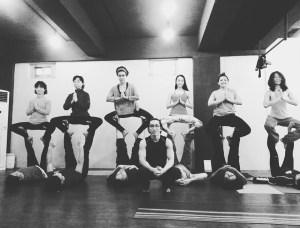
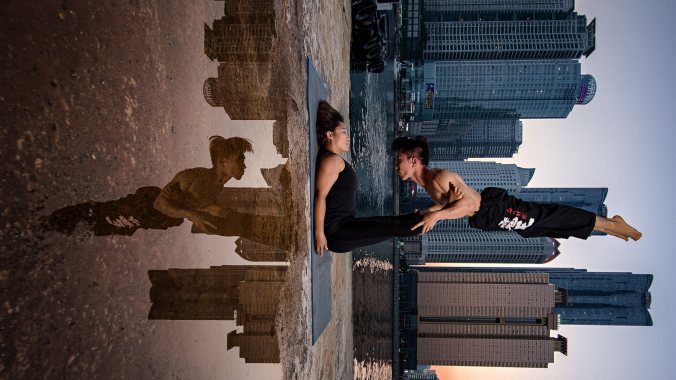
Her teaching style is creative and unique. Students leave having worked their muscles, often in partner exercises which are an extension of the playful and challenging acro yoga classes that Mindy also teaches. If you thought I couldn’t compliment Mindy’s yoga teachings anymore, then you were wrong because her acro classes are an equally fun way to learn more about yoga, yourself, and yourself through yoga. You can read more about my Kaizen acro experiences here and here, oh, and here (I told you I went to a lot of her classes.)

Simon, the other half of Kaizen, has a background in body weight training which comes through in his classes that push students physically, but most importantly safely. Simon’s other trainings (he also teaches jui-jitsu) aid him as a teacher of yoga and therefore benefit the students by giving them a well rounded practice from start to finish.

His Handstands Club class for example, is a four-week series that works on form, Simonalignment, and technique. Rather than just having students hop up into handstand against a wall, Simon works the areas of the body necessary in the advanced pose, and he works on them for the full four weeks. It’s a continuous series, and while the goal isn’t to perform handstand in four weeks, which is very unrealistic, he will get you pointed in the right direction to maybe one day to master the pose.
DIRECTIONS

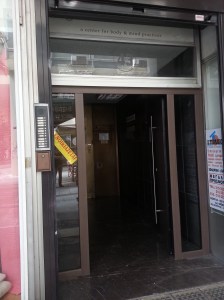
Take the green line of the subway (Line 2) to stop #212, KSU (short for Kyungsung University) or 경성대학교 in Hangul. Go out Exit 5 and walk straight. Take your first left directly in front of Artbox. Walk two and a half blocks until you see a boutique called Zebra on your left (on the right is a yellow cafe [of course – there are a gazillion cafes in Busan] called Compose Coffee.) Walk into the building entrance which is just left of Zebra, and take the elevator to the 6th floor. There is no sign for Kaizen in the elevator, look for Man to Man Fitness in Hangul on a red sign for the 6th floor, which is what the studio was called before Mindy and Simon took over.


COST

Since classes at Kaizen are designed and taught in four week series it is best to buy a month’s pass. You can buy a 4 class pass to cover a specific class, say Simon’s Handstand Club, or you can buy a bigger quantity, or you can get a one-month-unlimited-membership pass which covers all classes. Visit this page for details on pricing. Drop in classes are 20,000 won (roughly $18.)

mindy&simonacro

Mindy and Simon of Kaizen, Busan.


Disclaimer: The reason that I have not written my Kaizen studio review for so long is because I was a stand in substitute teacher at Kaizen when trainings and workshops took Mindy hopping around the globe. Teaching at Kaizen then became a regular class in my teaching schedule. I felt it unprofessional to review the studio while teaching there, so am writing the review after my Busan departure.


Bhavana Yoga Center, Athens, Greece – Review

My time in Athens is short, so I’m happy that I was able to find a  community class at a centrally located studio right in the hustle and bustle of the old city. Bhavana Yoga Center  is easy to get to (directions below) and hosts frequent classes throughout the week.

The class that I attended was a Saturday noon-time community class. You can find specifics about community classes, like who’s teaching and what style it is, and all other classes (they host an array of styles and list level specifics) on their website under Weekly Class Schedule.

Directions

Bhavana Yoga Center is located on a popular pedestrian street called Aeolou, which you’ll likely find yourself on as you explore Athens. It’s not far from the Acropolis and is home to lots of cute cafes and restaurants. There are also two Greek Orthodox churches on Aeolou Street which are good landmarks to use to find the yoga studio as it is situated between them, so if you pass both of them then you’ve gone too far.

The address is: 43 Aeolou St. & Kolokotroni                     20160402_141723.jpg
105 51, Athens – Greece


The Studio

Is beautiful. I couldn’t stop thinking how beautiful it was while I was having a look around before class began. Everything about it is warm and homey with sprinkles of humor thrown in (a handmade sign on the cork bulletin board read: “Warning: yoga causes health and happiness.”) The entrance way invites you to remove your shoes straight away and silence your phones. There’s a changing room for each of the sexes as well as bathrooms and showers. They have lockers which you can lock up if you bring your own lock. There are mats to borrow as well as props.

Be sure to arrive 15 minutes before your first class to fill out a student form and get changed. There’s a comfy lounge area with a couch and yoga books to browse if you arrive a bit too early. Directly in front of the check in desk is merchandise to buy like mats, straps, and teas. 20160402_141201.jpg

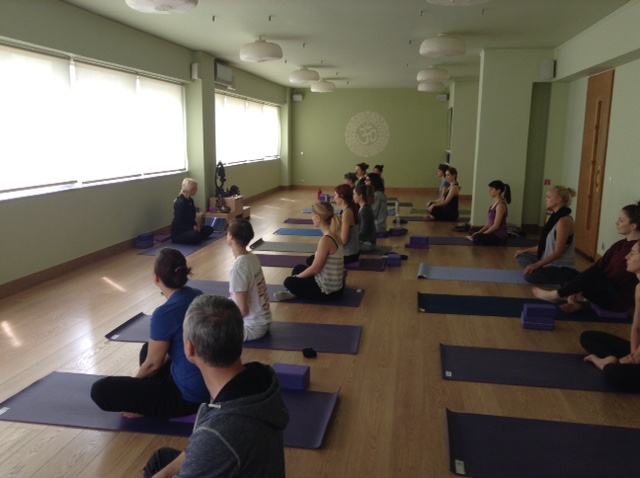
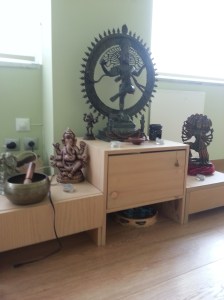
The yoga studio is long and open with windows all along the front. There are a lot of yogic relics like Hanuman and Shiva around that made me feel homesick for India and that add to that warm feeling. The community class I attended lasted an hour and 45 minutes. The teacher was a visiting teacher from Germany and the class was taught entirely in English, which is not always the case I was told afterwards. Classes are taught in the native Greek as well, but with some Sanskrit knowledge and peeking while in poses classes can be taken anywhere in any language. (Side note – the studio and their website were one of the most English friendly, and therefore tourist friendly, that I saw while searching for a studio in Athens.)

IMG_0449


Cost

The cost of Saturday community classes are 8€. If you try a mid-week class and it’s your first class at the studio, then the cost is also the same low 8€ with regular drop-ins costing 15€, not too bad for a European capital city.

More detailed information on pricing can be found via their website here.


Bhavana Yoga Center, in my opinion, is a must for a travelling yogi or yogini in Athens. All in all it was a great experience visiting the yoga center and I left ready to start my Saturday touring Athens with much needed energy and warmth.

Holi Cow, You’ve got some Pink on Your Face

A description of the color festival and four tips you should know

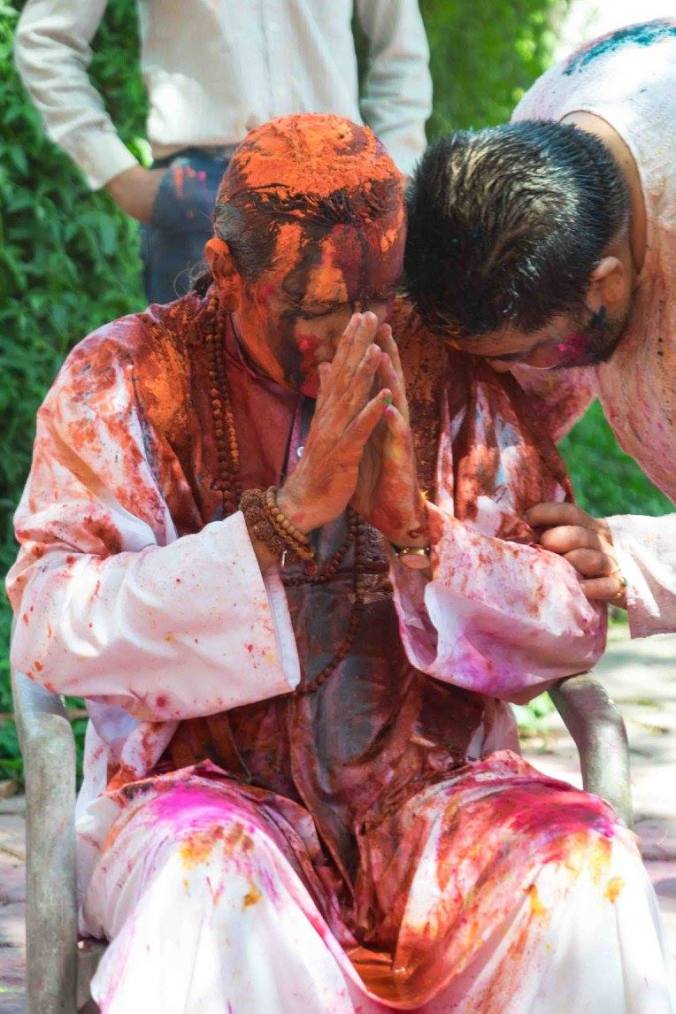
My month here in India is quickly (and sadly) winding down. It’s been an intense month of study, practice, and growth here at the Paramanond Ashram and Institute. Incredible India has been full of amazing food, wonderful people, and lots of color – powdered colors everywhere. Pinks, yellows, blues, and greens smeared on clothes and across skin during the exciting celebration of Holi. If you’re not familiar with what Holi is, then check out the new Coldplay song featuring Beyonce and it’s pretty much like that.

So what’s it all about? During a morning lecture the day of the festivities, Guruji, the primary instructor (guru) here at the ashram, told us about the meaning behind the throwing of colors. He put it in perspective of yoga and the chakras and explained that it’s a day to enjoy 100%, to let go and play like a child. There are definitely plenty of opportunities to do just that – powder, water, music, dancing! We also learned in our Ayuveda class that water and mud are thrown in the mix in order to cool down the intense vata that comes with the summer season, and it is hot here, so it makes sense.

12322694_10153292321640927_7285696917292266035_o

For our Holi celebration, yoga students and ashram attendees alike played just outside the doors of the ashram, only venturing onto the main street in the afternoon after most of the festivities had died down. It’s a bit of a shame that we didn’t immerse ourselves in the larger city celebration, but I’m in no way regretful, we had a blast. If you have the luck to celebrate Holi in India, then remember these four things

  1. WEAR WHITE – Obviously the color will show better on white than a dark surface. Make sure you have a white shirt that isn’t special to you, maybe that one that got splattered with turmeric tea, because that thing will never be white again (same can be said for your pants and underwear!) The colors keep coming and coming; it’s like a big human-tie die experiment.

12898189_10153292320960927_6229741255597557506_o

  1. OIL UP – This tip was given to us hours too late on the first day of celebration, but came in handy the next day (Holi is officially two days here in M.P. and some even got into the mood and bags of colors a day early.) Oiling up the skin, with say coconut oil, doesn’t allow the color to penetrate into your pores as easily, although there is bound to be some staining. Pink was the worst culprit, it’s been five days and at least as many showers and I’m still seeing people with red in their ears… maybe I should say something.


  1. DRINK WITH CAUTION – “Caution, this cup’s contents may be laced with CANNABIS!” should read the little disposable plastic cups (a whole different post – so much single use plastic!) on Holi because bhang is the offical drink of the color festival. What’s bhang you ask? Well, it’s a milky, sweet drink made with weed basically. You can read why it’s the official drink of Holi here, if you get passed a mysterious glass during the festival you’d be wise to ask about it’s contents. However, Holi at the ashram was without. It’s also good to keep in mind that other festival goers may be under the influence of bhang and/or alcohol, so mind your things and your person.


  1. PLAY 100% – Guruji explained that Holi was a time to forget about boundaries of age, religion, sex, or caste and to let go and play fully, 100%. It’s not as easy as it sounds, but once the first fingers leave a vibrant yellow streak on your cheek, you’ll join right in.


My first authentic Holi in India was perfect. I hope I’m able to celebrate it again at some point, somewhere. I hope that you get the opportunity as well, we need to play 100% now and again.


*EXTRA SPECIAL BONUS TIP/COMMON SENSE – Remember to close your eyes and mouth when you see someone coming with a palm full of pink. A necessary strategy for avoiding the ingestion of colors.


Photos courtesy and credited to Miko Photographie of Berlin.


Yoga Teachers – 4 Tips to Giving Better Adjustments

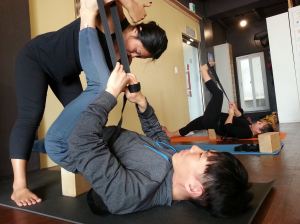
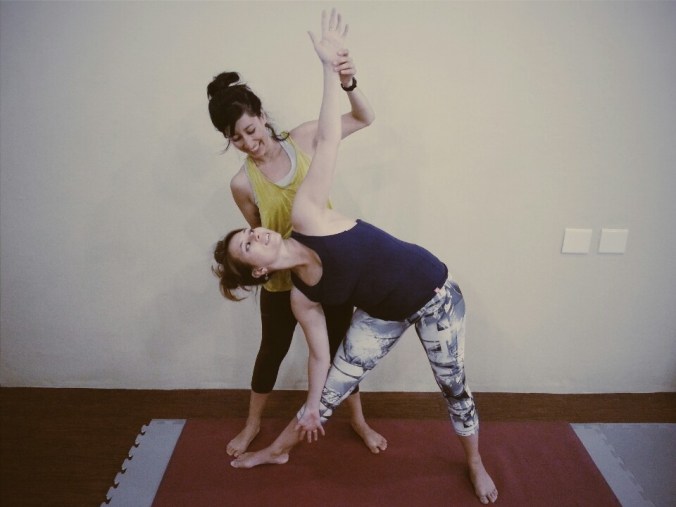
As a forever student I love going to a yoga class and receiving adjustments. There are times when you’re in a pose and you feel like you’re doing it pretty well and then suddenly a teacher smoothly places their hand on your hip, giving a little pressure, and – ahhhh… so that’s how it’s supposed to feel – totally different. For many students, it’s a primary reason for going to a yoga class when they could just as easily do a quick YouTube search at home.

20151229_112859.jpg

As a teacher, adjusting is a practice, like the asana practice. It requires constant studying, observing, and testing of the adjustments. You must go into an adjustment full of confidence, or your student will sense your hesitation and it will be less effective for them.

Flow

On top of teacher trainings, weekend workshops, and reading articles, here are 4 basic tips to remember when adjusting your students.


  • CONFIDENCE It’s so important that I’m saying it again – You must go into an adjustment full of confidence. This may take time if you’re new to teaching or new to an adjustment, so practice is required. But no matter how shy of a person you are, when giving an adjustment in class, you must do it with 100% confidence.


  • BE FIRM This is a teaching point that I will never forget from my first teacher trainer – Kimberly Waugh of Radiant Life Yoga School. She wisely taught me to adjust with a firm grip as opposed to a feeble, too-gentle touch. This circles around to confidence again, and also keeps the creepiness level down to zero.


  • MOVE WITH THE BREATH This is a technique that, surprise, surprise requires yet again more hands on practice. Remember your knowledge of the asanas and apply it to adjustments, i.e. Exhale as you guide a student into a deeper twist and have them do the same, verbally guide them by saying, “Inhale deeply… now take a deep exhale.” as they exhale, you guide them a little deeper in the twist, going only to their comfort limit.


  • TEACH It’s all fine and well to make a student feel better in a pose, but it’s even better to get them to understand why they  are feeling better. This way they can improve their home practice, and they’ll be grateful to you and will return again and again to your classes to keep learning.


Just like your asana practice, keep practicing hands-on-adjustments of students and you’ll be doing it like a pro in no time.Besides learning from workshops practice on people that you’re comfortable with at first, like a sibling, partner, or best friend and ask them for their honest feedback then take the adjustment into the studio. Happy adjusting!


Ashram Life

It’s been just about two weeks now that I have been living, as best to my ability, a yogic lifestyle in an ashram, here in Indore, India. The reason that I’m here is to advance my 20160314_090203studies of yoga, better my asana practice, learn about India and her beautiful people, and of course drink all the chai I can get my hands on (you gotta be fast, it runs out quickly!)
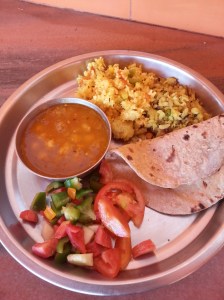
If you’re considering doing a YTTC or retreat at an ashram, here are some basic considerations of life at an ashram. My course is with Paramanand Yoga Institute, in Indore, Madhya Pradesh which is centrally located in the peninsula of India. Living a simple lifestyle won’t be for everyone, so do your research and contemplate if you’re up for life at an ashram before deciding to study one.


  • Yoga – It’s what I’m here for. In my advanced studies I’m learning a lot not just about the postures but about the other aspects of a yogic lifestyle, and it’s very much encouraged to go as deep as you can into it. That means trying to limit social media time, self practicing asana and meditation, and loads of personal reflection. If you go to an ashram to do a training be sure to look into the style of yoga that they practice and teach, as it’s very likely that it will differ greatly from the western, vinyasa flow/hot yoga that you’re used to. Go with an open mind and take as much as you can out of the variety of yoga styles that there are.


  • Vegetarianism – Ahimsa, or nonviolence, is a part of Yama, or self conduct, which is part of the Eight Fold Path of the Yoga Sutras by Patanjali, and this  might include vegetarianism in most ashrams. If you stay here in India, then you won’t even miss the meat, because the food is good. My friend forewarned that I’d probably even put on some pounds from all the ghee (purified butter) and sugary chai (both made from dairy, so let someone know if you’re vegan ahead of time) and she might be right.

20160314_131720


  • Karma Yoga – This is no hotel living. No one is going to clean your room for you or do your laundry, living in an ashram means doing things for yourself and taking joy and responsibility in your duty (dharma.) Not only will you be expected to care for your own space, but everyone is required to maintain the common areas. Personalized projects that cater to your interests are a possibility as well, i.e. – blogging!


  • Lectures – Whether  you do a yoga training, a short retreat, or a temple stay, remember that time spent in a new environment is time to learn and grow. At Paramanand Yoga Institute, there is a tightly packed schedule with classes on everything from Yogic Philosophy to Asana class.


  • Modesty – From attire to behavior there are rules here. 1. Shoulders must be covered, and only loose fitting pants (so leave your MPG at home.) 2. Opposite sex should not embrace/Don’t enter the rooms of the opposite sex. In a way you could almost think of an ashram as a monastery, essentially it’s religious, but before you wrinkle your nose too much, consider how a regulated day, diet, and schedule can be really good to push the reset button on your life. It’s also an integrated cultural experience that likely won’t be happening at a beach side resort.

Like everything outlined here, this may not be the case at the ashram that you find, but scour their website or send an email asking outright about style of yoga and behavior guidelines. If it sounds too intense, then look into a weekend visit or shorter trip than a month long training. Whatever length you choose, it’s beneficial to at least dip your toes into another area of yoga beyond asana.

Radiantly Alive, Ubud – Review

Bali won me over, but after spending two weeks there in January with my boyfriend, we decided to head east for Lombok beaches and diving in the Gilis.  We managed to take a few yoga classes in that part of the country – one at Ashtari on Lombok and two at H2O Yoga on Gili Air – but our time over there was mostly spent in the sand or under water.

Kuta yoga

view from Ashatari yoga studio in Kuta, Lombok

Once I was back on Bali in February, this time solo, it was time to hit the mat and fall fully into the Ubud lifestyle again. While my first time there was dominated by classes at Yoga Barn, I decided to branch out during my second visit and check out Radiantly Alive, a smaller studio across town. I bought a three-class card for about $22 that I used over my four-day return trip.

ubud1

Balinese Hindu temple

The classes

My first class was pilates with Acacia, a former dancer and yoga teacher from Canada whose energy and enthusiasm for movement lift up the entire room. The class reminded me somewhat of a barre workout, with small pulses within yoga poses to challenge the muscles. We moved in and out of poses quickly, doing a lot of ab work to strengthen the core.

The next morning, I took Daniel’s RA vinyasa class, a class offered only a few times a week. Daniel is the founder and director of the studio and teaches the class in addition to running workshops and hosting yoga teacher trainings.

He began the class by asking about our relationship with time. Is it a positive relationship or a stressful one? Is there never enough time? Are we always worried about what time it is? Ubud may be one of those places where time doesn’t matter, but for most of us, our lives are dominated by schedules and timelines. It was an interesting way to begin the class, and I find myself  – a month later  – still wondering about my feelings towards time.

Physically, the class was dynamic and demanding. The room was crowded and sweaty, and the day’s heat was in full swing already at 9 a.m. After core work, we played around with half moon pose, practiced going deeper and opening up more, losing our balance, laughing and trying it again. This led to the final challenging pose of the class – pincha mayurasana, aka feathered peacock pose. The inversion practice began by placing our forearms on the mat, walking our feet in and raising one leg. From there, we practiced little hops, floating our standing foot up just a few inches as we put weight into or arms. With practice, those hops become higher until the full inversion is reached with both feet overhead.

photo (6)

practicing pincha mayurasana, working towards the full inversion


Daniel related learning to balance in pincha mayurasana to learning to walk on two feet. We’re afraid of falling, but bit by bit, with continual practice, we can find our balance. The body knows how to fall, he said. We recover and try again.

I intended for acroyoga to be the final class of my Ubud experience, but a cancelled class meant signing up for something I never had any interest in – yoga dance. Again taught by Acacia, the class was packed with yogis who came for acro and ended up playing together in a completely different way. We began the class with a free dance – no mats to contain us – closing our eyes and moving to the beat of the music in any way we felt. Once we got a little loose and more comfortable, we started learning the 3:39 minute dance that Acacia had choreographed.

yoga dance 1

Acacia (front center) leads a small group of us after class

Yoga dance incorporated yoga poses, like standing forward fold, seated twist, and downward facing dog, with quick dance moves. The class was full of laughter, and Acacia’s encouragement carried us through to the end of the 90-minute session. Check out the embarrassing but awesome video of a few of us practicing the choreography one last time after class, here.

Facilities

Radiantly Alive has one main open-air studio with a gorgeous jungle view. Drinking water is available at the front desk, and the studio is equipped with mats, blocks and straps.

Anywhere from two to seven classes a day are offered, with 15 different classes throughout the week as well as yoga teacher trainings and workshops. Visit radiantlyalive.com for more info.

Pricing

Radiantly Alive offers just about any option to suit your stay in Ubud, from single drop-in classes at $9.50 to 180-day unlimited passes for $495 – and everything in between.

Directions

The studio is conveniently located across from Bali Buda, a fantastic restaurant with a neighboring natural foods market. For detailed directions, click here.


Korea, I love You

An expat’s love note to the beautiful land of mountains, department stores, & kimchi

It seemed such a foreign land when I first stepped foot onto the peninsula of Korea (South of course, I better clarify that before going any further.) Way back in 2009, I took a 30+ hour journey that landed me wearily in the country that I would unknowingly call home for more than four years.

My first hours in Korea were exceptionally Korean. I was placed in a love motel for my few days of training and taken to a dinner that came out wriggling and squirming in the pot. However, after the click-click-click of the gas stove, it began to slowly lose it’s luster, changing from sea life to dinner. It’s been kimchi and seaweed ever since, and although it took some time to acquire the taste, acquired it I have.

From Ulsan to Busan, teaching students aged 2 to adults; I’ve traveled the country, learned to love my local neighborhoods, and have grown comfortable living life as an anonymous foreigner in an incredibly homogeneous country. The list could go on and on of the things that I love about this country, but I’ll reign it in and keep it to a short-ish list.

Healthcare!

It’s quick, it’s easy, it’s so AFFORDABLE. Everything from a visa required health check to an eye examination and glasses fitting are services readily available and advertised to foreigners. Many hospitals employ a full time translator who will help set up your appointments, discuss what you need, quote you a price, and go with you to translate during your visit. My best medical experiences:

  • 10 Minute Glasses – There are glasses shops on every street corner full to the brim with inexpensive frames. The exam takes minutes and is as high tech as Asia gets. My last two pairs of glasses took longer to chose than to have made. After I found my perfectly dorky pair, the assistant informed me to wait 10 minutes for my prescription lenses to get put in. TEN MINUTES! The cost? 30,000 won, or less than 30$ (*Disclaimer – not all optometrists will speak English, be brave, or shop around for a shop with a doctor who can communicate with you. Or use google translate on your phone.)

1927748_10156481695495567_4260413307540884913_n

  • Dentist Visits – Luckily my dental health and hygiene has been mostly A-OK, minus one unfortunate incident. Cleanings you can have done at most chi-gwuas(dentists,) but you should know that it’s different from cleanings back home. In Korea teeth cleanings are called “scaling.” It can be a scary experience if you’ve never had it done before. While it’s called scaling, it is more like “scraping” and it feels like a sharp metal object scraping along the gum line of your teeth. But it can’t be all that bad if it’s what the entire population receives for dental care and the whole frightening experience will only cost you about 10,000 won, or less than 10$ USD.


  • Blood Work – I’ve lived with anemia for my entire life and never thought much of it, but figured that while I have reliable, full coverage insurance, why not check it out. It’s good that I did because my iron levels were extremely low, so I got jabbed with two viles of iron, started taking pills, and adjusted my diet. I then made a few more appointments via the English translator to continue checking that my iron level was increasing with the pills. The appointments may have been superfluous, the translator and doctor even questioned why I was visiting again so soon after my last visit, and my reasoning quite simply was, why not? The entire experience of seeing the doctor and having a consultation via the translator, having my blood drawn, waiting for the results took about 2 hours and cost roughly 20,000 won, I’m sure you worked the exchange rate out already, but that’s about 20$ USD. Oh, and after the results were done there was another consultation with the internal medicine doctor. Let me repeat that – I had two personal visits with a specialists via a translator, and got blood work done in about 2 hours. Getting blood work back in the US can involve visiting a lab and waiting a couple of days for the results, Korean healthcare is miles beyond American.


Cost of Living

Korea is so livable. I lived in the second largest city, Busan, and was able to not only get by, but to save money. Granted, I’m generally a frugal person, but the cost of living in Korea is relatively low compared to back home in the US. Check it out:

  • Rent – I found an apartment that was a block from the second largest beach in the city, a 10 minute walk to the subway line that connects the whole of the city, and was surrounded by mostly cafes and some dotted restaurants. In Korea you pay key money, or a deposit on your apartment which you get back at the end of your stay. Key money can range from 1 million won to 10 or 15 million won, that’s about 1,000/10,000/15,000 USD. Monthly rent depends on your key money and ranges from 300,000 won to 600,000 won (300USD/600USD.) Oh, and I should mention that Korea has the fastest broadband internet in the world and connection/router/month of unlimited use costs about 20USD.


  • Food – Korean food is healthy and delicious. As mentioned about it requires some 19041_546881468487_8253510_nacquiring though unless you grew up eating fermented cabbage on the regs. You can buy fresh fruit and vegetables at local markets for cheap. Eating out at Korean restaurants is cheap as well and healthy. Western restaurants serving pizza and pasta will put you back much more and generally are disappointing.

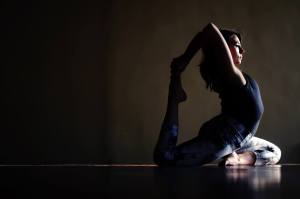


  • Enjoy Your Life – You can truly enjoy your life because you don’t have to worry about how you’re going to pay your cheap rent. There are loads of things to do especially around Busan: yoga of course, hiking, cycling, camping, bars, noraebang, department stores, jimjilbang, and more. I sometimes can’t believe the lifestyle that I have just given up, but I’m hopeful that a similar life is possible to create elsewhere in the world, and if it isn’t then back to the Bu I shall go.

10622760_10102457944880699_4955680072870828057_n

  • Healthcare – *See Above

Safety & Convenience

Korea is sometimes known as the Land of the Morning Calm (possibly because everyone’s still at noraebang [karaoke] till 7am) but should really be called the Land of Convenience. From shops and bars that never close to easy-to-use public transportation. Likewise Korea could be known as the Land of the Low Crime Rate. Straight away upon my move to Korea I adapted a sense of ease and comfort navigating the zigzagging streets at all hours of the night when returning from those never-closing-noraebangs, which might sound straight up stupid to someone who’s never lived there before, but those of you that have, know what I mean. I’m a small, unintimidating woman and never once did I fear for my safety while in Korea. This might just be the hardest thing to leave behind.

  • Transportation – It’s cheap, it’s easy, it’s often, it’s Korean public transportation and it comes in the form of buses, trains, taxis, and subway. You can get from one side of the city to the other for about 2$USD and in a little over an hour. You can also get from Busan to Seoul by bus or your option of slow or fast train, KTX. You can also use your rechargeable subway pass both in Busan and Seoul, and probably Daegu and Ulsan, etc. Now, can you imagine pulling out your DC metro card in New York with no problems?


  • Safety – No drugs. No guns. Minimal crime. There are countless stories of smartphones being left in cabs and getting returned, bags full of belongings getting forgotten on that convenient public transportation, and getting returned, and even wallets getting handed back with cash still inside. This is not 100% true all the time of course, and I did have a bike stolen from my building once, but never have I feared for my physical safety (other than every single day on my bike commuting on the road, but this is a love letter note a hate note, so I’ll leave that bit out.)


  • Healthcare – *See Above


This could go on. I could write about relationships, the yoga community, and my lovingly adorable students, but already I’ve hit the magic number of 1000+ words which means that most of you quit reading a long time ago, or never even clicked, too scared off, and to those of you who stuck to it, congratulations and thank you! So I must bring this post to an end by saying that I will forever remember my time in Korea in the warmest part of my heart. It will never fade away because Korea has become a part of me, I will probably take my shoes off when entering a house, I will pass money using two hands, and I will have so many great friendships formed over the bonding of being expats in the Land of the Morning Calm. 11193389_10155440948275618_418032844345695615_n


Professional Yoga Shots – 4 Tips

Instagram Yoga, it’s a thing. As described by Jason Crandell (paraphrased from memory) Instagram Yoga is – “doing a pose on one side long enough to get a snapshot,” as in, it’s not really yoga. Yoga is balance, so if you attach to a shot of yourself holding an impressive pose (on your good side)  for the split second it took to take the picture, then it’s not truly “yoga” in the traditional sense. But I’ve done it, it’s part of my image as a teacher, which I need as I begin to market myself to studios. This post is not about Instagram Yoga, which on the positive flip-side can be very inspiring. Rather, this post is about finding a photographer friend, relative, or hiring a professional to take photos with a more technical camera than an iphone 6.

Why? The main reason to do a photo shoot as a yoga teacher is quite simply professional. We interact and consume primarily through screens these days, and images have impact, (honestly, would you enjoy this blog post as much if it didn’t have images embedded into it?)

As a yoga teacher about to leave my teaching position here in Korea I know that I have to do a lot of self promotion in order to find teaching jobs in new cities. That self promotion involves Facebook, Instagram, this website, emails, and more. Each thing listed will inevitably have my face and yoga poses all over it.

Here are my tips for your Yoga Photo Shoot:

  • Dress Modestly – All bodies are beautiful and so is self confidence, but bearing midriff and butt-cheeks can be too much for some. Remember that these photos may be used professionally, so use your judgement.

12605355_1231107303570471_6638566688454559275_o

  • Realistic Poses – Chose poses that you can hold comfortably. I highly doubt that a studio would interview you and request you demo your strongest, most impressive pose, but still, you need to be honest with your practice and abilities. Straying from comfortable poses to pretzely poses is for the classroom, in the roll of a student, with an experienced teacher, or your photo shoot could lead to injury.


  • Find A Yoga Photographer – What? That’s a thing? Well, I’m not sure if it’s exactly a thing, but when I had my photos taken it was by my good friend, Mindy Sisco of I Write Light photography. Mindy is a fellow yoga teacher, so she knew exactly how to get my toes, elbows, and eyes in the right place at the right time for the most beautiful (if I do say so myself!) pose shots. In the past my boyfriend, a great photographer in his own right, has taken yoga pictures of me, but he couldn’t tell me when my hip was jacked up in Hasta Padangustastana because he doesn’t have the eye for it, so some photos came out unusable.


  • 12525392_1228646733816528_6095315996969326375_oHead Shots – Be sure to get actual head shots. A studio may want to see you bustin’ a pose, and pose shots are great for social media usage and event posters, but you’ll also want to represent yourself more professionally for the greater world that exists outside of the yoga world, because sadly we have to enter that world from time to time. A good head shot can also be used for Linkedin, other network profiles, or your non-yoga resume.
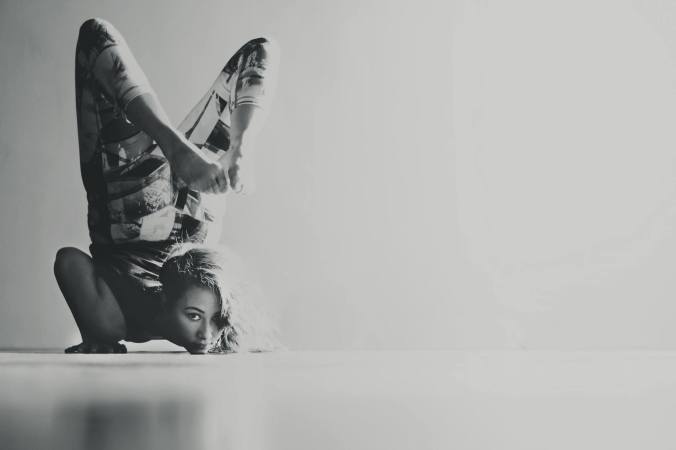
My experiences with yoga photo shoots have been nothing but fun. Whether you do it mid-cycle ride, hoping off your bike at the perfectly spotted backdrop; or hire a make-up artist, hair-stylist, and photographer to do studio shots, it’s most important to enjoy the process. Meditate on your image and how you would like to present yourself as a yoga teacher in these single frame images; almost everything when done consciously will come out better than when done in a rush. Be proud of the end result, share it, and self promote. Well thought out, professional images could get you a lot further when applying for jobs than your Instagram roll.

12640221_1228735380474330_4478747538666939627_o12633589_1231107263570475_33090303289947209_o


Like I Write Light’s yoga photography? Visit Mindy’s website for information on how you can book a photo session with her. She primarily works out of Busan but is traveling/teaching/shooting around the world and just might come to an area near you.