Guest Author – Ashley Biekert on Her Yoga Journey – A Yoga Beginner’s Testament

Introducing Ashley, a new convert to the joy that is yoga. Ashley gives her experience overcoming the ever-common anxiety and nerves that come hand in hand with attending initial yoga classes and her transition to becoming a regular yoga student that has had success in health, both physical and mental.

Yoga…. to someone who has had extremely poor flexibility (like I couldn’t even touch my toes) for my whole life, this four letter word held a lot of intimidation for me. I mean, sure, I had tried a few basic poses at home, but the thought of a class where other people might see me struggle made me shudder. To say it was out of my comfort zone was an understatement to say the least. But the truth is, good things happen outside of your comfort zone, and once I was able to recognize this, I was able to truly embrace this wonderful art form.

I started my fitness journey in December of 2017 with at home Beachbody workouts. Yoga was my Sunday workout video, and this truly was my first introduction to any sort of yoga beyond those couple basic poses I knew. As the weeks went on I began to look forward to my Sunday’s but I still felt like something was missing from the experience. I looked around online to get some more info on the yoga classes in the area but was incredibly hesitant because I truly felt there was no way I could ever measure up to the people in those classes and that I would be the most inexperienced person in attendance. So I waited.

At the end of February my birthday weekend rolled around and I found out there would be a Restorative Yoga class at Sun Moon Yoga, and since this sounded more my speed, I convinced my sister to join me as a birthday gift. It was great! My instructor Karen made me feel so comfortable and there was something so different about the energy in the room when you have fellow practitioners with you. I was hooked. At the end of class, I signed up for beginners yoga that just happened to be starting that Wednesday, and I went for it!

Now, was a nervous showing up to class that Wednesday? Absolutely! It was a new experience and those always make me anxious. But do you know what outshined that nervousness that I had? EXCITEMENT! I was so thrilled about this new journey I was embarking on, and I couldn’t wait to see what I could learn.

Every week I walked away from class with more confidence in myself and more appreciation for what my body was able to do for me. I could see my flexibility increasing, slowly but surely, and I feel myself getting stronger. I was no longer intimidated by the thought of someone seeing me struggle or the teacher adjusting me. In fact, I fell in love with adjustments. These are something you very much take for granted when you are only practicing on your own. It was great to finally have someone showing me the right way instead of just guessing. I could feel the poses working for me instead of struggling to get them to be what I thought they should be. There was absolutely no looking back now!
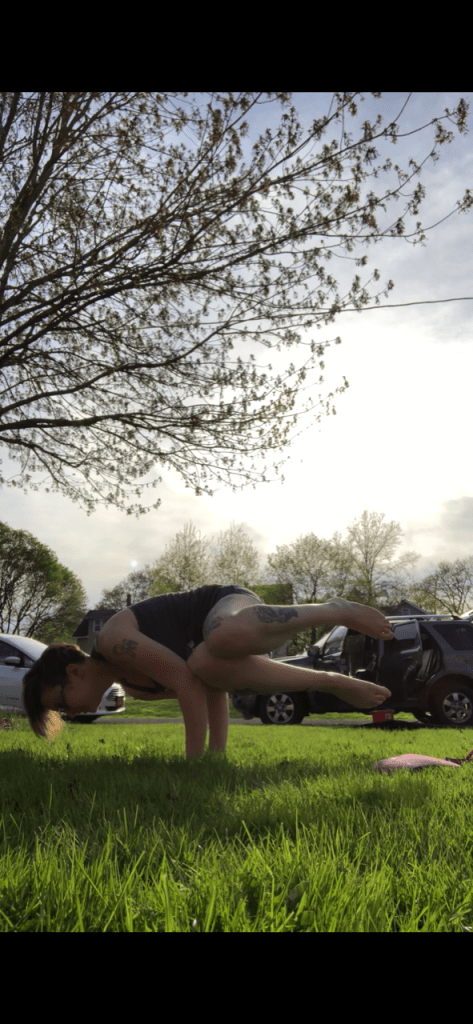
image1

I no longer fear new experiences when it comes to seeing what my body can do. I’m not afraid to be the least experienced person in the room. We are all on different journey and we are all at different places in our journey. To compare yourself to someone else’s capabilities is so futile. I’ve learned to love my body for what it is today while also being excited for what it will be capable of doing for me tomorrow.

The biggest thing Yoga has taught me isn’t how to touch my toes or the proper way to do downward dog, it is to love myself always… To love myself through the failures and successes, and to embrace my imperfections and work through them. This is the only body I get, and I am so blessed to be able to use it for the short time my soul gets to inhabit this planet. I won’t waste any more time doing anything but wholeheartedly loving my vessel and working to improve it however I can.
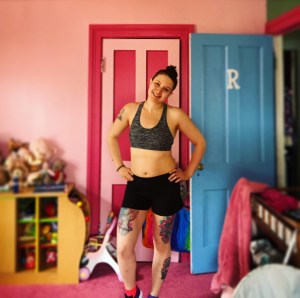
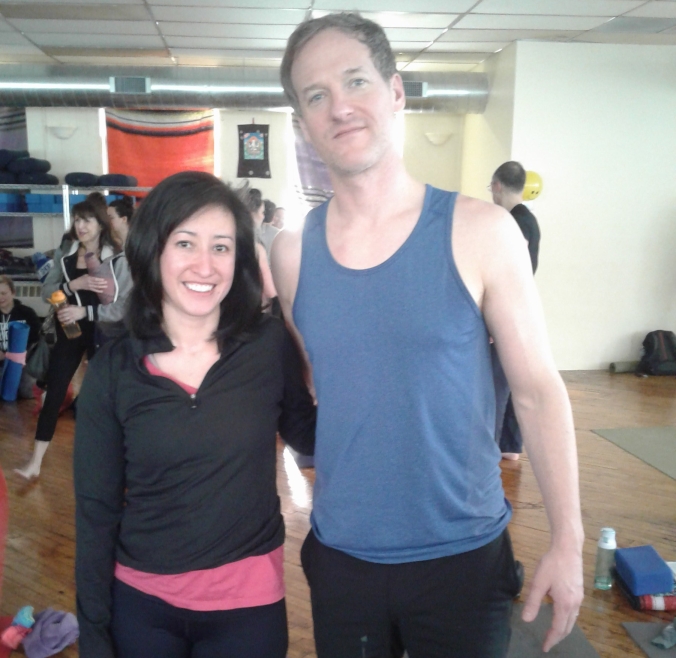


image2My name is Ashley Biekert and I have been a resident of Jamestown, NY my entire life. I have been married to my husband Andrew for almost three years and I am the mother of my beautiful 1-year-old daughter, Rayne. I have only been doing yoga for a few short months but I have found a lot of love for it. I hope to continue to grow every day and see where my body can take me. The sky is the limit! You can follow me on my fitness journey on Instagram at @raynys_mama 

Jason Crandell Workshop Take Aways

It was two months ago that I attended my first (but not my last!) workshop with Jason Crandell. I traveled a far distance – ten hours round trip to be exact – to practice and study with Jason, a renowned vinyasa teacher. You can read about the studio where the workshop was held here.
No matter what style of class or where, I always take something away form the teacher, good or bad, and store it for future use and implementation. Let me clarify that I do not mean that I take sequences or any other sort of “intellectual property” but rather a word here and there or an interesting assist. These are my take aways from Jason’s workshops.

Humor

He was funny, and frequently, too. There were around 80 people practicing challenging vinyasa sequences together, energy was high and as much as it is repeated and known not to let the ego creep in and self judge in class, I’m positive that eyes were looking around the room to compare practices. Jason cracked jokes that dissipated thoughts of the ego, at least that’s the effect that it had on me. The mood was lightened during handstand practice, and the point was made that life is not ending if the handstand is not perfect.
img_20180324_165433.jpg

Float Around

There was a small raised stage with a glued down yoga mat, I’m assuming that that’s where the usual teachers teach from, and it is where Jason started his workshops from, but not where he was glued to. Throughout the roughly eight hours of flow, Jason walked around the room to give his sequences. I liked this. It kept everyone involved and the energy flowing.
Also, it literally brought him back to the students’ level. Something that I had never though of until I heard the idea on Andreah Ferrerrit’s podcast, Yogaland, is that as teachers we have an instant air of hierarchy and power over our students. To move around the room and give students equal attention, not just the advanced students at the front (because lets face it, beginners generally go to the back and it’s usually only the late comers who have to begrudgingly roll their mats out right in front of the teacher, or it’s the confident students who choose to be there.) Hear Yogaland’s podcast about this topic and yoga in the era of #MeToo here.

Demo to the Crowd

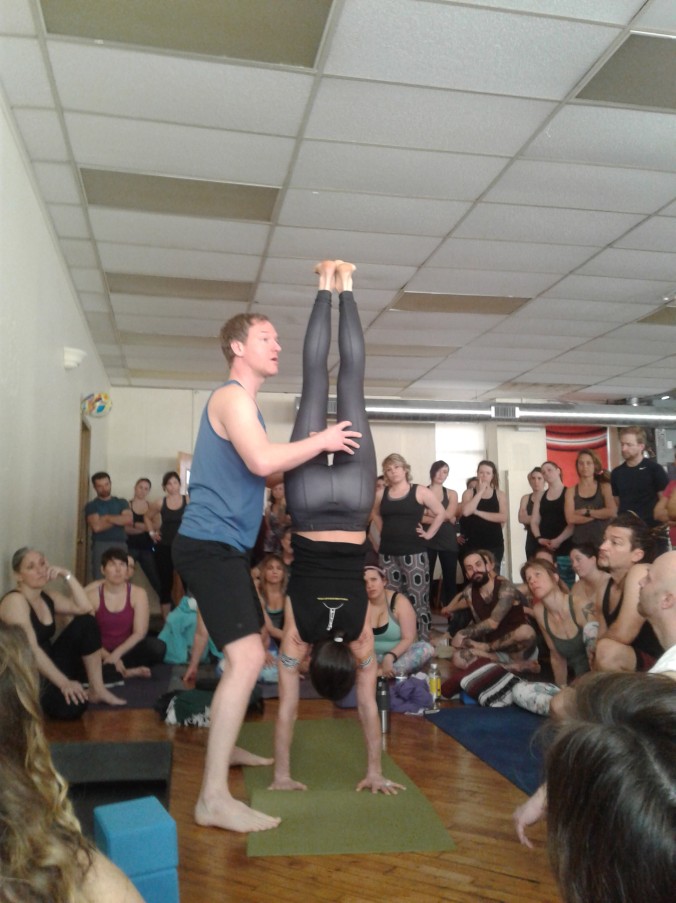
Usually in class I demo poses myself, but often times Jason had a student perform a posture while he pointed out adjustments or assists, never to the embarrassment of the student, he demoed students capable of the poses. Often times his assistants were called over to a central mat to perform the pose, as in the photo below.

IMG_20180324_114105.jpg

This is such an effective teaching tool. It brings the entire room together to witness a pose developing in real time. Questions can be asked and answered then and there. This is necessary to do when having students partner up, you have to make sure that they know what they will be doing and what their partner’s role will be, especially when the pose to be practiced is an advanced pose such as an inversion.
As mentioned in the intro, my first yoga workshop with Jason will not be my last. I have signed up for a morning workshop with Jason in early June, this time closer to home in Cleveland, OH. It was difficult to make the decision to attend only one portion of his weekend long workshop in Ohio, but my mentor and good friend, Mindy Sisco is visiting me during that week from South Korea, so sacrifices had to be made. Not to mention, I’ll be practicing with her all week, including in Cleveland, so I’ll still be learning and growing as a student and teacher.
If you are a yoga student who is getting more into the practice, then I highly recommend finding yoga workshops near you this summer; teachers, of course you know how beneficial workshops are. Workshops are better than classes, instead of a teacher simply leading you through sequences, the teacher gives you the technique and drills to be able to perform difficult poses in the workshop or down the road as you build strength. Then you can take those newly learned skills and apply them to your home practice or at a the next studio class you attend in which the teacher says,”… and now pop into tripod headstand if that’s in your practice.” because it will be in the practice now, a new skill gained from a knowledgeable workshop.

The Yoga Loft, Bethlehem, PA – Studio Review

I made a commitment to myself that I would train more this year, so when I saw on Instagram that Jason Crandell was teaching a weekend workshop on the east coast of the U.S. I didn’t have to think twice before booking a spot. The studio is a good five and a half hours from where I live, but the idea of a weekend with a well-known vinyasa yoga instructor to practice and learn made the drive worth it. A separate post to follow regarding the workshop with Jason, this post is about the studio alone.

The Yoga Loft is in a central area of Bethlehem which is an old steel city with the decaying remnants of that time still dominating the skyline. The studio is in an old brick building with street parking and a parking lot to the side. The studio is up three flights of stairs, something to keep in mind if running late or suffering from an injury.

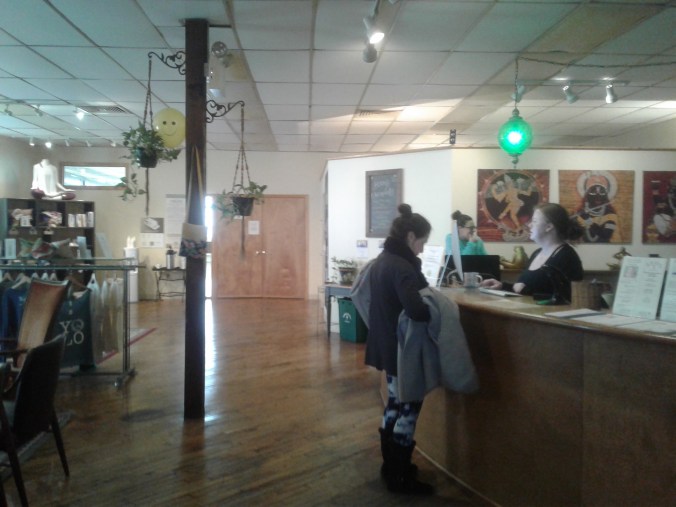
Once up the flights of stairs you pass through a door into the foyer of the studio. There you can register at the front desk, browse their yoga accessories for sale (clothes, books, etc.), and lounge in a sitting area. There’s also a water machine to fill up your reusable water bottle before class.

IMG_20180325_132831.jpg

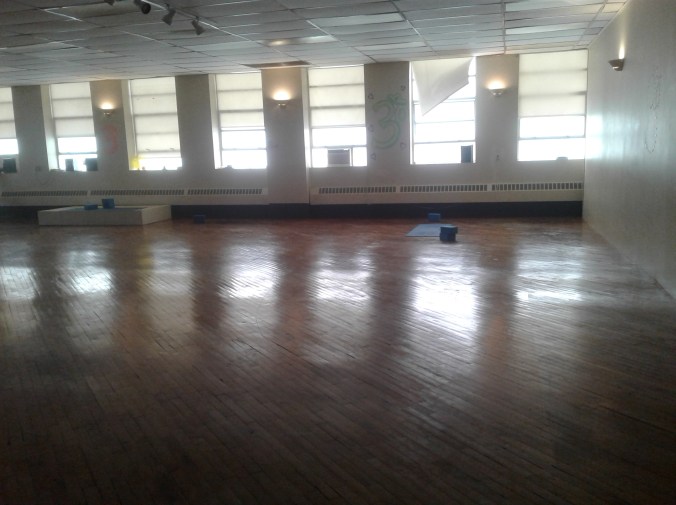
Just beyond the entry way and slightly to the right is a doorway that leads to two changing rooms and the toilets. The double doors directly ahead lead to one of their three studio spaces. The space that I practiced in was massive, photo below, it held 70-80 people with mats tightly placed side by side. The floors of the studio are beautiful hardwood and there are a lot of windows to let natural light in. All areas of the studio are welcoming and kept clean. Staff that I interacted with during registration and during breaks from the workshop were friendly and sociable, although I did not take a class with any of the local teachers while there.

IMG_20180325_132252.jpg

There are a lot of classes on offer at The Yoga Loft. Looking at their weekly schedule online, there are three to eight classes offered per day, with less offered at the weekend. Classes on the schedule are labeled by level, a guideline that ensures students attend appropriate classes, something that not all studios provide prospective students with. Styles offered on the weekly schedule include: Yoga Flow, Infant Yoga, Barre & Pilates, Candlelit/Restorative, and more. Special events, workshops, and free events also found on the website.

The studio offers a lot of promotional classes to get new students in the door. There is a six-week beginners series for those new to yoga to help them get them on their feet and gain confidence to then explore other teachers and styles at the studio. They also have a new student, promotional, unlimited monthly rate of $39. Lastly, they host open houses that include a free class and option to ask questions about yoga to staff. These all make a lot of sense in terms of brining new students in the door and getting more people interested in yoga, especially those that may feel shy or nervous to try yoga for the first time.

Another interesting page found on their website that I have never seen before on a yoga studio website is a section called ‘Places We Love’ which includes restaurants and places to stay recommended by the studio. This is so useful because the studio hosts traveling teachers with big names that no doubt draw in students from all over the east coast; case in point my five and a half hour drive there, I also met two women rushing out the door at the end of the Jason Crandell workshop that were rushing because they had something like a nine-hour drive home to Maine! Us out-of-towners appreciate recommendations. Listing restaurants is very smart as most people who do yoga tend to lead a healthier lifestyle than the average American, therefore would appreciate knowing where the local vegan restaurant is as opposed to walking into the nearest McDonald’s.

I enjoyed every aspect of my short visit to The Yoga Loft in Bethlehem, Pennsylvania. Never before had I even really heard of the city or studio, but I am glad that a post on Instagram about the workshop got me interested and travelling across New York and Pennsylvania to travel there. If you live in the vicinity, vicinity being the entire east coast it seems, then check out their upcoming weekend workshops and book yourself a spot. A highly recommended experience.


Yoga Teachers – Taxes!

Taxes are no fun. They’re something that we put off all year until April rolls around and they become a quick necessity and an annoyance. Taxes as a contracting yoga teacher are more manageable and less scary than they may seem leading up to April, however. The one thing all yoga teachers need to keep in mind is to keep track of almost everything. This sounds ultra-annoying, but a little work throughout the year means less digging for information at tax season.

Unfortunately there is no shortcut to filing taxes when working for yourself as a yoga teacher. Whether you work part-time now and again, or fill your weekly schedule up with as many classes as you can, you will need to keep track of how much you worked, where, what you spent to do your job, and how much you made, of course. It can be easier than it seems.

One thing that helps is to keep track of all of your classes, taught and classes attended. Keeping track of hours taught is beneficial for two reasons. One, you can add up your teaching hours and eventually use them to increase your yoga teacher title from RYT (registered yoga teacher) to E-RYT (experienced registered yoga teacher). The second benefit is that you can look back at your calendar and track your driving mileage to and from class to be deducted. Miles to and from classes and trainings taught and/or taken can be tracked and used as deductibles.

The rule on deductibles is: They must be both ordinary and necessary. Ask yourself what you need to teach yoga and if those things are common necessities for all yoga teachers. For example: yoga mats, clothes, and trainings. By clicking the hyperlink you will find an article by Turbo Tax which goes into detail on this.

Other business expenses might include accommodation during weekend long workshops as well as meals out during those trips. Keep track of spending during such cases by using a consistent credit card that continuously tracks spending, keeping receipts, or by keeping paper records. My credit card offers a year-end summary that is very handy to double-check my spending, specifically business spending, which I printed out and highlighted before filing my taxes. My credit card, (Capital One Venture) also earns travel points and has no international fees. Perfect for international yoga retreats.


When working for multiple studios or for companies teaching corporate yoga, you will receive a 1099 from each employer as long as you earned more than $600 in the year. The 1099 is a form that you will have filled out when you started the job and at the end of the year the employer will send you the completed 1099 with your year-end earnings to be used for filing. Keep track for yourself so you can check for mistakes. One thing to keep in mind, if you send an invoice at the end of December but are not paid until January for that work, then the money paid to you in January will be applied to your following year’s earnings.

Final tip, find a tax professional to help with taxes. It may seem as if taxes are a DIY item, and they may very well have been for you for the majority of your life, but with the complications of working for yourself and juggling multiple studio employers, taxes may no longer be self-manageable. Plus, by hiring a professional you will be able to relax knowing that everything is by the book and that you will be receiving the largest possible refund.


Follow hyperlinks for more information. This article does not constitute as legal, professional tax advice, for the real deal find a tax professional.

Bye-bye 2017, Welcome 2018

Well, that was fast. It doesn’t seem possible that 2017 is coming to a close and a new year will be here full of hopes and goals. This year was a big year for me personally and quite the roller coaster around the world. In this post I want to reflect on my past year in terms of my personal life, yoga, & sustainability, as well as use this platform as a way to commit to a few goals for my 2018.

My previous year was full of primarily of weddings and green cards. On Earth Day 2017 I married my love in our down to earth civil ceremony. The choice to marry on Earth Day was intentional as was the entire day and the way that we designed to tie the knot in the most sustainable way that we could. You can read here for ides on planning your own DIY, sustainable wedding.

My husband I again got married in September which was the big shindig with my large family and friends the came from near and far to celebrate with us. This event we also planned to be as DIY and sustainable as possible. I have not written about our wedding in any blog posts yet, I will post tips bit by bit during 2018 as wedding season gets nearer.

As mentioned above, my year was full of our two weddings and a green card, which belongs to my husband (finally). That was a stressful, long, and moderately pricey endeavor, but it was well worth all of the hard work and sacrifices that we both had to make so that he could settle with me here in the U.S. We completed the entire process with some advice from a few friends whom previously obtained green cards, yet without the assistance of an attorney. Coming in 2018 will be a few posts with tips for others who are going it alone to get a green card.

In terms of yoga, my year was both quite and busy. Unfortunately, I did not attend any trainings in 2017 save a few workshops with my dear friend Mindy and some classes here and there at local studios and during my travels. It is a serious goal of mine to attend a weekend or week long retreat in 2018 and to seek out a YTTC in the next couple of years to continue to build my teaching tool bag.

This past year, however, was busy for me as a teacher. I taught in studios and increased my corporate schedule. I continued to teach vinyasa, designing classes appropriate for my students, hatha classes for the corporate students, and some fun workshops and seasonal classes. My 2018 teaching goals, besides training in classes, workshops, and YTTCs, is to push myself more and more to therefore safely push my students to their abilities and beyond as well as to force myself to become more creative with workshops and collaborations.

Finally, and most importantly, I have had some great experiences in my local area, attending educational events on the environment and sustainability. On a personal level I have tried my best to cut back more and more on plastics and have continued my slow fashion lifestyle. Looking towards the future, I am excited to have been accepted as a 5 Gyres ambassador, a title that means that I will host some educational events in 2018 and into the future in which I’ll share the damaging effects of plastics on our oceans. Being an ambassador is a commitment to learn and share and by having an association with their name I have more weight when sharing information with the public as opposed to standing alone on my soapbox. Many people are already aware of the dangers of plastic, but many more are not, and to ask someone to change their daily habits for fish can be seen as a stretch and annoyance, so I am looking forward to utilizing 5 Gyres resources to give myself more credibility.

5gyres_ambassador_rgb

This time of the year is an excellent time to reflect on goals and lessons learned from the past year’s experiences and an even greater time to dedicate yourself to personal goals and resolutions. I can’t wait to give 2018 my all and hone my skills and craft with each passing month and year. This yoga thing is such a journey, as is life as a whole. Each new pose is a practice to get there and each teaching experience is an opportunity to obtain more and more knowledge to benefit my students of the present and in the future.

Tis the Season for Karma Yoga

The holiday seasons is not only fast approaching, it is on top of us. As I write this, it is December 20th, so Christmas is just five days away for many in the west and those all around the world who celebrate the Christmas holiday. Here in the U.S. Christmas began showing up commercially way back around the time of Halloween. Retailers unpacked their Christmas stock, to what many is considered way too early, and each year it comes out earlier and earlier, so that customers can decorate early and check presents off of their lists. Although Christmas seems to have morphed into a season of materialism it still offers a time of giving to those in need.

This is an old tradition that may even go back to Mary and Joseph being given room in a barn, but at the very least goes back a few hundred years. According to a historical documentary by the BBC, Victorian Farm Christmas,  the Victorians were charitable during the holiday season giving through collections at churches to go to the poor or by giving food directly to those without. Many today continue this tradition of giving at Christmas time, whether it be by dropping change in a red, metal Salvation Army pot, or by making a donation to an organization.

Within my communities I have noticed multiple ways to give this year, such as by donating toys to children without, food to a food cupboard, and yoga classes by donation in which the money raised is given to a specific cause. In fact, I hosted a candlelit Slow Flow earlier in the month that was by donation. Teaching for free or attending a class and donating to a cause is what is classified as karma yoga, or yoga in action.

tis the season

Karma yoga can come in many forms. It might be performing a chore, giving of time or money, or freely sharing yoga with others. Around the winter holidays is a great time to host a karma yoga event or find one to attend. People have it in their hearts to give and it’s cold, so a great time to move towards indoor activities. Of course, however anytime of the year would be a good time for karma yoga, but during the holiday season is a very appropriate time to give.

As a student look for donation classes in your community. If you are a teacher or studio owner, host a class or two by donation and find a local organization that will benefit from the money you raise. It is so easy as a teacher to host a karma yoga class, the skill is already there, and the space if a studio is readily available is there as well, all that is required is organization, promotion, and some time to plan and teach.

May you and yours have a joyful holiday season and may you find ways to give to your community this season and into the new year.


Falling for Yoga

The seasons are changing – weather is chilling, moods are shifting. It’s a time of transition, something that those of us that live in regions that experience four seasons go through four times each year, but each time still feels new and fresh. Sometimes excitement for cozy blankets and books, sometimes with sadness to lose the heat of summer. Likely a bit of both.

For me this change of season is a time to rededicate myself to my yoga practice. People are sometimes surprised to learn that my practice ebbs and flows. This is hard to admit. I know that I should, and need, to be practicing yoga daily, but like all other human beings living in our high paced, overworked, distraction filled modern times, I too have difficulty at times practicing as much as I should. Recently this has become more apparent to me via workshops and meditation.

As a yoga teacher I have been trying my humble best to give my students as much of my knowledge and genuine self as I can. I spend a lot of time studying articles and books about sequencing and anatomy, but what gets pushed aside for the book work and for balancing my time with my family, my full-time job, and teaching gigs, is my practice.

I have never totally lost my practice, it just gets smaller and smaller to where I am sustaining my flexibility and strength but am not evolving it. With this public post and inspiration from the falling leaves, I recommit to setting my alarm, abiding by it, and rolling out my mat. Making a habit stick takes time, 21 to 60 days at least, so I am hopeful that by the time winter rolls around that I will have made personal progress.

The primary goal not being to “land” or “master” certain poses nor to improve my Instagram feed – although if being totally honest, both of those things are benefits of a constant practice, sad as it is we live in a social media world; the primary goal is to have personal discipline and to learn my body more in-depth. By doing these two things I will improve my personal practice and my teaching abilities.

With the weather cooling down and the hygge setting in, I am ready to fall for my yoga practice again. To fall in love and to fall out of inversions. To heat up with vinyasa and to cool down with restorative. To be the forever student that I so love to be, not just a bookworm, but a student of the mat.

Yoga Teachers – Continue Education

A two hundred hour training is not very long to learn an ancient practice of the breath, body, mind, and spirit, yet that is all that is required to be yoga teacher, and really it is not absolutely required because as of right now there is no licensing required to be a yoga teacher. That is why it is beneficial to the teacher and therefore to their students to attend as many classes as they can, go to workshops, and if possible attend multiple trainings.

That being said, yoga teacher trainings are expensive. The cost of mine in 2013 in Nicaragua was around $3,000, not including flight. The cost of my most recent training in India was much less, but still at least $1,000. Those prices may look high, but they are pretty low compared to what else is out there. When I was researching trainings I found some for as much as $3,000 for a two week, two hundred hour training (how you can cram 200 hundred hours and thousands of years of knowledge into two weeks is beyond me) which did not include any accommodation or food. The trainings listed above were both month long intensives that included room and board for the entire month. The current, official Bikram training, held at a fancy resort is $16,600 USD for a single room, the training is around two months long, therefore double the length of either of my individual trainings, but still very pricey.

Examples of costs of trainigns are to emphasize that I realize that most people cannot afford to take multiple trainings. That being said, what teachers can do is attend workshops, join studios, find a private teacher, and/or study online. Finding classes and workshops that are designed to be continued education. YMCA, power yoga classes are not what I’m talking about. Those are fine for a teacher to take to get ideas about sequencing, playlists, and cues, but in order to learn more about yoga, teachers must practice themselves and continue to study as much and as often as they can.

Workshops are great because they break poses down and actually teach how to teach, if geared towards teachers. Even if a workshop is for the general public and not towards teachers then teachers are still likely to learn something more than they would in a workout-style class.

A teacher could take every workshop and training available in their area and still not learn yoga in totality. That is impossible. What you can do it specialize your practice and teaching skills. Take workshops that are geared in what is needed in your local market or that you have a keen interest in. Areas of specialization might include prenatal, vinyasa, alignment, etc.

Once you get to a workshop make it worth as much as you can, ask questions, introduce yourself to the teacher and other students, network, and practice hard. Take handouts and study them. Take a notebook and pen and take notes. Treat your workshop time as you did your teacher training time and study.

Self study and being a forever student is what a yoga teacher needs to do to better their own personal practice and therefore to improve their ability to teach their students and to continuously offer more. A stagnated teacher leads to stagnated students, and yoga is about progression.


Arm Balance Fun

Are balances are poses that constitute “crazy”-contortionesque yoga poses, the sort that elicit students to think to themselves that they could never do that, but they really could, or might be able to, with enough dedication to drilling strength and technique. Just as with all poses it takes time to develop the bodily awareness of what each area of the body should be doing in terms of strength, where to push and pull, what to engage, what should be lifting or sinking. Every pose, even those considered beginner poses such as Warrior II involve a lot of technique, the same is of course true for arm balances. If you’re struggling with an arm balance that has been evading you for months, or if you’re just considering taking the leap into practicing them, take a deep breath and read on.

They should be fun. All yoga should be fun and enjoyable. If you find that your practice causes frustration and annoyance at not being able to do a pose, then you need to breathe more deeply and recognize the negativity in your mind, push it out of there, and replace it with positive thoughts such as – “I am trying my best” or “I am building strength” or ” One day I will succeed, it may not be today, but the work I do today will bring me there when my body is ready.”

That last part is important to remind yourself of because your body may not be ready for what your yoga teacher is doing, at least not yet. All poses require strength and flexibility, for arm balances the strength is in the core, so work that a lot. Flexibility will vary pose to pose, but consult a teacher to find out where you should be opening for each individual pose. Once you have the knowledge of what to work to move towards the pose that you’re aiming for then work it, a lot. Train your body for what you’re asking it to do. This will take time and effort. There are poses that I have been working towards for years that are still out of my reach, so I work them. This may continue for a few more years and I may or may not ever reach what I’m trying for, but I build strength and awareness while I practice and I try to be unattached to the pose, whether I land it or not.

To practice nonattachment to your goal pose you must focus on the physicality of it and then release whatever emotions that it brings up. As mentioned earlier, if you find yourself becoming frustrated because you “can’t” do a pose (and there’s no such thing as being bad at doing a pose in yoga, for more on that read here) then simply shake those frustrations out of your head. The same is true for the reverse, if you try something different or for the 100th time and are finally able to get your body into the pose, then smile and have a humble celebration within, but also let that go. Do not let the ego run away with itself, practice nonattachment to either outcome.

The fun in arm balancing comes in opening your heart to try new things, in pushing your body to it’s limit and expanding it’s capabilities, and in one day lifting off and flying. When you’re ready to tone up and build strength put on some of your favorite tunes and welcome the sweat then use that heat to stretch out your body and work your poses. You’ll get there one day, or you won’t, it’s the journey that matters, enjoy and have fun.


Beginner’s Workshop at Yoga Roots, Cleveland Heights, Ohio – Studio Review

Yoga workshops, can’t get enough. Workshops are more than classes, they’re longer and they’re for learning and generally they cost a fair bit more than a normal drop in class, but not the Beginner’s Workshop at Yoga Roots in Cleveland Heights, Ohio. In fact, their Beginner’s Workshop is totally free, but it’s still two hours long. I know, I couldn’t believe it either, so I checked it out.

I admit that it might sound odd that a trained yoga teacher would attend a workshop for beginners, but I went with a friend and I enjoy taking beginner’s classes sometimes because, guess what – I teach beginners! Attending beginner’s classes is a good opportunity for me to witness and hear how other teachers communicate effective teaching to their students. This workshop was no different and it was really inspiring as a teacher to attend.

19866498_10100474775782817_358879747_nThe studio space at Yoga Roots is pretty cool. It has an industrial feel with a high ceiling and exposed heating units. There’s a wall of props and a nice floor space to practice on (it’s heated, too – must feel amazing in winter.) My friend and I walked in somewhat late so we took spaces up front right next to the teacher. The room was packed full of at least 30 students. The teacher settled us all in and we began gently, after she explained how when she began yoga years ago that she had injured herself by pushing herself too far beyond her physical abilities, and therefore she enjoys teaching beginning workshops so that she can teach others to avoid doing the same thing to their bodies. I very much appreciated her openness and honesty to a roomful of mostly strangers, who likely had the same emotions of the ego as she had as a beginner. By sharing her intimidating experience as a beginner the teacher broke the ice and brought her down to the level of of everyone else in the room.

The workshop that continued from her introduction was similar to a typical vinyasa class, but was broken down into pieces, first teaching a vinyasa itself bit-by-bit and then standing poses that are common posses in classes at Yoga Roots. I have not attended a general class at Yoga Roots, but I gather from things said by the teacher that a typical vinyasa class consists of little breakdown of poses and is taught more as a guided vinyasa sequence, which are great for students who know what the heck the difference is between Warrior I and Warrior II, but very intimidating (and not necessarily safe) for beginners.

That is where the Beginner’s Workshop comes in. It is a long class where beginners can feel comfortable in a room full of other students that practice at their level and where basics are broken down and taught to them. It’s Yoga 101. Then, when they are comfortable and ready, they can make the leap into other classes on the schedule at Yoga Roots, and there are a lot, classes at time slots at all times of the day, seven days a week.

The best part, in my opinion, of the Beginner’s Workshop was that it was Q & A. Students were encouraged by the teacher to ask questions about poses if any arose and once one student asked a question, many followed. Some questions were personal, such as about a previously acquired injury and how to perform a posture, which displays how special this event was, that a student could ask a trained and qualified teacher a very specific and personal question, not common in all yoga classes and certainly not while practicing with YouTube. By asking questions students will have gained confidence in areas of uncertainty so that they could then go into a class at Yoga Roots feeling sure of themselves. At the end of the class they offered everyone who attended a discount if they signed up for a membership, another, and happily surprising bonus; unfortunately, I don’t live in the area.


It would make anyone happy to enter this nestled studio. Initially it was difficult for my friend and I to find, but a guy in the neighborhood helped us out (it’s down a driveway right next to the hair salon.) When you enter the studio there’s a counter to sign in at and merchandise to browse if you’re on top of your game and arrive early. Remove shoes upon entrance and sign in. There’s a bathroom and separate changing room as well as cubbies to keep your personal items. A special event happening while we were there that I was told about after the workshop was a yoga challenge and it wasn’t one of those “do an impossibly challenging pose in your cutest Lululemon and post it on Instagram” type of challenges, it was an actual challenge. Students earned gifts for attending classes. The first mark to make got you a mug then a T-shirt and finally if you attended 30 classes in the month time frame of the challenge then you received a gift card to the studio. The amount of participants was impressive and the fact that they were improving their well-being and being a bigger part of their yoga studio community by attending more frequently were secondary bonuses beyond the gifts.

To wrap up, if you live in the Cleveland area and are looking for a great studio then try Yoga Roots. If you are a beginner then get to their next Beginner’s Workshop which happens monthly, except for in the summer, check their website for exact dates.